I had a very unsatisfactory night. I thought I was tired enough to sleep and sleep, but it would not come. Then I realized that I had a splendid sore throat and quantities of mucus that made breathing difficult. Add to that the person in the next room who came in at 03.45 and made a number of noisy (drunk) attempts to unlock their room door before succeeding, by which time I was wide awake. I dozed a bit more, but by 06.30 thought it was time to get on with the day.
I showered and packed with care. I was ready by 07.20. I gathered my things, left the room, posted the keys and left the hostel. But the instant I had left I realized my poles were still in my room, and reception didn’t open until 13.00. I could have rung the guy to see what he could do, or I could just walk. I said a grateful goodbye to my “Trail Buddies”, which had done well over 1000kms with me, and strode off.
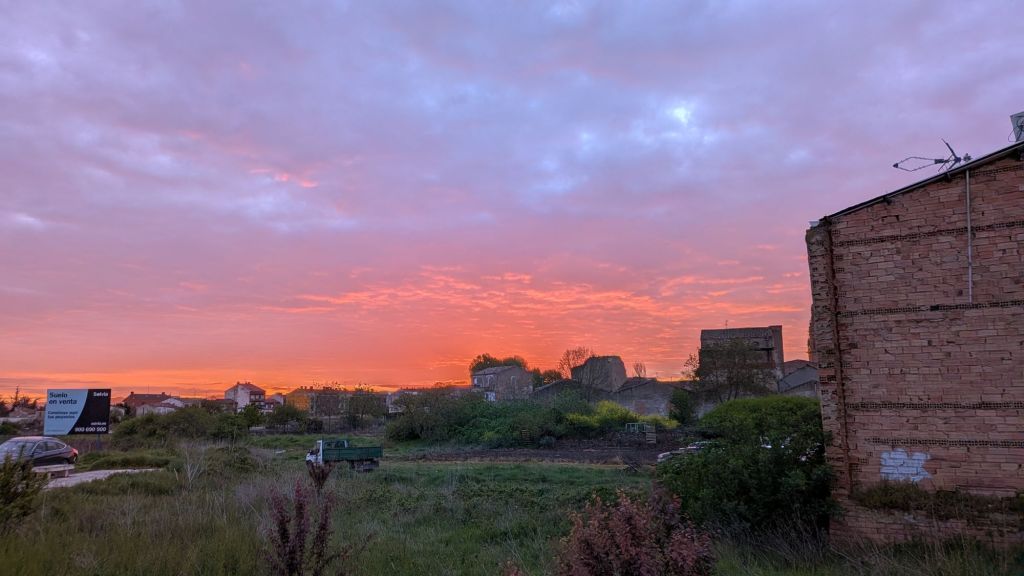
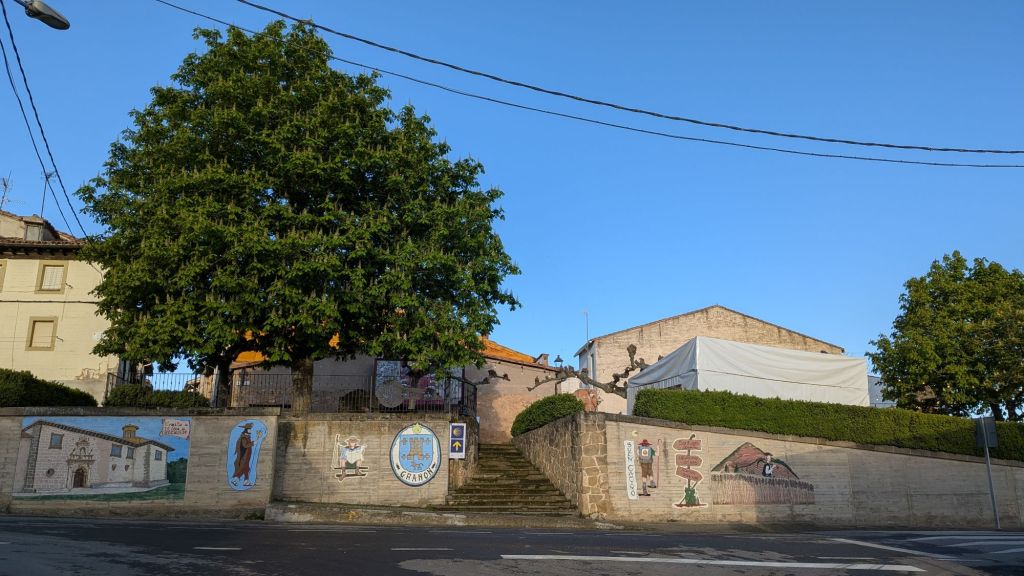
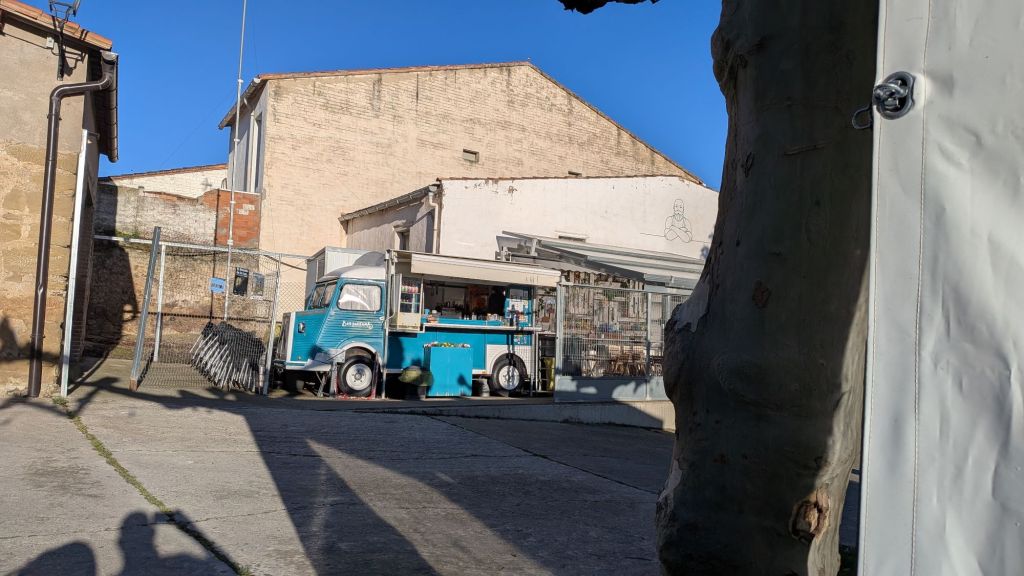
There was no warning in the dawn colours, the light cloud soon began to dissipate and the sun came out. Seven kilometers later and I was coming to Grañón. There was a fine welcome for pilgrims, and a first rate breakfast van.
A few kilometres the other side of the village, walking through huge wide prairie-like fields, we passed from little La Rioja into the (by comparison) huge Junta of Castilla y Léon. Nothing much changed, and compared to the sketchy waymarking of some parts of the Vézelay route, both La Rioja and Castilla y Léon have plentiful big clear Camino route by markers with lots of supplementary yellow arrows to show the way in towns. Whereas in France I sometimes had to walk with the Buen Camino app open and in my hand all the time showing me the way, in Spain I am pretty convinced that you could do the whole thing without any guidance aids at all.
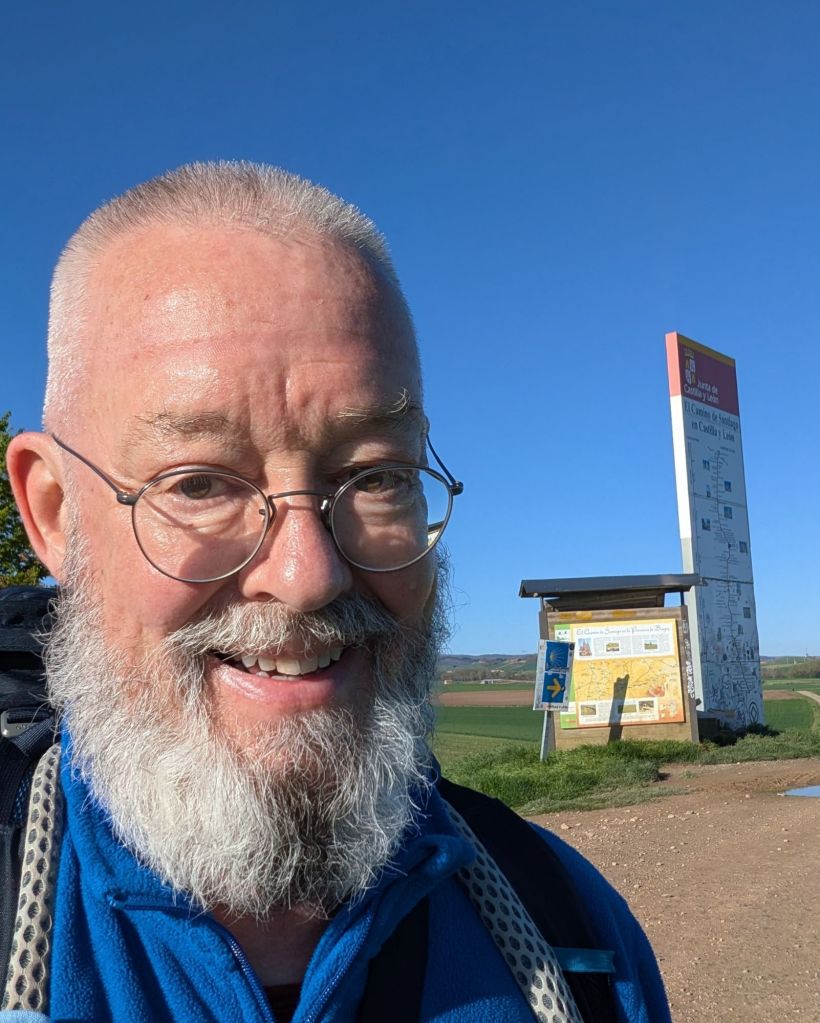
We passed through a number of small, very quiet villages, with little sign of life. Sadly their churches were locked, with no hint about how to gain access. The third was the birthplace of Santo Domingo de la Calzada (Saint Dominic of the Roadway); he lived from 1019-1109, exceptionally long for his period. He was from a poor family and illiterate, and was, for that reason rejected from the Royal monastery in Nájera. But Domingo sensed a call to the religious life, and, basing himself in the town which now bears his name, he gathered supporters and followers, and devoted himself to the improvement of conditions for pilgrims, building hospitals, lodgings, bridges, and roads. His simple faith appealed to both local people and the pilgrims passing through, and he is a great example of someone whose goodness was shown in practical service to support the faith and life of the communities he served. He is usually depicted in a friar’s robe, with a white cockerel at his feet.
A lot of today’s walking shadowed the route of a busy main road, which was not the most pleasant way to cover the miles. I had planned to stop at Belorado today, 22kms in, but I realized that I was feeling fine, and it was still only 10.50 and I had less than the 7 kms to go. So, I cancelled my reservation in a hostel there, and decided to have lunch in Belorado and then go on a bit further to Tosantos.
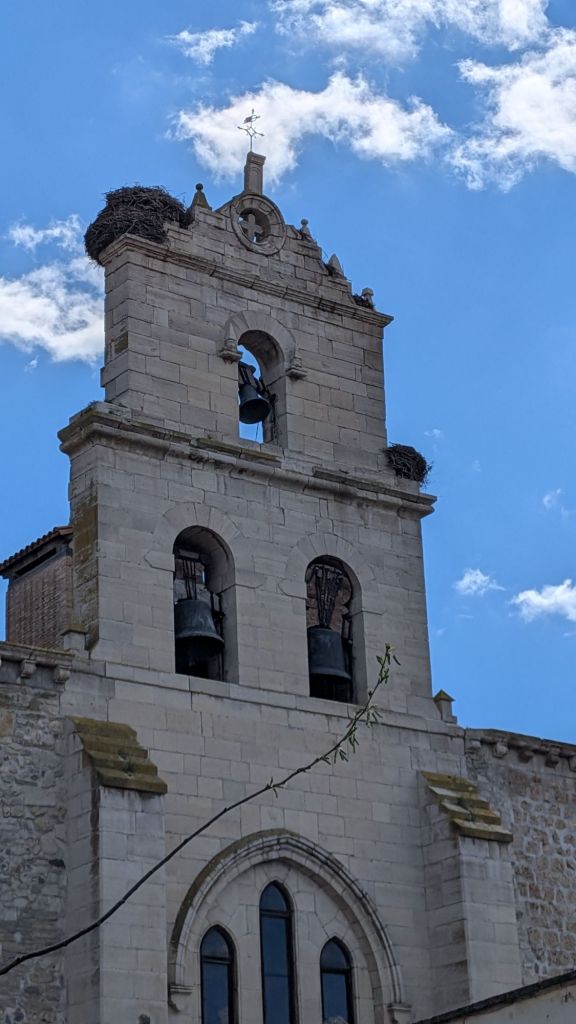
I had a delightful rest at a restaurant by the parish church in the middle of this big village. Three courses for 16.90€, including wine! Suitably rested and refreshed, I pressed on to Tosantos at 14.00.
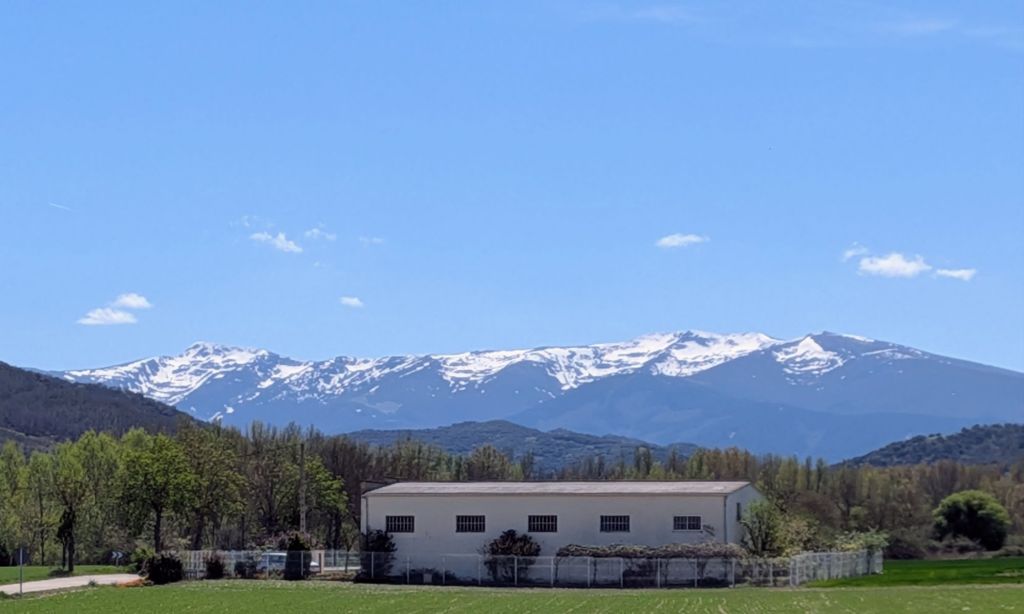
The afternoon was warm, but not uncomfortably so, and I was in Tosantos by 15.00. I found the Franciscan hostel, and booked in there. It is very basic, but has a most loving ambience, so I know I will enjoy it for one night! I had walked nearly 28 Kms, but I glad to report that my feet and feel fine. I plan to do a good stretch tomorrow, but that will mean I won’t have so much to do on Friday when I expect to arrive in Burgos.
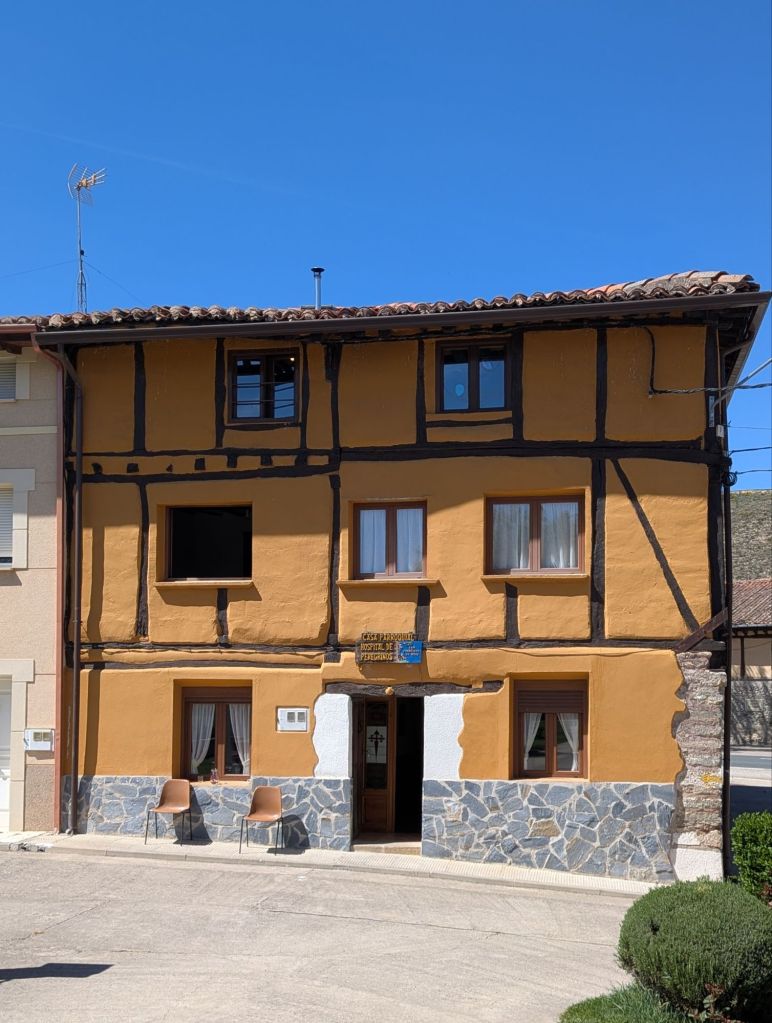
I didn’t miss my poles at all, but I think I might replace them in Burgos – they are a useful safety feature for the mature walker, both in tackling steep ascents, and the even more treacherous descents. Safety first!

