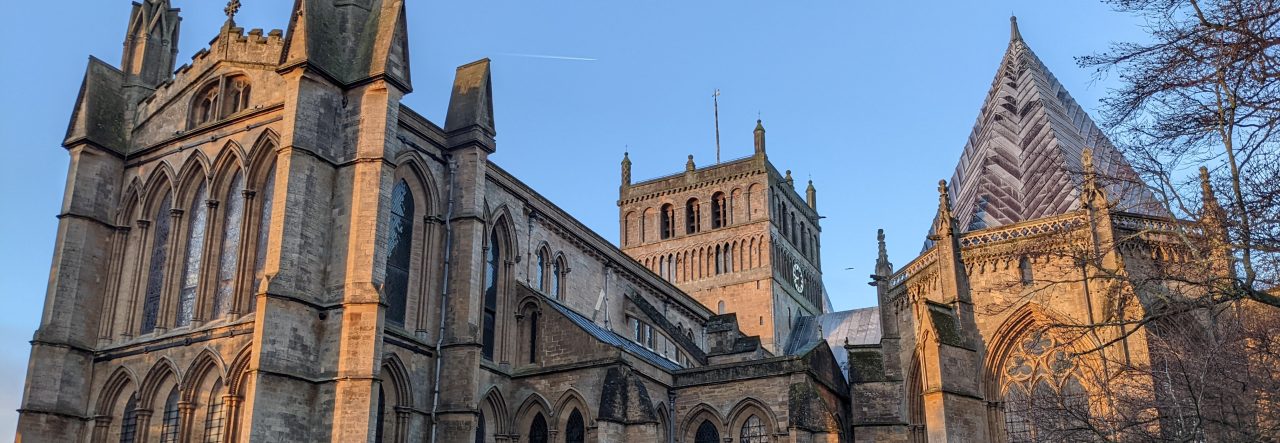
It was very cold this morning; 3 degrees and a stiff breeze. I had a small breakfast in the excellent albergue, and set off at 08:20. My way took me through the centre of the small town, and I called in to the parish church.
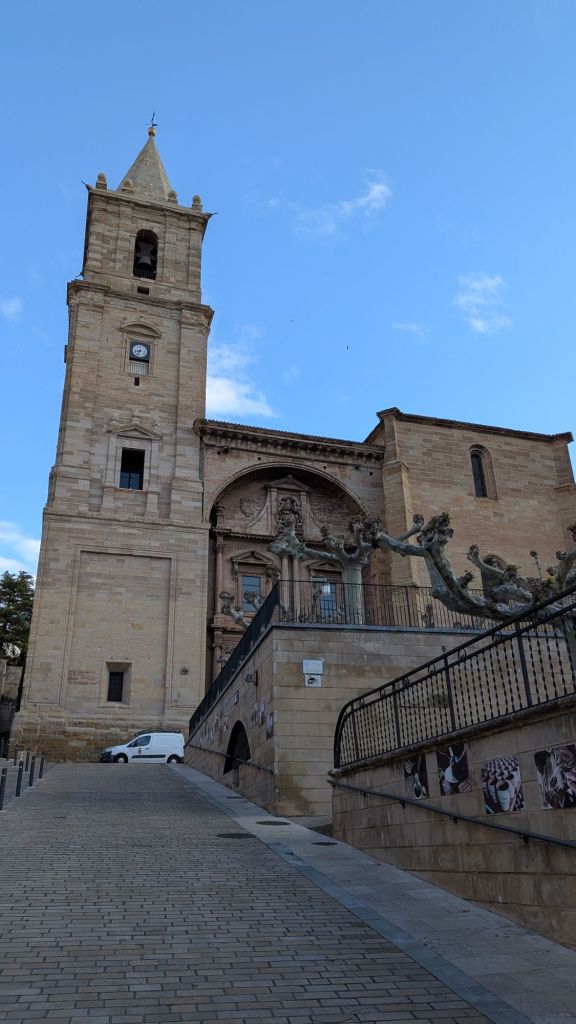

The richness of the decoration dates from a period when Spain was the world superpower. But it does make one wonder how much of the money spent on this elaborate devotional extravagance might more usefully have improved the life of peasant populations!
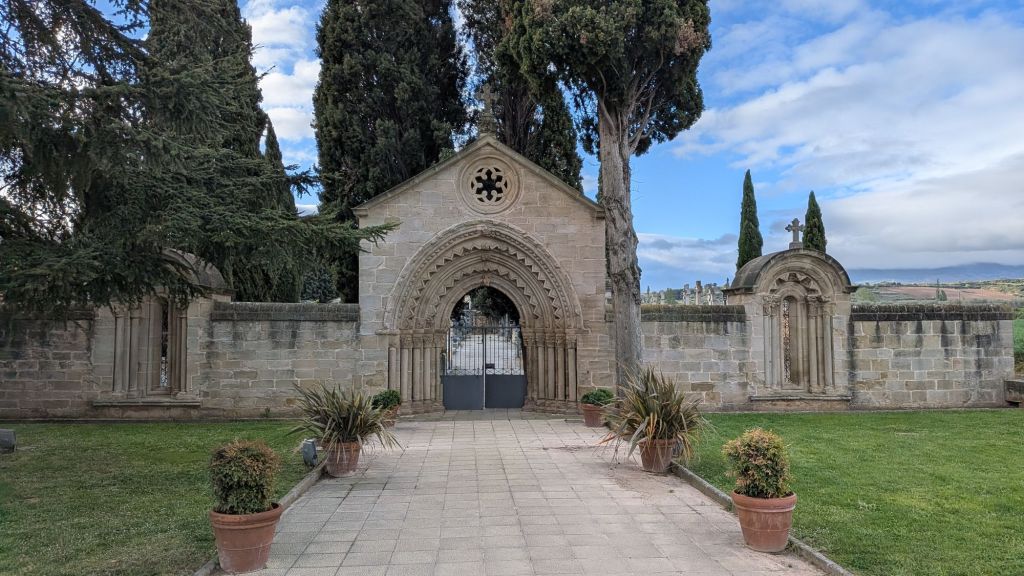
After a while we were at the edge of the town, where the town cemetery was fronted by two much earlier monuments which had been moved here, notably the entrance gate of a pilgrims’ hostel whose ruins we passed on our way into Navarrete.
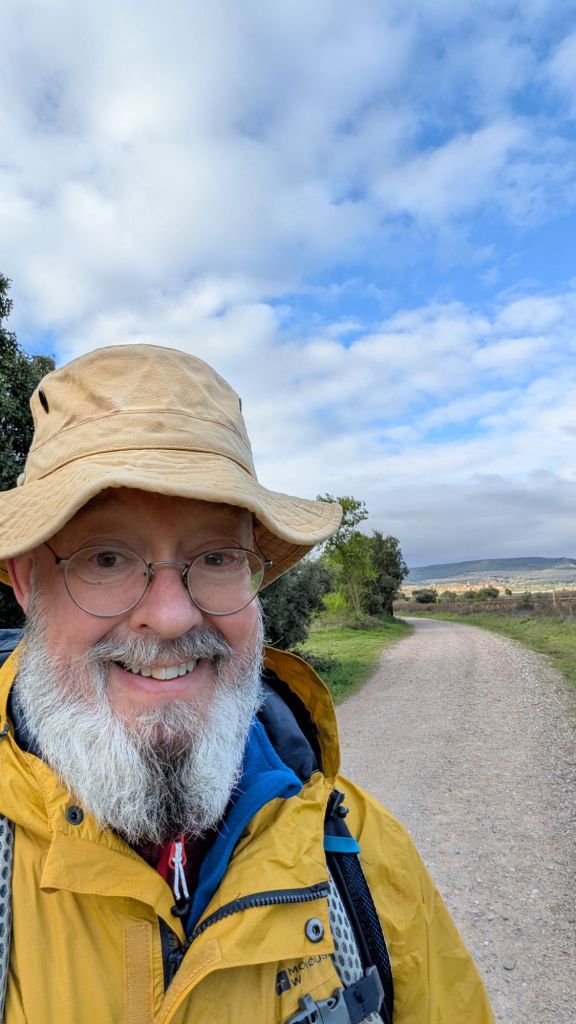
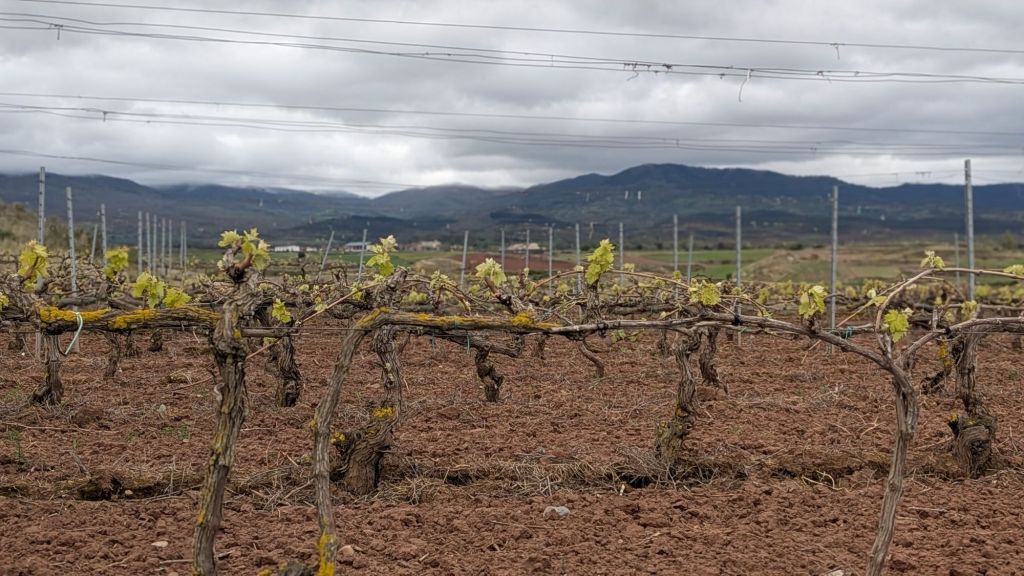
The pathway ran along the road for a bit, then rose into countryside covered by vineyards. The biting wind made me wish I had remembered to pack gloves! Meanwhile, the cloud cover broke and some sun began to lift the ambient temperature a bit.
After a while the path began to run alongside the motorway. This is most unpleasant, but it is something that happens from time to time in the Camino’s progress west. I am using an excellent guidebook to the Camino Francés by a man called John Brierley. Brierley not only sets out the main Camino, but he often offers alternatives that give more attention to historical, spiritual or natural highlights of the route. Brierley’s detours sometimes add a few kilometres, but they are great and get you away from walking along by the noise, smell and rush of motor traffic.
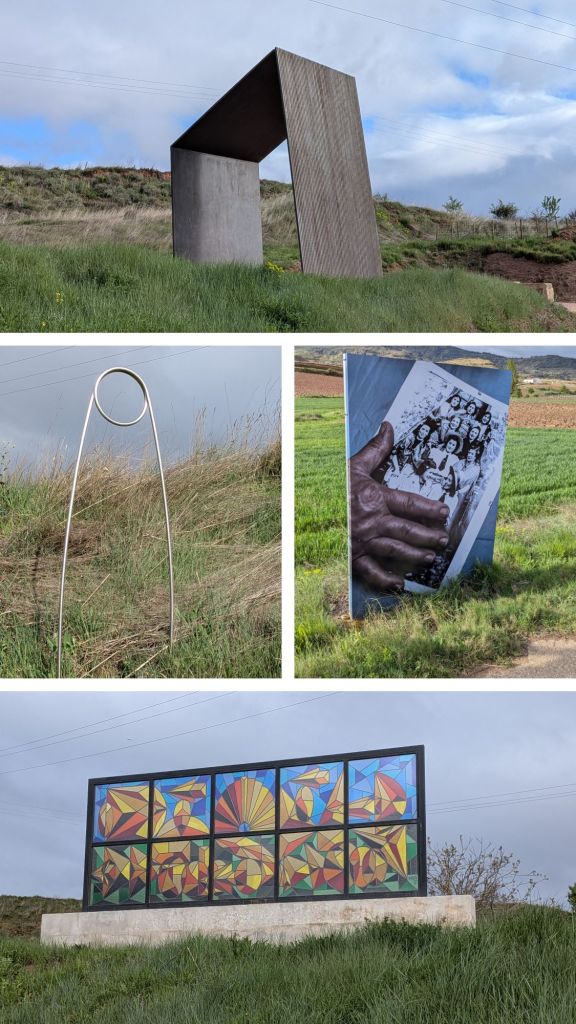
After a kilometre or so by the motorway I had the chance to test out a Brierley recommendation. There was a path off to the left to a village called Ventosa. The kilometre or so had been designated ‘a kilometre of art’, and every few hundred metres were art installations – paintings, photographs, sculpture, and even stained glass. It was a delightful approach to a village.
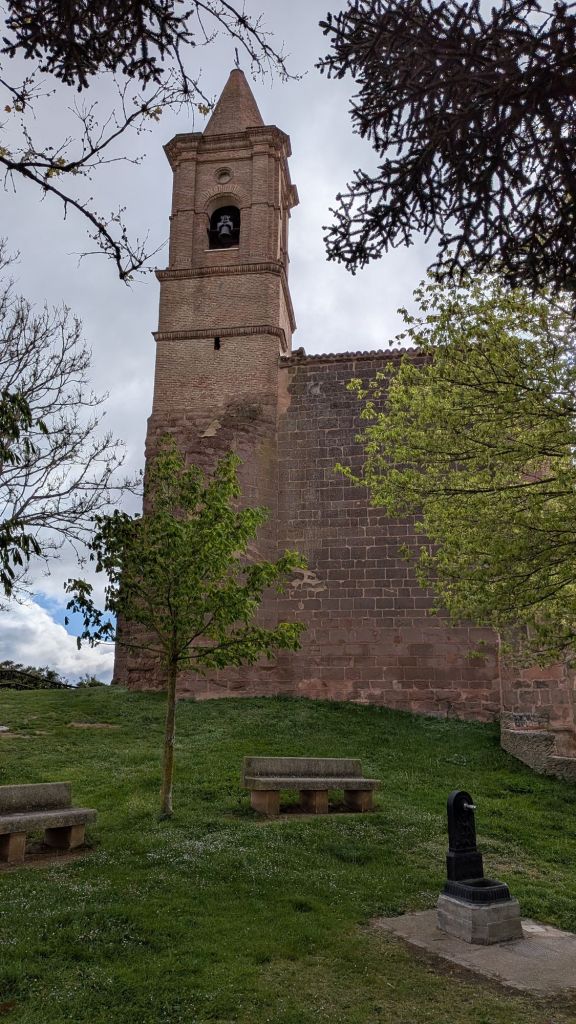
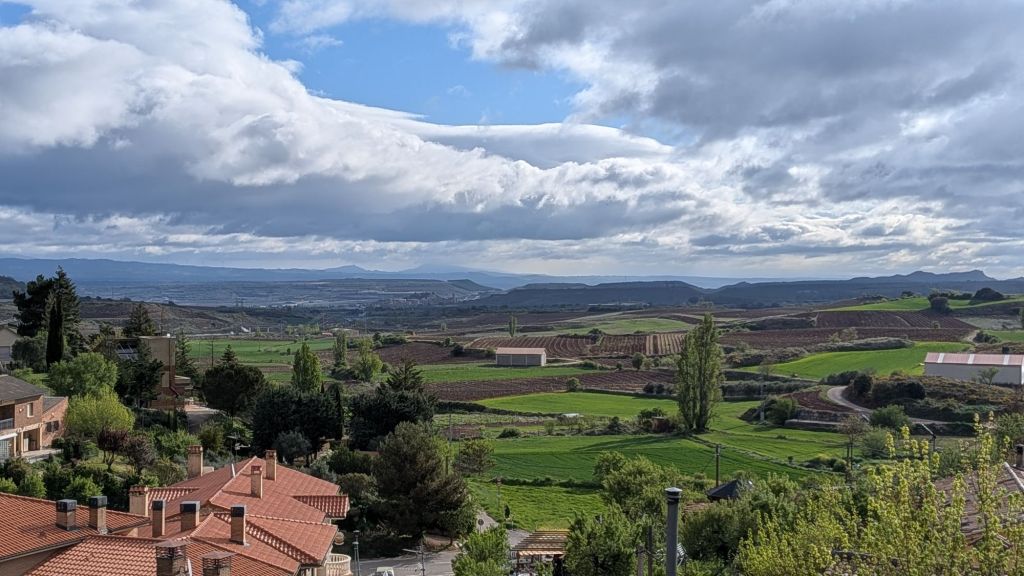
Ventosa was a hill village renowned for its wine and honey. Very charming, with the Church of St Saturnin at the top, with commanding views east and west.
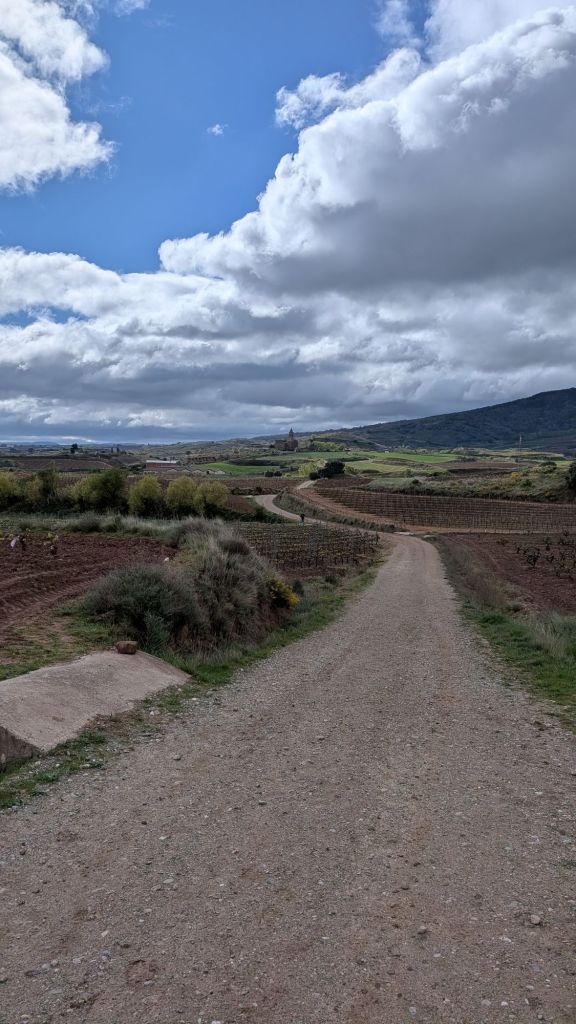
The road wove its way through endless vineyards, the vines all starting to bud. By now there was more sun, but the temperature remained in single figures. Getting near to Nájera we went over a small pass and then the last five or so kilometres were downhill.
Nájera is approached by a long and rather dreary walk through industrial estates, with some aggregates industry, construction sites, fly tipping areas, and so forth. But the old city centre was charming. It was, in its heyday, the capital of Navarre, and many of its kings and queens were buried in the Monastéria Réal de Santa Maria.
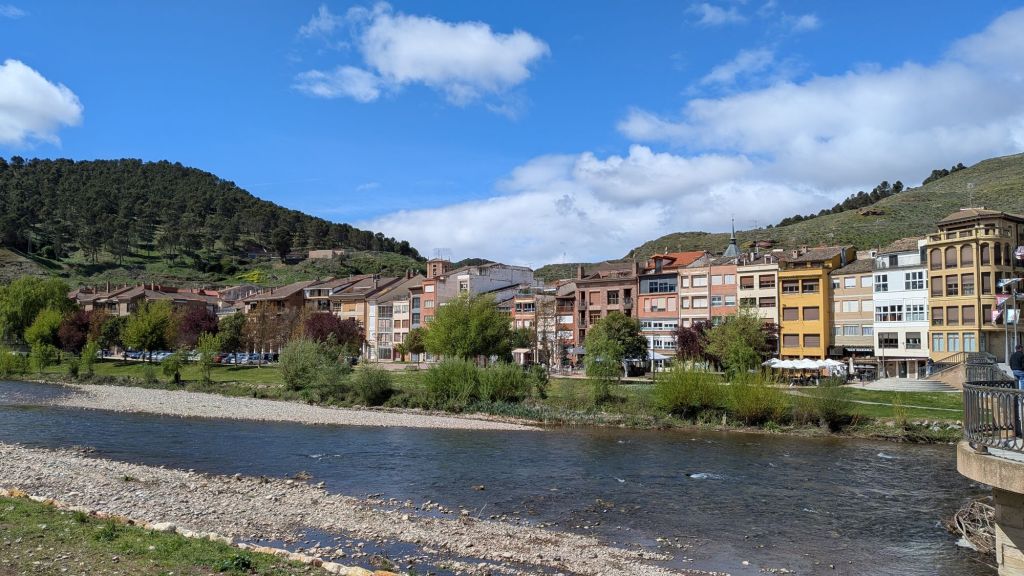
Once I was (finally) in the town I found my hotel, and having dropped off my rucksack, went for a stroll in the old town.
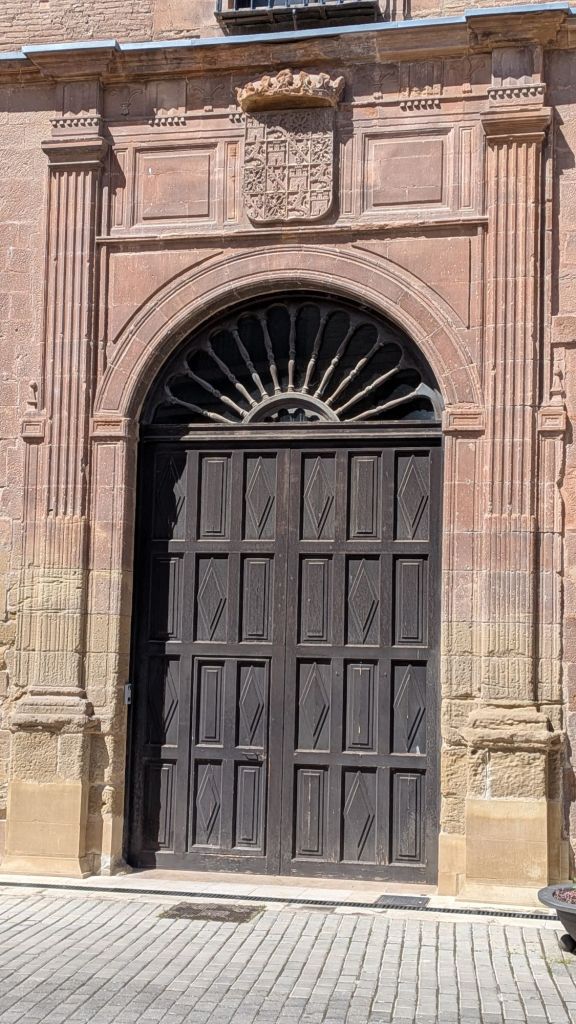
The main attraction was the Monasteria. But when I got there it was barred and bolted. At the bottom of the square was the ayiuntamiento, or town hall. The girl in the office was completely uninterested in the question of when their incredibly important historical asset was open and directed me to the Tourisn Office. I went to the Tourism office. Closed on Mondays. I went into a shop – when was the Monasterio open? Oh, it’s closed on Mondays.
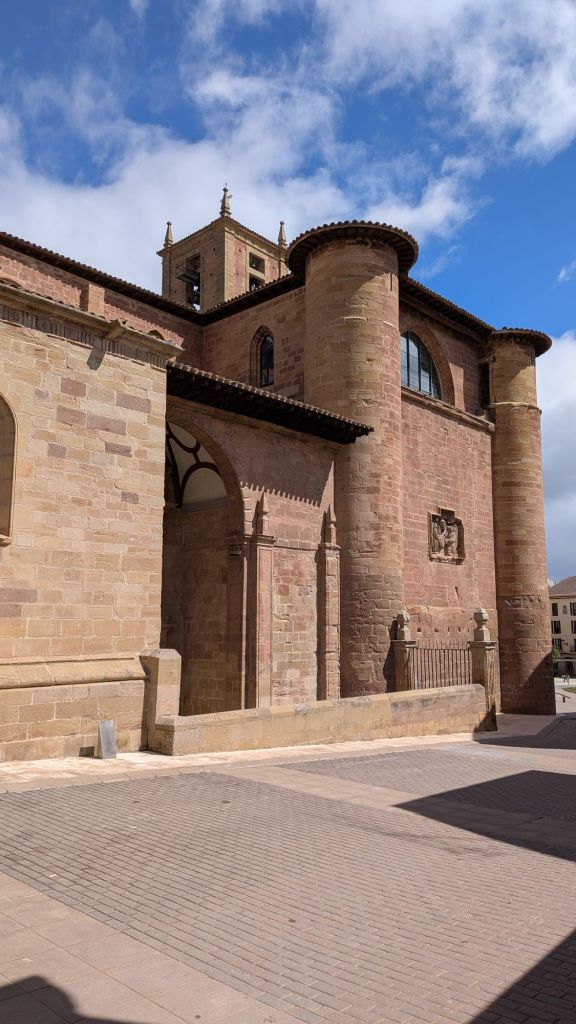
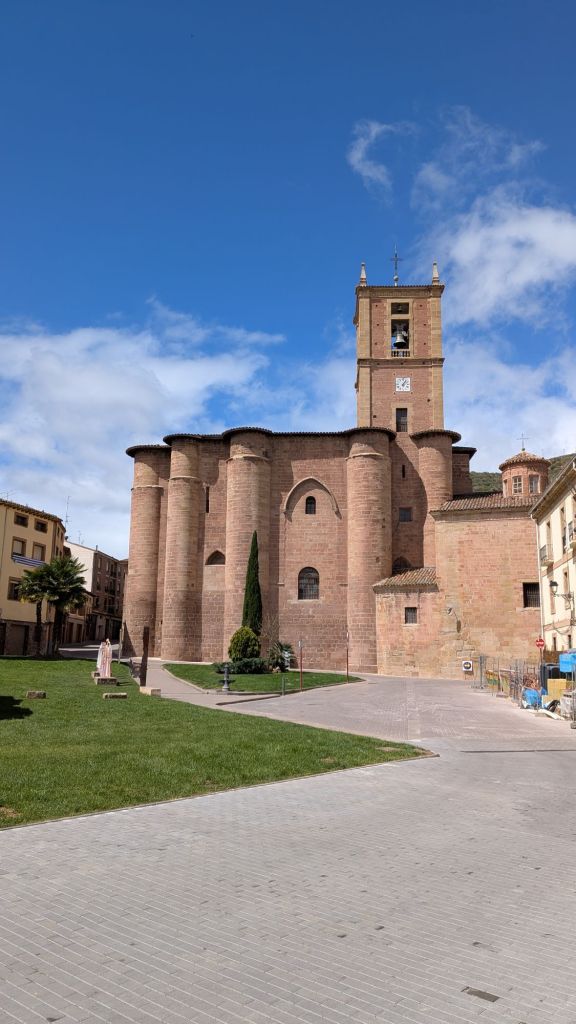
I went back to the hotel, booked in and had a siesta. Going out later I met quantities of frustrated pilgrims who had been looking forward to seeing the Monasterio, and could not understand the mindset that thought it was a good idea to close it one day a week. Beer and food later, I repaired to the hotel for an early night. Tomorrow, San Domingo de le Calzada!

