This blog post was originally published in via media.news on 15th November 2024. Via Media News is an Anglican news site whose strapline is Rediscovering the Middle Ground.
My post was written in response to the publication of the Makin Report on the serial abuser, John Smyth, who died in 2018. His activities were never properly stopped until the broadcasting of a documentary about him by Channel 4 in 2017. He had abused boys and young men in England, Zimbabwe and South Africa over a forty year period – and those who knew about him did not effectively report or stop him. The Makin report was highly critical of the Archbishop of Canterbury, Justin Welby, and this brought about his resignation some days later. This blog provides some theological reflection on the background in which Smyth operated, and the impact of that background on the Church of England as a whole.
Delayed by years until it seemed it would never arrive, I think few of us reckoned with the seismic impact of the Makin report. There, behind the piety, and yet somehow magnified by it, was the horror of the sadism and cruelty of Smyth’s abusing in England; there, in a tale that is still yet to be told in full, was the more explicitly sexual exploitation of boys in Zimbabwe, and his shadowy career in South Africa. One hundred and thirty victims at least; several deaths; many lives forever altered, spoiled, and tainted; and an abused family who could never get away from this narcissistic tyrant.
There has been a good deal of discussion of the extent to which Smyth was a Church of England abuser. His background was Plymouth Brethren, and when the family were expelled from that setting, they moved to another very conservative evangelical context. But John Smyth found a new spiritual home and purpose when he was recruited by Eric “Bash” Nash to help run the camps at Iwerne Minster from 1962 onwards. These camps were notionally under the aegis of Scripture Union, a non-denominational evangelical body, but they were effectively Bash’s own fiefdom. Nash was an ascetical, driven man whose unrelenting focus on his mission attracted enthusiastic followers from the top tier of boys’ public schools. His most famous disciple was John Stott, a Rugby pupil.
Nash, a Church of England clergyman, had graduated to youth work and his famous ‘Bash Camps’ after two curacies. These took place at Clayesmore School in Dorset, in the village of Iwerne Minster, hence their later title, ‘Iwerne’. Nash’s mission was clear and simple, to take over the Church of England for Jesus, and through it the nation, providing it with the best leadership he could, Christian boys from elite public schools. His recipe was an imperialist hangover: but for them to be their best they needed to be Christians after his kind. And ‘his kind’ was simple, direct, and entirely Jesus-focused. Theology was a dirty word to Bash; ABC was all you needed – in his words, Admit your need; Believe that Christ died for your sins; Come to him as your Lord and Saviour.
The camps were also defined by some other noticeable characteristics: they were single sex (though there was a girls’ Iwerne, Bash had no interest in it – or girls at all for that matter) and sex was something to be strongly discouraged. Nash himself was a confirmed bachelor, and never displayed any interest in that kind of thing. He thought marriage was a regrettable weakness, and homosexuality abhorrent. The whole structure of the work created a semi-secret world; Iwerne provided spiritual support and pastoral mentoring for boys who were, after all, away from home a lot of the time. Intense ‘personal work’, as it was called, consisted of regular meetings for Bible reading and prayer and self-examination, supported by much letter writing. It was easy to start to depend on these people who seemed to care so much. In between the running of house parties or camps at Christmas and Easter as well as in the summer, much of Bash’s life was on the road, visiting his boys at their schools.⅗383
Questioning at Iwerne was discouraged, as was thinking; faith, discipline, overcoming temptation and sharing the message with others became the prime areas for activity, all washed down with lots of games and sport to tire everyone out.
So there you have it: a simplistic faith, keeping its believers infantilised and unquestioning; a culture that separates itself from the world, for those who believe and turn to Christ are saved, and those who have not yet or who don’t are damned; intense relationships with mentors and colleagues, and close relationships with others discouraged; a shame culture – for the mentors wanted to impress upon you the importance of repentance for your many failings, and what teenager does not fail many times and in many ways? If you had the temerity to think you were not doing too badly then it might be suggested that you were caught in the sin of pride – it was hard to avoid feeling guilty. All of this was, as with lots of youth organisations, wrapped up in Iwerne’s own language and customs, not easily accessible to the uninitiated. If, at this point, you are thinking it sounds rather cult-like, I would not blame you.
In the hands of Eric Nash, who, by all accounts was a modest and genuinely humble man, the camps flourished and raised up leaders for the evangelical wing of the Church of England. I have suggested that the camps and camp culture was cult-like. But what came next was much worse.
When Nash grew old, he passed on the running of the camps to The Revd The Hon. David Fletcher, son of a Labour peer and one of ‘his’ boys. By then Nash had already introduced Smyth, who went to a minor public school (and felt acutely let down by his father that he had not gone to one of the best) into the leadership of the camps. Smyth’s own church at the time was for many years an Anglican one, and he trained as a Reader and sought ordination. The cover provided by Iwerne’s culture gave Smyth his opening. Within the oddness of Iwerne, the charismatic Smyth created a complete and effective ‘cult within a cult’ in which he was free to abuse egregiously. He was a slippery character to be sure: as the report says, a narcissist, entitled, grandiose, lacking empathy, someone who took pleasure in inflicting pain, and a man with a strong sex drive which, unnervingly for a homophobe, directed itself in part to teenage boys and young men. When challenged he would strike back, and hard, and if that failed, he was always ready to turn himself into the victim.
Iwerne managed to nurture not one, but two very questionable leaders in that generation; Smyth, whose activities while ‘hiding in plain sight’ have been compared to those of Jimmy Savile, and David Fletcher’s younger brother Jonathan, who will come to trial for alleged sexual offences next summer. Smyth and Fletcher J. did not like each other; yet so strong is the bond inside the little society of Iwerne, that when Smyth’s world within a world was falling apart, and the news of his crimes was leaking out, Jonathan Fletcher can be found, according to Makin’s report, defending him and trying to hush things up.
In the period 1980-2010 Iwerne, while seeming to continue as normal, was living through two major changes, one external and one internal. First, in the Church of England, the church of which most Iwerne participants were a part, the increasing dominance of evangelicals meant that men from that tribe, including those raised inside Iwerne, were ordained, and, by sheer force of numbers, started to be appointed to senior positions. In a way, this was the vindication of Eric Nash’s strategy. The fly in the ointment was that men who reached those positions were obliged by the demands of the church as a whole to grow beyond the childish and unnuanced theology of Iwerne, which made them suspect for those who kept alive the flame of Bash’s ‘ABC’. This meant that the church had leaders, or certainly some, who had not truly been raised in the historic Church of England but through a parallel closed society, and who did not instinctively understand or value Anglican theology, liturgy, history, or pastoral theology. When you are taught that Christianity is at heart all about the saved and the lost, and that you have the insight to distinguish between them here and now, then the Parable of the Wheat and the Tares, the polity of being a national church, and the practice of parochial and pastoral ministry in all its complexity, subtlety, and opportunity is rather lost on you.
The second sequence of events, invisible to most in this period, concerned the huge threat posed by Smyth. When his appalling crimes started to become known in 1982, those clergy to whom these things were reported kept the whole business to themselves. When Mark Ruston, the vicar of the Round Church in Cambridge, and a greatly respected preacher and leader, wrote his first report that year and began to circulate it to some chosen colleagues, he was clear that he understood the law to have been broken by what Smyth had done, and cited the Offences against the Person Act of 1861 section 47: assault occasioning actual bodily harm. Rather than report this to the police, these men managed this privately for one overwhelming reason – protecting the reputation of the camps. The correspondence between them is littered with concern above all for what any scandal, should Smyth’s activities get out, might do to ‘Gospel work’. Their job, as they saw it, was reputation management, not justice. They were also deeply concerned for John and Anne Smyth and wanted to help them. And the victims of his crimes? There is, in the reports from that time and in the letters between the leaders, more than a whiff of victim blaming. Smyth, of course, encouraged this by saying that all the complaints from the boys and young men were exaggerated. The victims who started to speak were not really listened to and believed – not, that is, until one attempted to take his own life because he could not face another beating. But their needs were never prioritised. Camp, and ‘the work’, had to be protected at all costs.
Even when Smyth had been forced to resign from camp, his friends and erstwhile colleagues from the Iwerne network clustered round to help him relocate and start a new life. Coded warnings were sent ahead, but he made it to Zimbabwe and then South Africa and was supported financially by UK and other sources in what Makin calls a ‘lavish lifestyle’ from then until he died in 2018.
The ‘management’ of Smyth and his criminal activity was complex and multi-layered, but as it began to break down, information leaked out to Church of England clergy beyond the Iwerne network, and even bishops. Yet, somehow, even with victims starting to come forward, no one really grasped the enormity of the crimes before them and acted with the perseverance needed to stop him. Not until after 2010 are proper reports laid before the police and, even after that, poor co-ordination between county police forces and the church meant that Smyth remained at large.
One of the trustees of the Titus Trust, which ran the Iwerne camps after 1997, acknowledged, in her submission to Makin, that she had failed to report abuse because “of a misplaced loyalty to the Iwerne regime”. That is the point: loyalty to the Iwerne regime. Loyalty to that above all else; loyalty to Iwerne above the demands of justice, charity, love, or truth. Loyalty to that regime, even, ironically, above doing what Jesus would have done.
That regime, built as it had been on its thin gruel of a theological basis, its snobbery and elitism, and its neglect of the richness of the tradition of the Church of England, had the temerity to market its camps as giving a chance for boys to find out about “The Christian Faith”. The ocean depths of the faith; of prayer, of thought, of service, of social engagement – none of that was offered. Just a simple ‘gospel’ message, disembodied and uninculturated, and a lot of unpleasant manipulation of vulnerable young men masquerading as pastoral care until they were entangled in Iwerne’s clutches.
I went to Iwerne to help for two summer camps in the mid 1970s. I was twenty years old and at university. I didn’t like it; it seemed childish and creepy at the same time. Personal pressure was put on me by David Fletcher to keep coming, and that solidified my decision to having nothing more to do with it. When I was there, I saw and heard nothing amiss, and I had no personal contact with either John Smyth or Jonathan Fletcher. But I think my instincts to steer well clear were well advised.
Theology that makes shame one of its core virtues is no Christian theology at all. The bodily and sexual dishonesty of Iwerne was almost limitless. Bodies were there to be taxed and driven in endless sport, and the world of feeling was to be avoided – it was as if bodily existence itself was an inconvenient accident. The tenderness of the incarnation was trodden underfoot by the transactionality of a two-dimensional salvation. One of the summers I went to Iwerne my visit followed some days of singing at Salisbury cathedral. It felt like taking myself away from the beauty of holiness and into a wasteland. I was told off for singing and told off for talking to the girls in the kitchen – but then, Iwerne was weird about sex. I recall being told, in a talk on sex to senior campers, that what you were looking for in a wife was someone who would be “an angel in the kitchen and a devil in bed.” I thought it was messed up misogyny then, and still do now.
Overly negative about masturbation, fretful about any engagement between the sexes, terrified of real women, utterly neurotic about homosexual attractions and love, Iwerne’s sickness was played out in the distorted libidos and anxiety-laden fumblings of its devotees. The fear of sinning loomed over bodies in general, and participants in the camp in particular. Iwerne’s legacy of fear, homophobia, and inconsistency still fuels the culture war around Living in Love and Faith.
At its worst, Iwerne was a haven for a vile abuser and criminal. That its alumni, products of a para-church organisation with questionable theology and loyalty to the Anglican tradition, have risen so high in the life of our church, either as leaders or prominent parochial ministers, is our tragedy. It will be our folly if we don’t see what has been done, and fight to recover the breadth of the Church of England, and its traditions, and its social and cultural engagement, so that, even if much diminished, we can again be a church for the nation, and not an incomprehensible and morally suspect oddity.
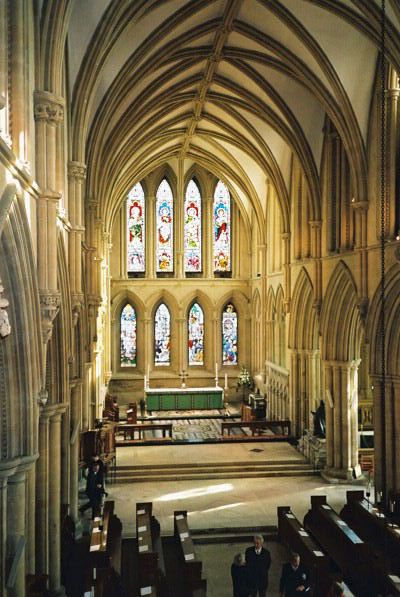
 From The Quire
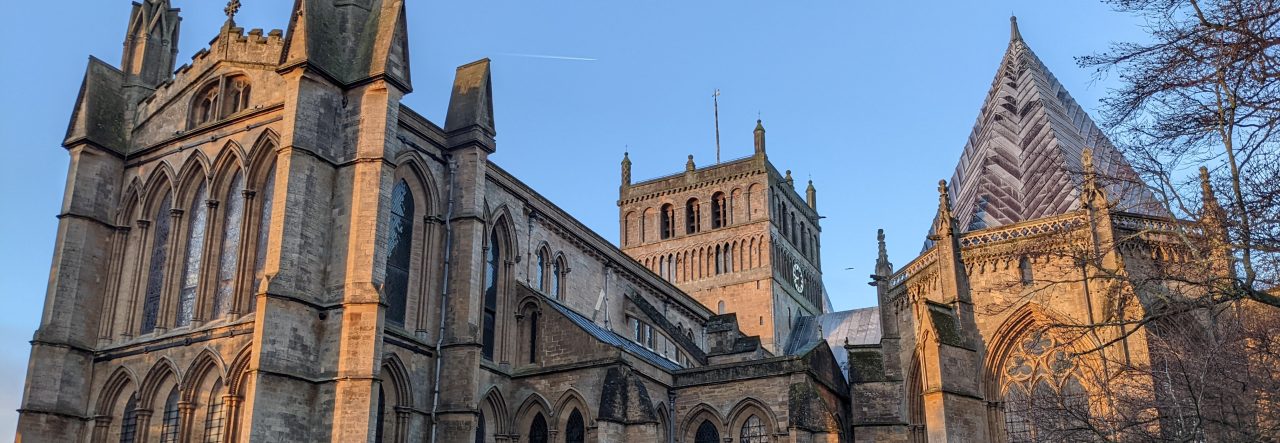
So very insightful – as usual. One of the many disgraceful things about the closed cult of Iwerne, and its ignoring of John Smyth, is that it was all done in the name of Christ. Of course victims feel angry and betrayed, and rightly so. And the rest of us feel betrayed too, as ‘the Church’ is now perceived as hypocritical and unsafe. Even stately Southwell Minster had a bunch of white flowers left outside this week, with the notice, ‘Remember the victims. No more cover-ups’. We are all – as Christians in the C of E – seen to be tainted by Smyth and the protectiveness of the church authorities for the institution, even though 99.9% of us had nothing to do with it.
LikeLiked by 1 person
Dear Vincent,
you are too kind. I believe we really will have to make decisions, not only about being safer, but also about being much clearer about what we positively stand for – and what we do not – if we are to win back trust.
with all good wishes
jeremy
LikeLike
Thanks so much, Jeremy. I wonder if you have sent it to Hugh, whose son-in-law has been a Iwerne staffer. As ever Vincent
>
LikeLiked by 1 person
Thank you, Vincent – I have emailed him.Jeremy
LikeLike
Pingback: Opinion – 16 November 2024 | Thinking Anglicans
Thank you, Jeremy, for a fascinating piece. I came across the simplistic ‘ABC’ gospel of Nash via the evangelistic preaching of John Stott around 1960, and it seemed to work for a lonely teenage boy at the time. It brought me into a warm, distinctly evangelical Anglican church which was a shaping context for me both educationally and religiously. I don’t regret any of that, for it was also a context of intellectual exploration – rather far from the ‘Bash’model – and personal growth. Where it differed further from the Nash model as you describe it is was in its focus not on Jesus but on Paul. We knew the Epistles inside out, but somehow the Gospels – probably at the heart of the broad Anglicanism you describe – came a poor second, except of course for the Passion narratives.
It took a year or so of undergraduate study of English literature (and the narrow experience of a university Christian Union) to help me realise that the world was broader than the evangelical sub-culture; and I rapidly became ‘unsound’, in Bash terminology. But it isn’t an easy world to escape from. I am profoundly relieved, though, that I did, the more after reading the Makin report. Deep in the psychology of Smyth – and in the continuing outlook of university Christian Unions and fundamentalist Anglican evangelicalism churches, lies the dreadful theology of penal substitution. Its perverted understanding of God has a lot to answer for.
LikeLike
Thank you for this comprehensive and skillfuly presented account. Your observations about the need to restore pastoral theology, church history, liturgy etc. in order to retrieve a truly Anglican tradition are in themselves vital even without the tragedy of the abuse that has precipitated the need to revisit what we are about as a national church.
LikeLike
I have wondered for years how the evangelical takeover happened. My suspicion has been the importation of American type charismatic fundamentalism, but I could not work out the route of how it became mainstream in the C of E. I had been saying for a while that we would have to wait for the history to be researched and written on about 50 years. But now we know. It was a deliberate take over plot by the Iwerne leaders. And they have succeeded. Maybe now that bubble will burst and the good from this scandal will be that fundamentalist evangelicalism will be seen as the hollow position it really is.
LikeLike
It was inevitable that Archbishop Justin had to resign given the Makin review’s comments, but the idea that the Rushton circle should somehow keep their heads down is unconscionable. Many will be retired or even dead, but they should at the very least be named.
LikeLike
The only surviving recipients of the 1982 Ruston report are, I believe, Andrew Cornes, who is still, though retired, a member of General Synod and the Crown Nominations Commission. It seems unconscionable to me that should still hold a PTO. He was a curate at the time, but did nothing, and went along with Ruston’s modus operandi.The other person who saw a redacted version of the 1982 report was George Carey in 1983. He did nothing. I cannot think he should retain his PTO, given his appalling behaviour over Peter Ball.
All the rest have since died.
LikeLike
Hi, the Ruston Report states at the top that it went to 8 people (including Ruston himself). Makin identifies these on page 80 of his review and notes that 7 are now deceased. Some like David Fletcher died during the review process. The only one alive now is Roger Combes.
We obviously don’t know exactly who else got the report or a summary thereof. Makin does discuss this.
LikeLike
I’m afraid all I can manage is Ick! 🤢
LikeLike
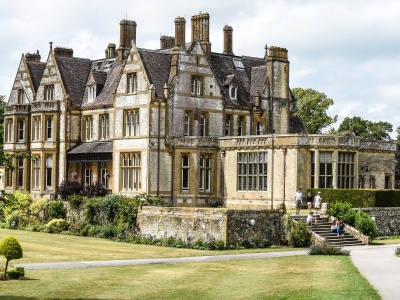
The picture labelled ‘Clayesmore School aka Ewerne’ could give the impression that the school was in some involved with the Ewerne Camps. Apart from letting its premises for the summer camps, as far as I am aware Clayesmore School had no involvement with the camps. It was then, and continues to be, a well-regarded independent boarding school. The caption on your picture is misguided.
LikeLike
Edited – thank you for pointing this out.
LikeLike
Thank you.
LikeLike