
Learning things involves listening. That is obvious – we listen to things we didn’t know and we try and fit them into the jumble of impressions, facts, traditions and habits that go to make up the way we know anything. Descartes thought that the human mind was a bank slate, ready to receive sense impressions and, by the use of reason, to arrive at sure knowledge of the things around us. We have all heard of ‘I think; therefore, I am’. He was fundamentally wrong.
Human learning is a much more complex and far less individual thing. It begins when babies feel and learn through touch and care from their mother or father or grandparent or carer. It goes on with the imitation that teaches them to learn to interpret expressions and tones of voices. It follows with the miracle of language acquisition and the beginnings of self-expression. But it never ends. All human learning, all human understanding and meaning is socially embedded.
“Again and again, Wittgenstein reminds the reader that all meaning, even the very gesture of pointing something out, must have conceptual links with the whole system of the human way of doing things together. There is nothing inside one’s head that does not owe its existence to one’s collaboration in an historical community. It is established practices, customary reactions and interactions, and so on, that constitute the element in which one’s consciousness is created and sustained: my sense of myself, not to mention the contents of my mind and memory, depend essentially on my being with others, my being in touch with others.”
Kerr, Fergus. Theology after Wittgenstein. Oxford: Basil Blackwell, 1986. p. 76
Even the solitary scholar in the library is not truly alone. They participate in the history of scholarship, they depend upon the thoughts of others, the survive because of the culture of academic research and so on. Whoever we are, whatever we do, we are always standing on the shoulders of others, and absorbing new ways of understanding and perceiving. Kerr’s summary of Wittgenstein’s epistemology applies as well to Christian existence:
“Even something as seemingly inward and individual as my ‘consciousness’ and ‘sense of self’ emerges only out of a shared life with its ‘established practices, customary reactions and interactions’. Our existence is a shared existence and it becomes intelligible only through distinctive shared ways of life. Language allows us to understand ourselves, and our practices, but it also works the other way round. Language gets its intelligibility from the shared practices in which it is embodied. Wittgenstein called these ‘forms of life’ or Lebensform in German.”
Davison, Andrew, and Alison Milbank. For the Parish : a Critique of Fresh Expressions. London: SCM Press, 2010. p.12

So there is no wonder that time and again in life, we learn by joining in. We learn by listening to others who know whatever it is we are ignorant of. We learn by watching and seeing how things are done; then we try it ourselves. Life is a huge apprenticeship. And the greater the experts among us, the more they are likely to know that they know very little. It is the fools who think they know all they need.
Now, the Church of England has set itself a very big, socially embedded learning task, Living in Love and Faith. And it has done so because it is aware that there is a problem with how sexual minorites are embedded in the church. This is because the social context in which our learning (and, as a church, our discipleship, our Christian living) has taken place in the past, had no room for the knowledge that this sexual minority held. It was, so we were told, illicit, immoral knowledge, that had nothing to contribute to society and should be punished or at most, suppressed, hidden.
That began to change in the mid-twentieth century, when society decided that punishing people for being part of a sexual minority was cruel and unnecessary. How did this come about? It came about because people started to listen and to learn. They became close to members of this sexual minority even if they were not part of it themselves (John Wolfenden of the 1967 Wolfenden Report had a homosexual son), they listened to witnesses who knew that world, and so their knowing became shaped by that propinquity. Male homosexuality was decriminalised. But that was only the start.
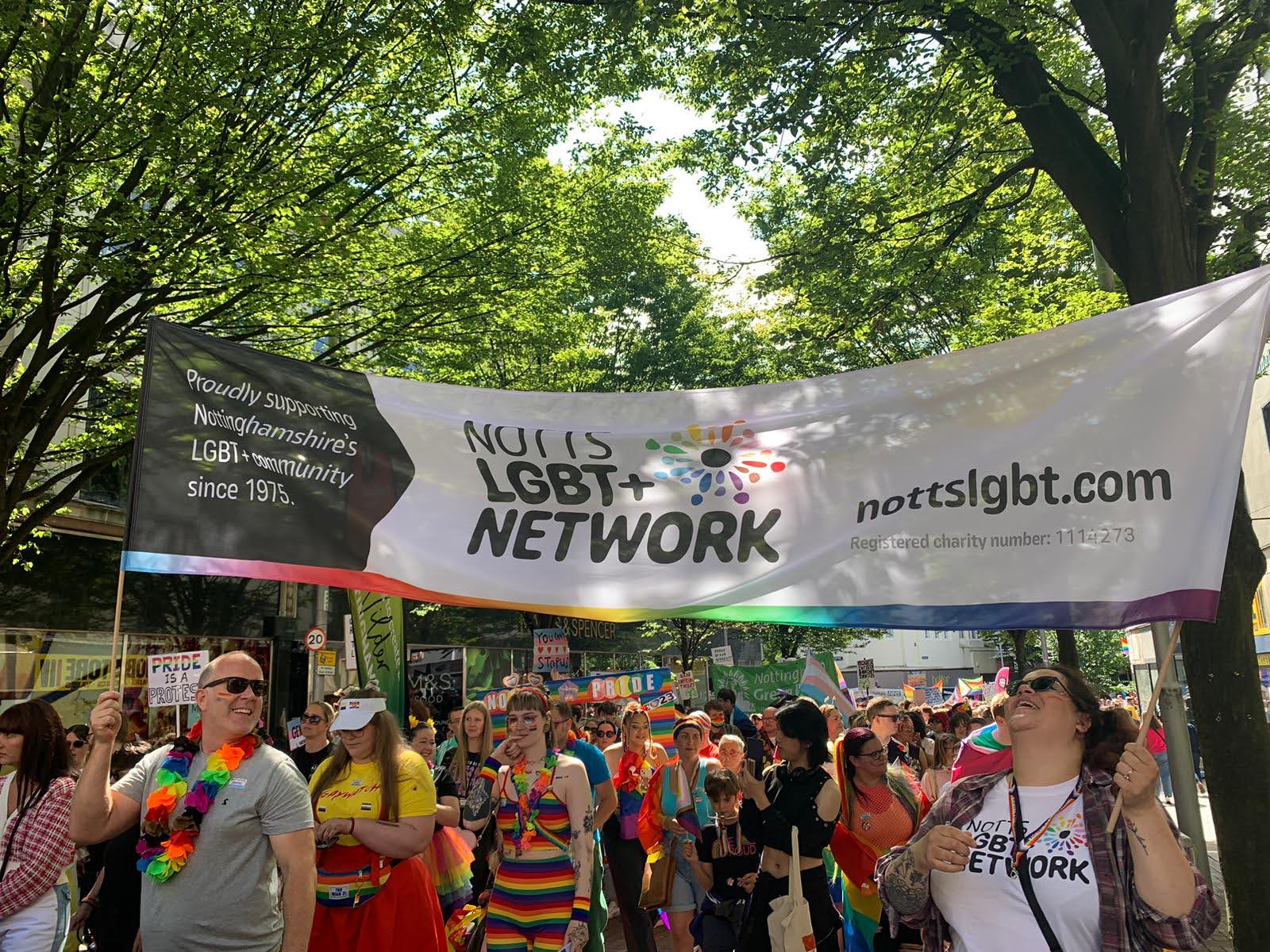
Liberated from prison (sometimes literally), gay men and women still had a long road to travel to make society recieve the knowledge that they possessed, and to find ways of learning and living together. It was hindered by the AIDS epidemic in the 1980s and 90s, but by the beginning of this century, there were enough gay and lesbian people woven through every level of society in an open enough way for the ice shelves of prejudice to start melting. Too many people knew too many gay men and women to pretend that they were not a proper part of the world we inhabit – and the obvious question then was, ‘If they are in so many ways just like everyone else, if they pay their taxes and contribute to society, why should they endure discrimination?’
The 1980s anti-gay Section 28 was repealed, civil partnerships came, the Equalities Act, and in 2013, same-sex marriage was made legal. And nearly ten years later, the sky has not fallen in. Lesbians and gays contribute to the way we know and learn and discover; we are part of the historical community. And the longer we go on the more our experinces and understandings become part of the practices and habits of society like other people’s: the remarkable thing is that they are not, most of the time, very different from everyone else’s – because before we found ourselves part of a sexual minority we were raised as children and went to school like everyone else, and learnt in a muddled kind of way, like everyone else, how to live in the world. Community is community for everyone, and the things that build it up are common to the human race.
So you will understand my perplexity when I got this reply from my bishop to the message I sent him two days or so ago (and by the way several other people got exactly the same message):
“Dear Jeremy,
Thank you for taking the time to share with me some of your concerns and frustrations with the present proposals and further steps within the LLF process. I also recognise that my own theological and ecclesial position on these matters, which I have always tried to express transparently and is consistent with Church of England doctrine, is something with which you will disagree.
I assure you that I continue to listen and learn from others, and I pray for the wisdom to exercise my ministry as bishop in a way that seeks the unity and pastoral stability of the Church within the faith as we have received it.
Thank you for your prayers for me and for General Synod. Like you, I pray that the kindness and compassion of the Lord will be reflected in the way people speak of one another.
as ever in Christ
Bishop Paul”
I did not expect the bishop to answer my question directly, as to what kind of a vision of a new Christian inclusion he had for this diocese, but I was struck by his claim to be listening and learning. And this takes me back to Descartes and Wittgenstein.
English protestantism has always had something of a problem with tradition, to say the least. It has always elevated the Bible to a position of primacy, above that of tradition, and in reaction to the understanding of the Roman Catholic Church. Now, Sola Scriptura (only Scripture) can mean that only those things which can be demonstrated from Scripture can be foundational for Christian faith (or, as the Thirty-nine Articles say, are necessary for salvation), or it can mean that only Scripture can be used in determining any matter of faith. There is a sliding scale between these two things which has varied over time and according to context.
The principle and preferred method of this group to arrive at knowledge, however, is through the analysis and application of a fixed text, without the need to to look too hard at the way knowledge is transmitted socially. Biblical analysis should reveal the answers, which can then be overlaid onto the lives of Christians. I exaggerate slightly – but not too much. This is essentially a Cartesian method. Interestingly, the Protestants who found this method inadequate and had to do things rather differently were those who went to work cross-culturally – missionaries who, from a variety of backgrounds and theological stables, came to realise that they had to do the work of “inculturation” in both the teaching and the living of the faith. The bishop’s reference, by contrast, to ‘the faith as we have received it’, does not suggest that there is a task of inculturation to do in every generation, engaging deeply with society as we work out what the unchanging gospel means in an ever-changing world. Two remarkable bishops who sought to do this were David Sheppard and Derek Warlock, the Anglican and Catholic bishop/archbishop of Liverpool in the 1980s and 90s.
So when the bishop tells me he is wanting to ‘listen and learn’ from others, I guess I wonder what he means. I recall that when he arrived in the diocese I offered to take him to Nottingham to visit some of the LGBT landmarks of the city, support groups, pubs, clubs etc, so that he could get to know that part of his diocese. He did not take me up on the offer. I don’t know why.
But I know that in almost all my dealings with evangelicals around this issue, they keep their distance. We meet at conferences or debates, or we exchange slightly frustrating jabs at each other on X (hat tip @Psephizo), but they don’t really know me or my life or my way of understanding and living Christian life. Their lives (straight, cis, hetero) are not at issue, and, in any event they constitute, quite understandably and properly, the background reality of social life. But because, of course, knowledge, listening and learning are all socially embedded, maybe they realise that if you get close you might really hear things, and really understand and start to change your thinking about things in the way you have been taught to. So it is better to keep us at arms length and pray for us. Meanwhile, the gulf between society and church grows ever wider as people are bewildered and repelled by a church that seems so determined to reject the minority that society recieved years ago.
Reports from a conference of the Global Anglican South in Egypt last week suggest that Nicky Gumbel, the influential vicar of Holy Trinity, Brompton told the assembly the House of Bishops proposals could be defeated and the Communion could be saved. For him, it is appears that the least honoured members of the Body are dispensible; what he didn’t reckon with is that very many of those LGBT Anglicans are from the Global South and live a precarious life in fear and danger. Some of them are refugees in this country – where the church is fundamentally still hostile to them and us.
Anyway, I stand ready as always to engage and meet, and to listen and learn.
 From The Quire
I am reminder of Sydney Carter’s poem…
Your holy hearsay is not evidence.
Give me the good news in the present tense.
What happened nineteen hundred years ago
May not have happened.
How am I to know?
So shut your Bibles up and show me how
The Christ you talk about
Is living now.
LikeLike
I love it!
LikeLike