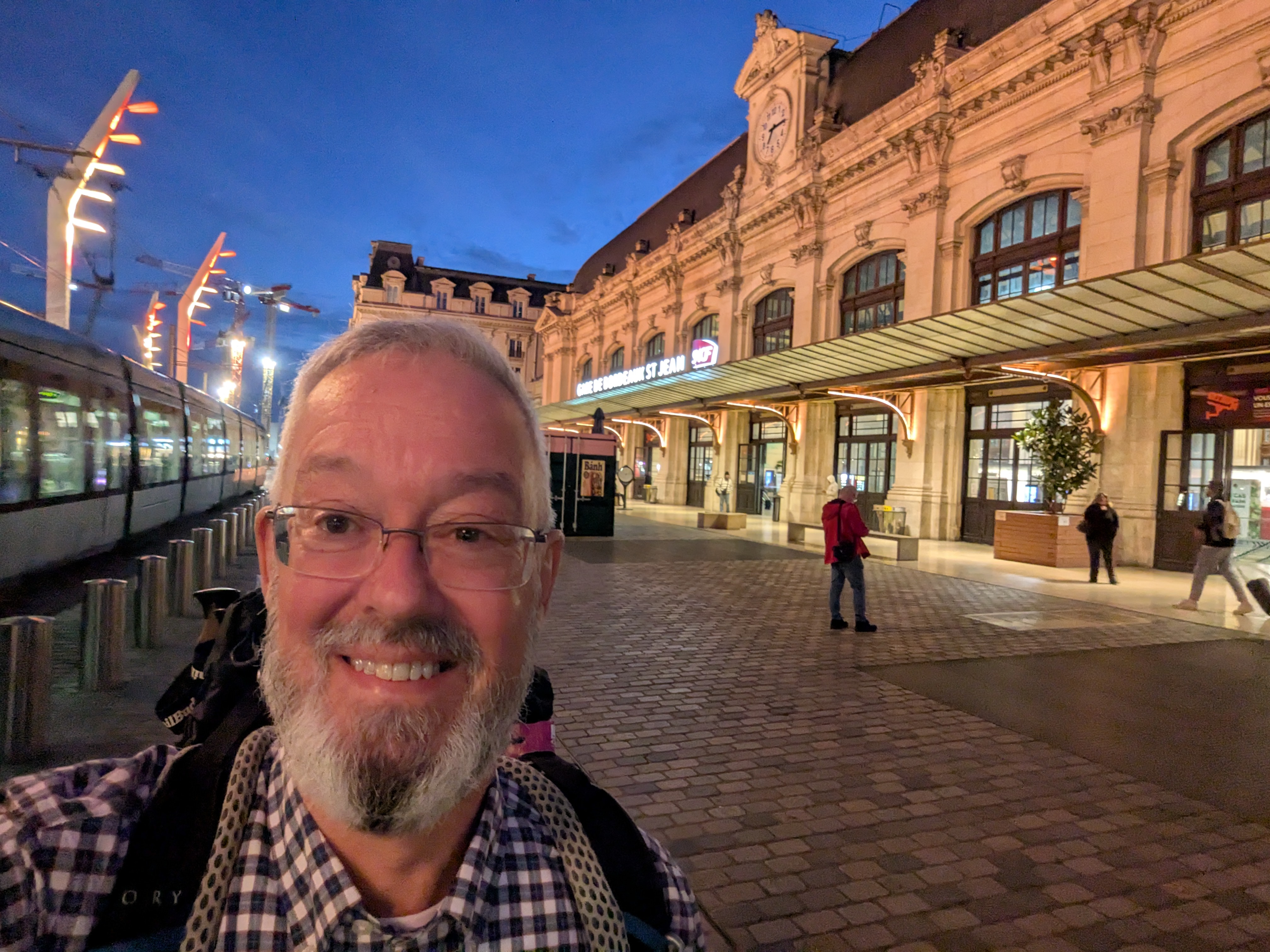
There is a limit to how far you can go by land without it taking days to get to where you want to go – I think, with this stage of the Camino, I have now reached it. Perhaps, if I were younger, I might be able to go further in any one day, but as it was, I was really glad to have to stopped in Bordeaux and had a very good night’s sleep. Today’s activity was three train journeys to get me from Bordeaux to Southwell.
The first was by Ouigo – France’s budget TGV service – from Bordeaux to Paris Montparnasse. You don’t get much more than a seat from Ouigo – there is no food or drink sold on board, so you have to take your own provisions. But the journey was uneventful and rapid, and we got into Paris on time. Thankfully, transferring from Montparnasse to the Gare du Nord is a simple matter of one Metro line, so I was in the Gare du Nord by 11:55.
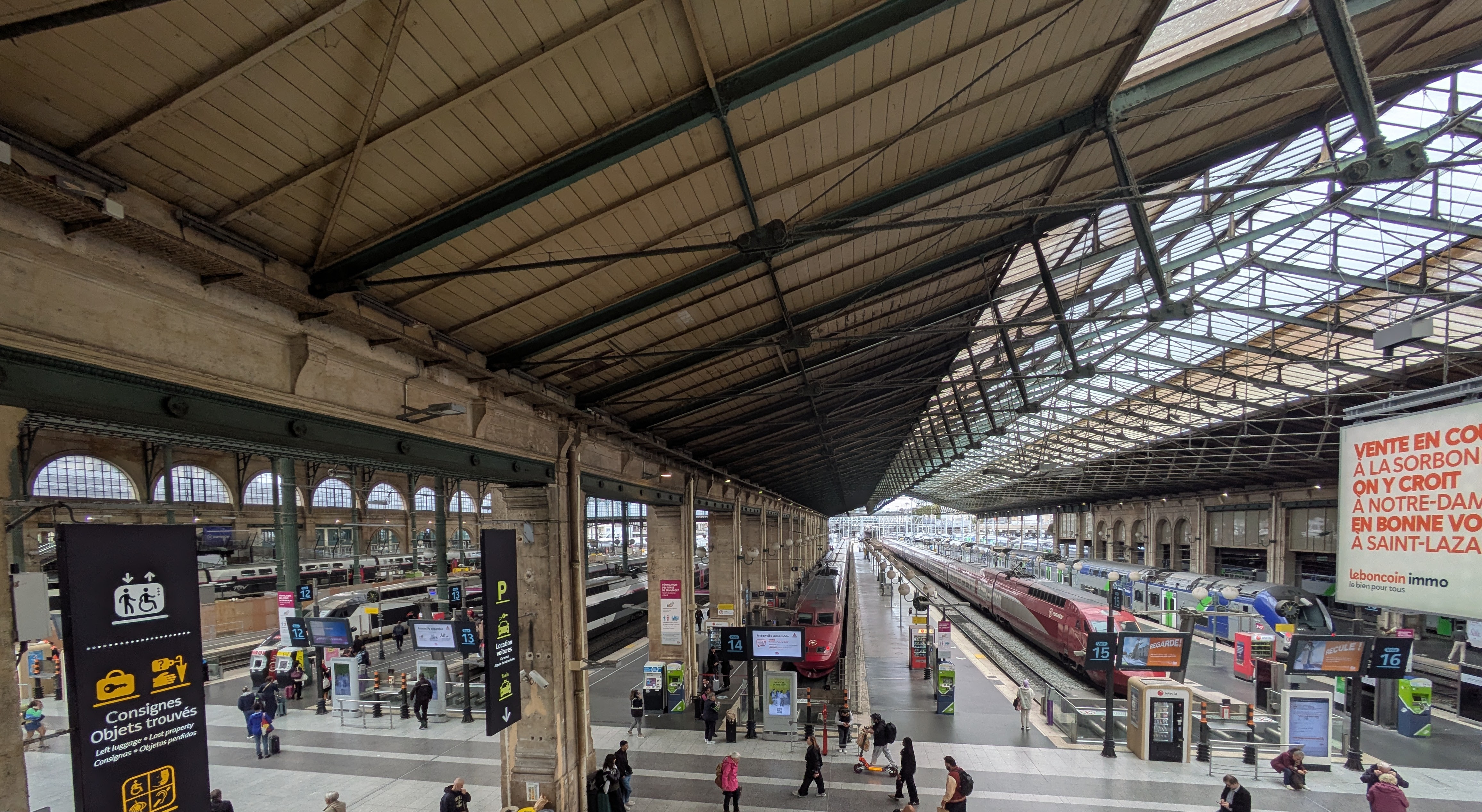
I had time for a bit of lunch and was then ready to wait for an hour or two for my Eurostar connection. This was delayed, and then delayed some more, and we finally left Paris at 15:50. A little slow running in England meant an arrival time of 17:16. I had missed my connection to the LNER train I had booked to get home. I got the next one, but that was held up at Huntingdon and limped into Peterborough – so I didn’t get to Newark Northgate until 19:20. Twelve hours, almost to the minute, since I had left Bordeaux.
Add to all that exhausting palaver the six hours on a bus from Bilbao to Bordeaux, and I have decided that, in the spring, I will fly to Bilbao, and then take a bus to Logroño, to restart where I left off. Anyway, Laurence was there to meet me at the station; I was so thrilled to see him again, and it was a joy to be home.
Here are some reflections on this latest stage of my adventure – in no particular order:
- It has been a truly wonderful two plus weeks. No incidents or accidents, just some great travelling and reflecting. Probably my favourite section so far.
- Greatest fears? That my feet wouldn’t cope – this proved completely wrong, and they improved over the time. Also, and this may sound weird, making the transition from France to Spain. Because I am a fluent French speaker I feel very much at home there, and my Spanish is rudimentary. But I love languages and communication, and I am happy to have a go and get things wrong, so, in fact, I really enjoyed being in Spain.
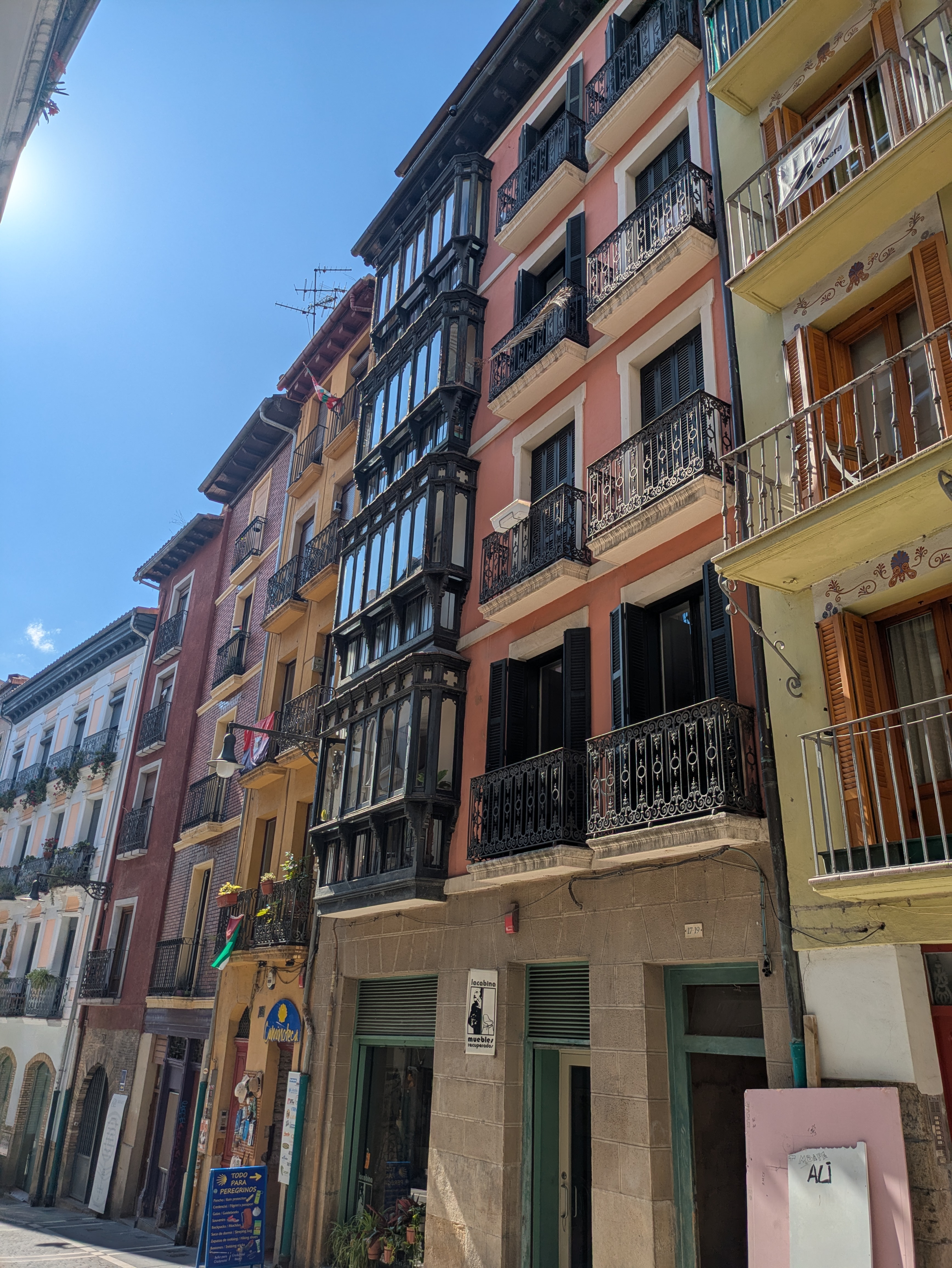
- Biggest surprises? That I could do up to thirty kilometres a day and then another long day the day after. I started gently, but after four days of warm up I was good to go. The new shoes I had bought were brilliant, and I had no blister issues at all (Merrell Moab, in case anyone wants to know – excellent wide toe box). The other biggest surprise was Pamplona. I had no idea it was such a splendid and interesting city – I loved it.
- Best moment? I had dithered endlessly about how to get from France to Spain. Would I take the Via de Baztan, or the Via del Vasco Interior – both lower-level routes – or stick with the Camino Francés? And on the Camino Francés, would I go on the lower Valcarlos route, or on the Route de Napoléon, over the tops? In the end I went over the top, and it was glorious. There was something very satisfying about walking uphill for twenty-one kilometres and standing on the Col de Lepoeder and looking out over the mountains – thrilling. I am so glad I did it. Top moment.
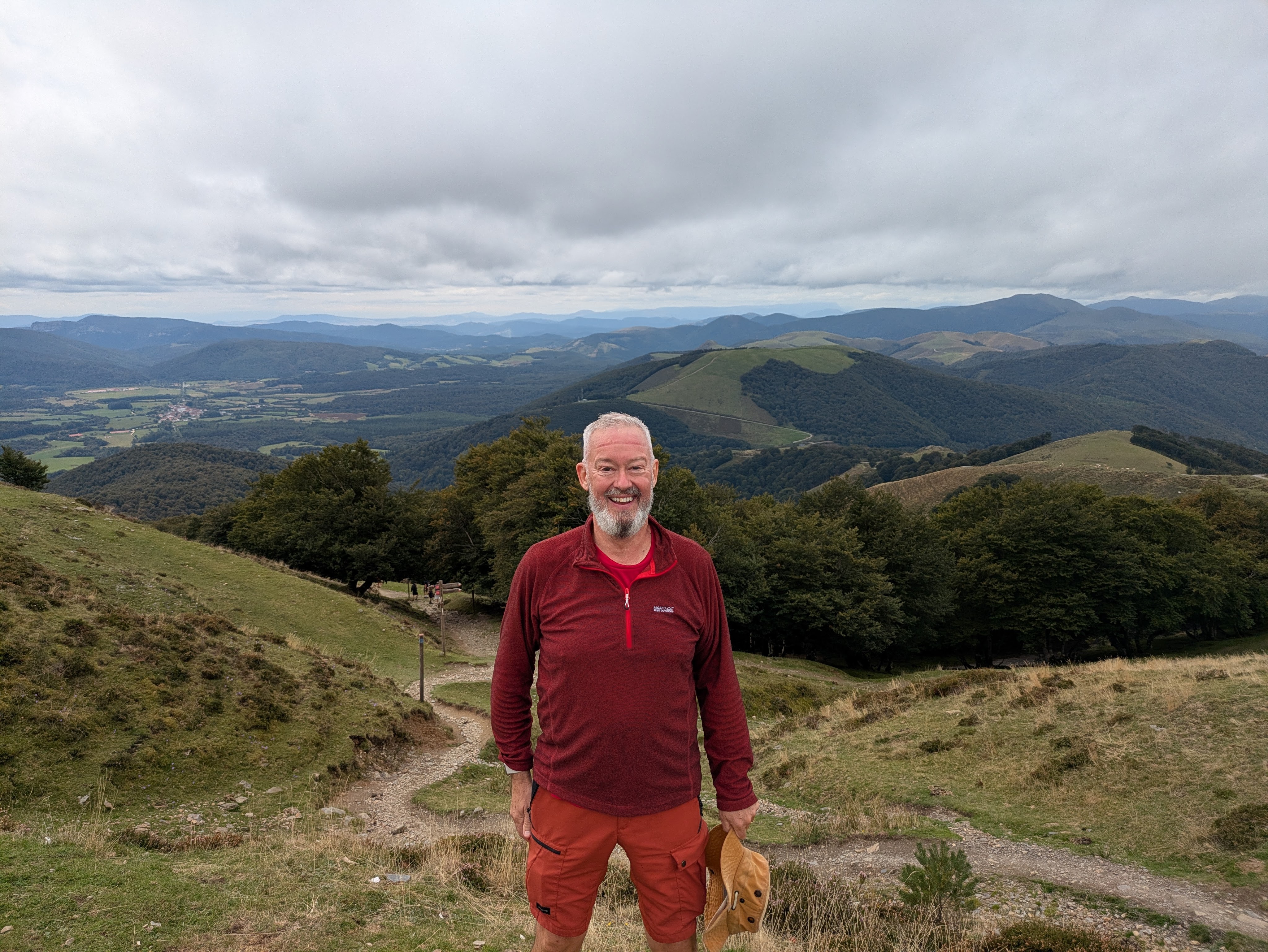
- Loveliest sound? The bells around the necks of sheep, goats, cattle and horses in the Pyrenees.
- Toughest stretch? Without a doubt the extra 7.5 kms in the heat of the afternoon when the lady at Los Arcos had told me there was no bed for me, and I decided to go on to Sansol. Blazing sun, and no shelter – I did get rather dizzy at one point – I was so glad to get to my journey’s end. And, after all, the Palacio de Sansol was the best hostel accommodation of the lot.
- What are the differences between the Camino de Vézelay and the Camino Francés? I miss the wonderful French chambres d’hôtes for a special pilgrim rate, and also the small hostels run by Associations – I have met some wonderful people there. Because the Vézelay route is not used by huge numbers, I have loved the days of walking completely by myself. The Camino Francés is a different matter – hundreds of thousands use it every year. I found myself enjoying the camaraderie – and seeing people I had seen some days before again when our paths crossed. I enjoyed the conversations, and the fact that, despite the numbers, I could still walk by myself and be quiet.
- Small joys? I loved discovering all the really small, unsung pilgrim churches and hermitages along the route. I loved the sense of people having prayed there for centuries as they journeyed on and adding my prayers to theirs.
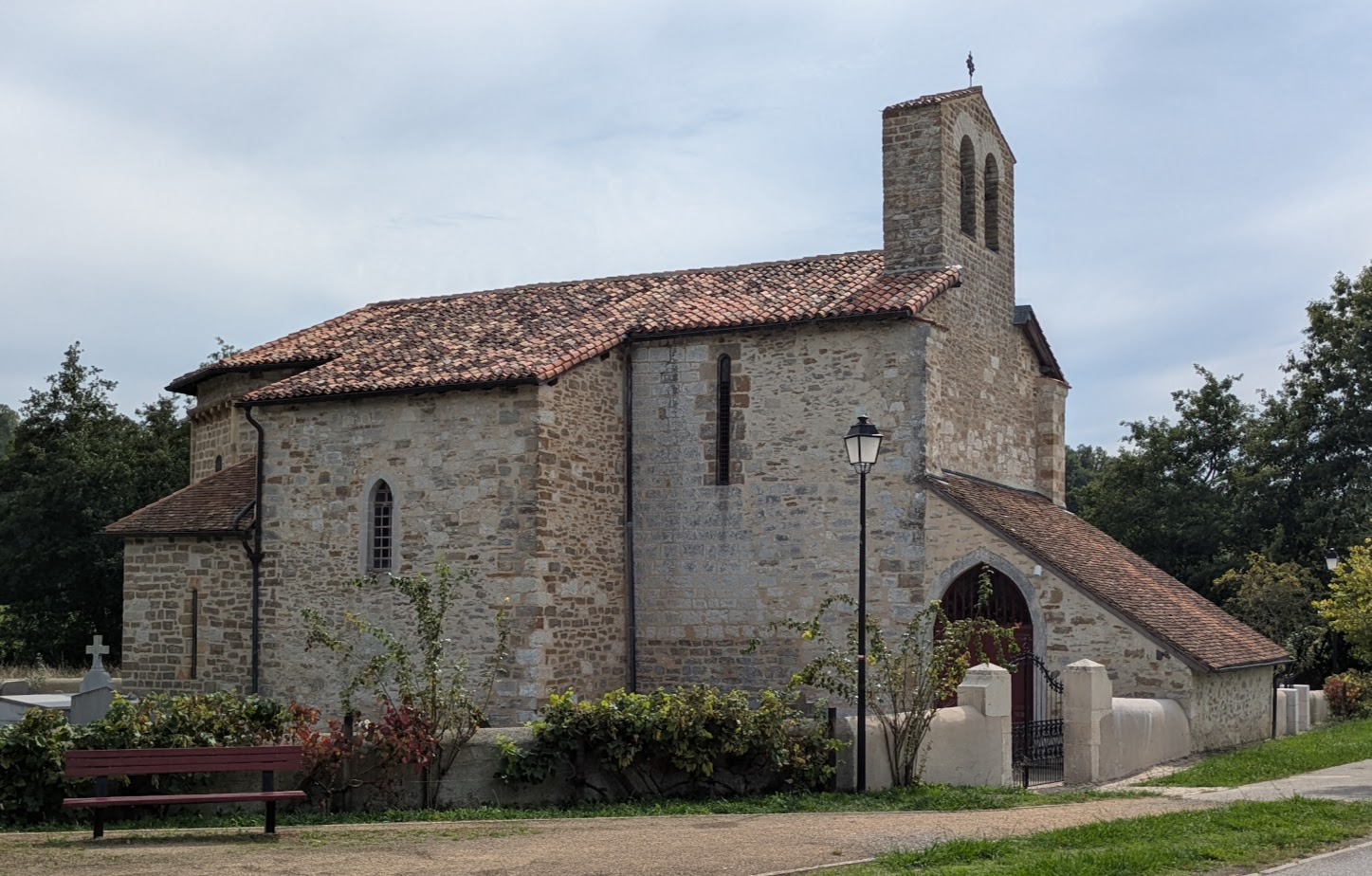
- Best worship? Mass at St Jean-Pied-de-Port the night before going over the top (literally) – such an amazing international congregation, all seeking a blessing. Most of them were starting the next day from cold! And the service at St Anton, Bilbao. Both led by really good clergy, with evident and active female participation. Both were really uplifting and moving.
- Greatest disappointment? Abbaye de Roncesvalles. I was so sad about this. I had been looking forward to staying there once I had decided I was going to do the Camino Francés. But getting registered and getting to one’s bed took well over an hour at the end of a long day’s walk. The facilities were primitive, the food was fairly unpleasant, and to top it all, the Mass was the most disappointing I attended. Rushed, unfriendly, unencumenical – the unequivocal warning just before Communion to any non-Catholic pilgrims, that they were allowed to receive was done in a bad way, and in a bad place in the service – not a good introduction to Spanish Catholicism. However, to be fair to them, they do have to cater for industrial quantities of pilgrims!
All this left me with one or two other bigger questions (as well as many thanksgivings echoing in my heart and mind).
- Is there enough infrastructure to cope with the numbers of those who come? And they come from the ends of the earth. Australia, New Zealand, China, South America, North America, Vietnam, Taiwan. One of the strangest sights of the walk was the group of thirty or so Japanese pilgrims doing their collective physical jerks at seven in the morning on two mornings. This was only a question for the Camino Francés – as I have said, the French side is still blissfully comfortable. The truth is that the Camino Francés goes through some rather small villages that are struggling to accommodate the numbers wanting/needing somewhere to stay the night. The camino must be a very significant contributor to the local economy, but at, say, Los Arcos, a village of fewer than five hundred people was struggling to cope with the numbers coming through. We have all heard of over-tourism – can you have over-pilgrimage?
- The tourism/pilgrimage tension. You can’t stop people going where they want to go (well, you can, but that is another story), but what happens to a great pilgrimage route if it is then used by people as a ‘trail’ like all other trails – one to be ticked off a list? I was very conscious that quite a lot of people had flown into Barcelona, for instance, got trains up to Saint-Jean-Pied-de-Port, did three or four days of the walk over the mountains, got to Pamplona and then vanished. What was that about? Why not use one of the other routes over the Pyrenees – there are more spectacular ones – and if mountains are your thing, there is a long-distance path through the Pyrenees from East to West. And all these various trails are very well marked. There is no answer to this, but it concerns me. I suspect it may be much less of an issue in the next stage – quite a few folks miss out the bit between Burgos and Léon as being rather boring (but isn’t that part of the point of pilgrimage?). But then, if people haven’t got an interest in the idea of pilgrimage you can’t impose that on them.
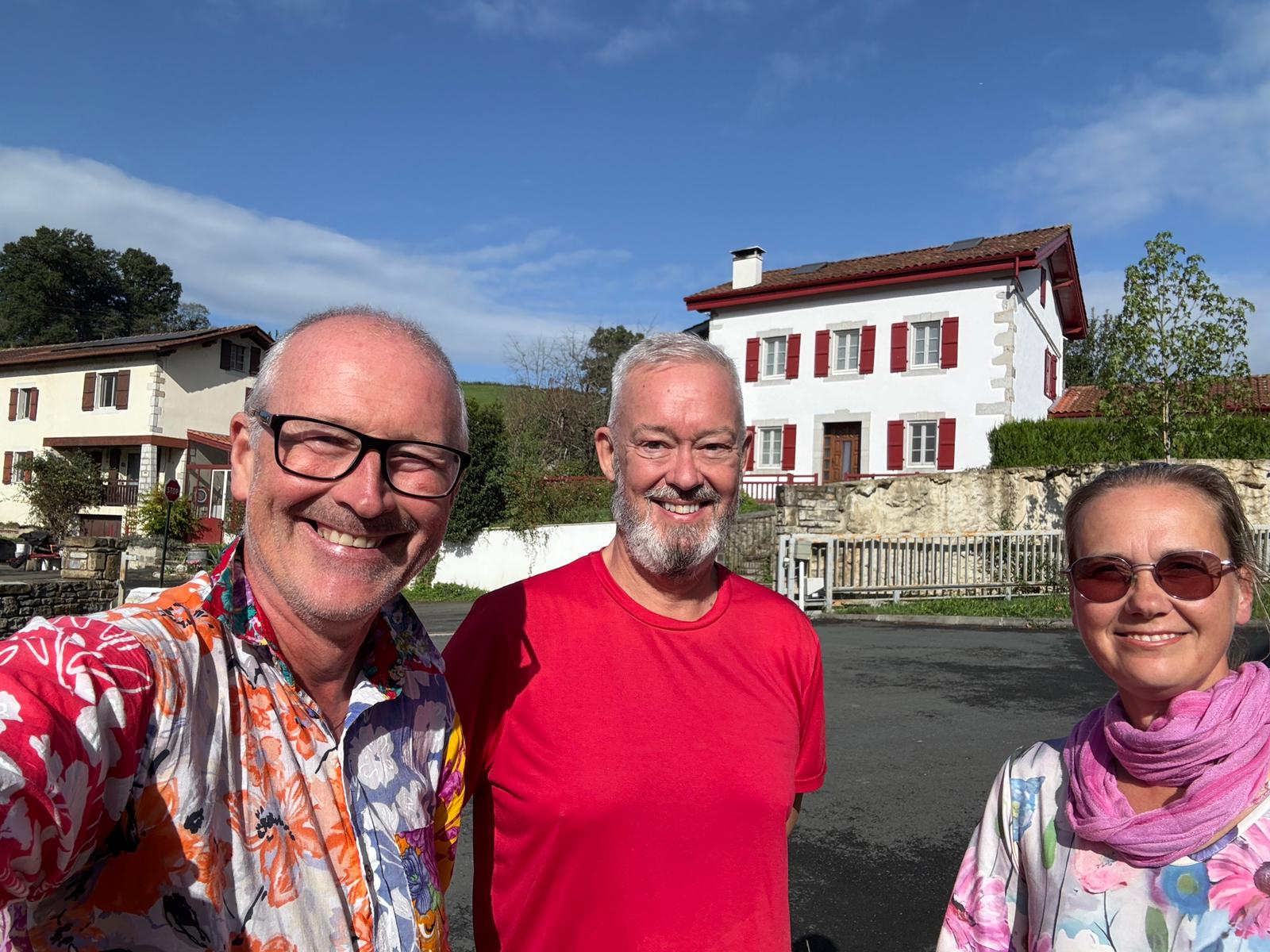
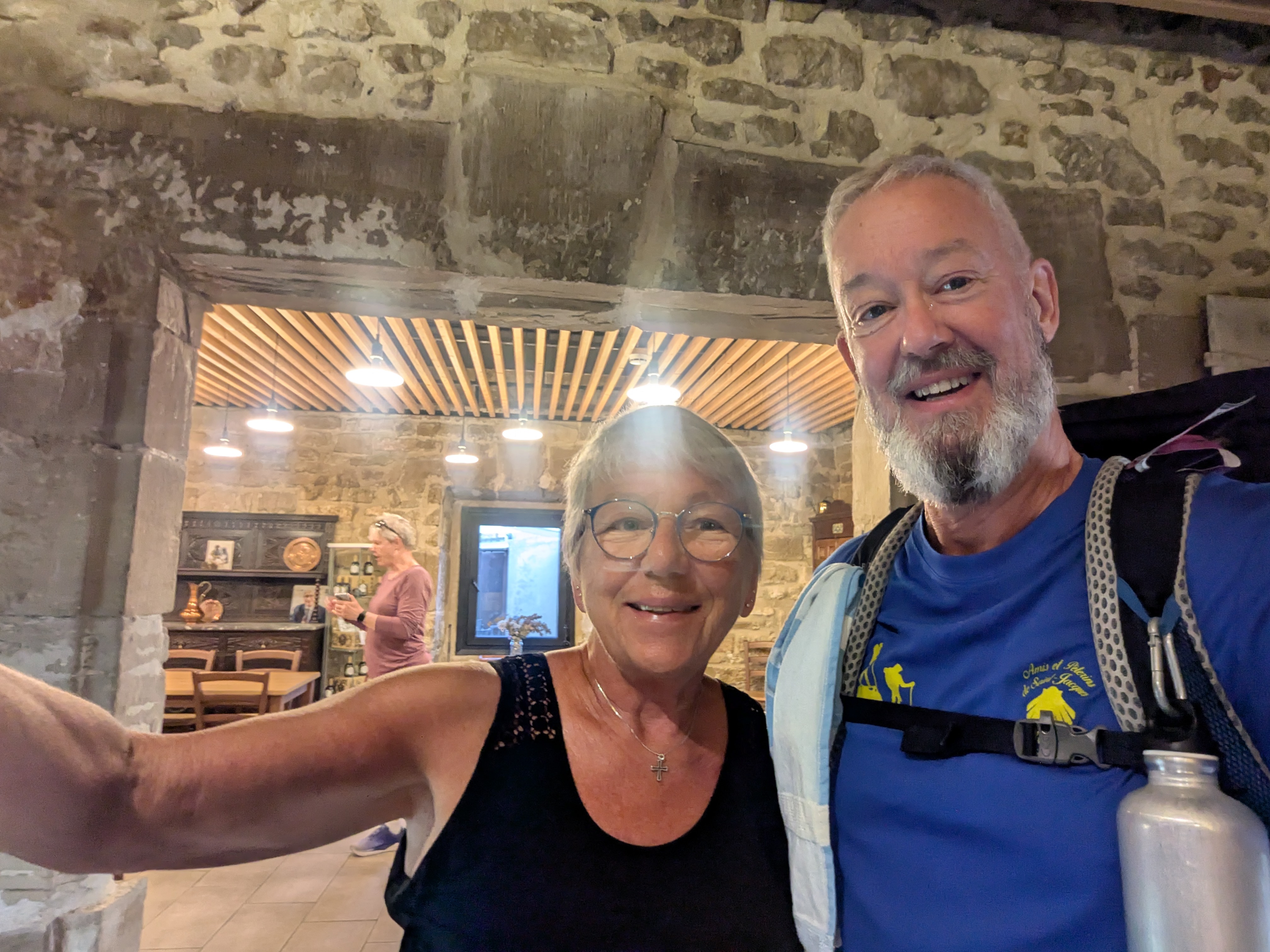
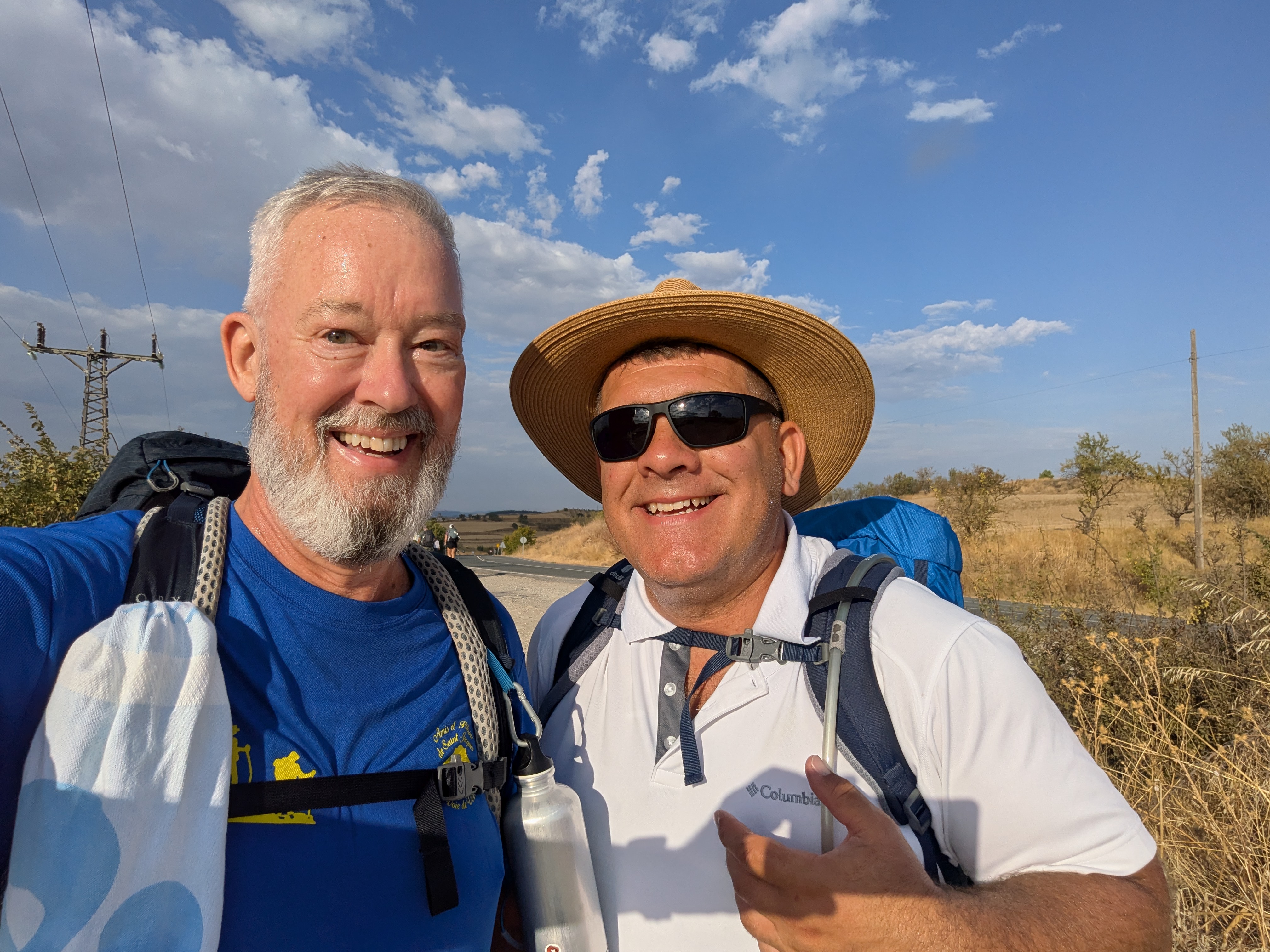
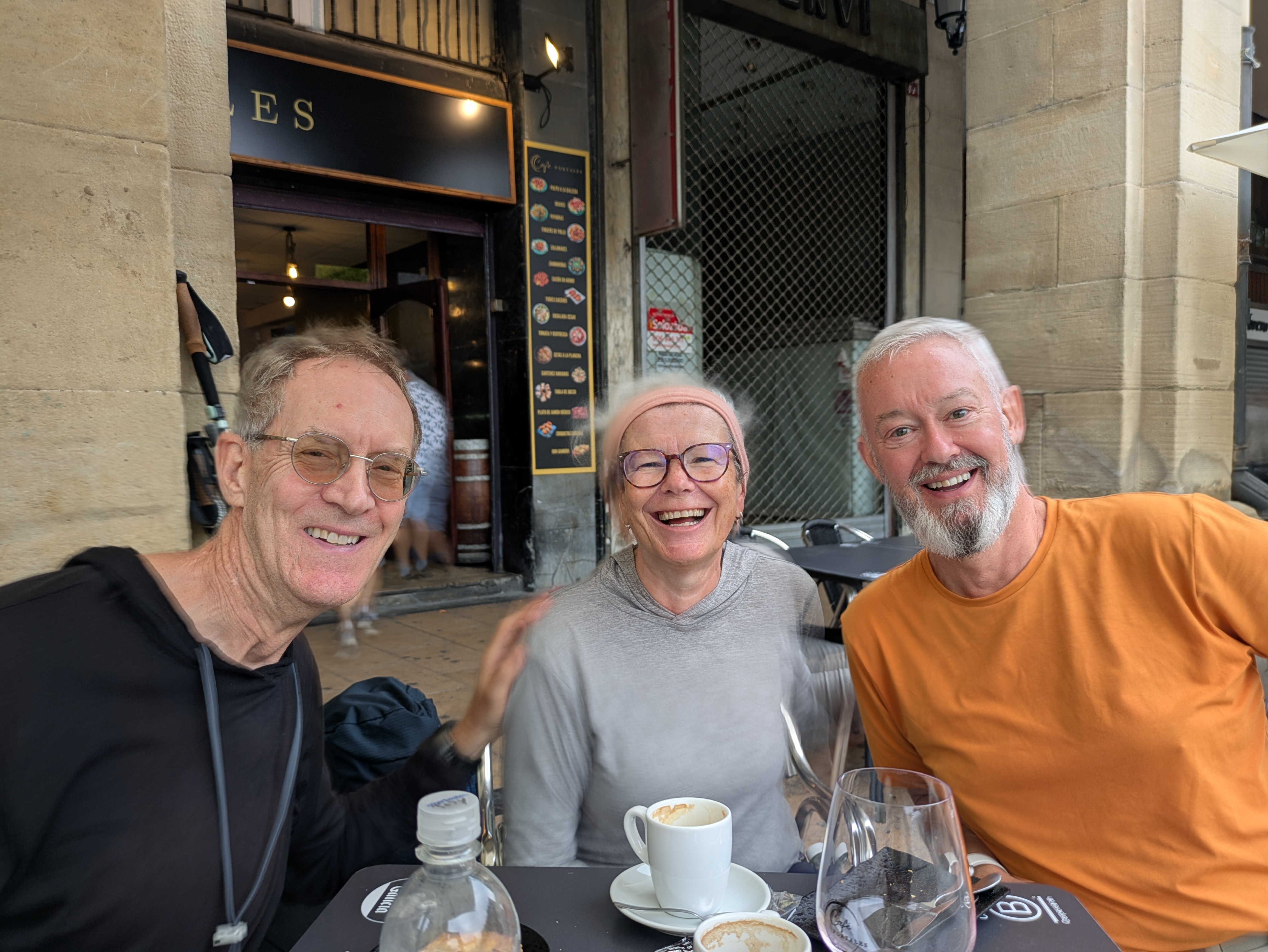
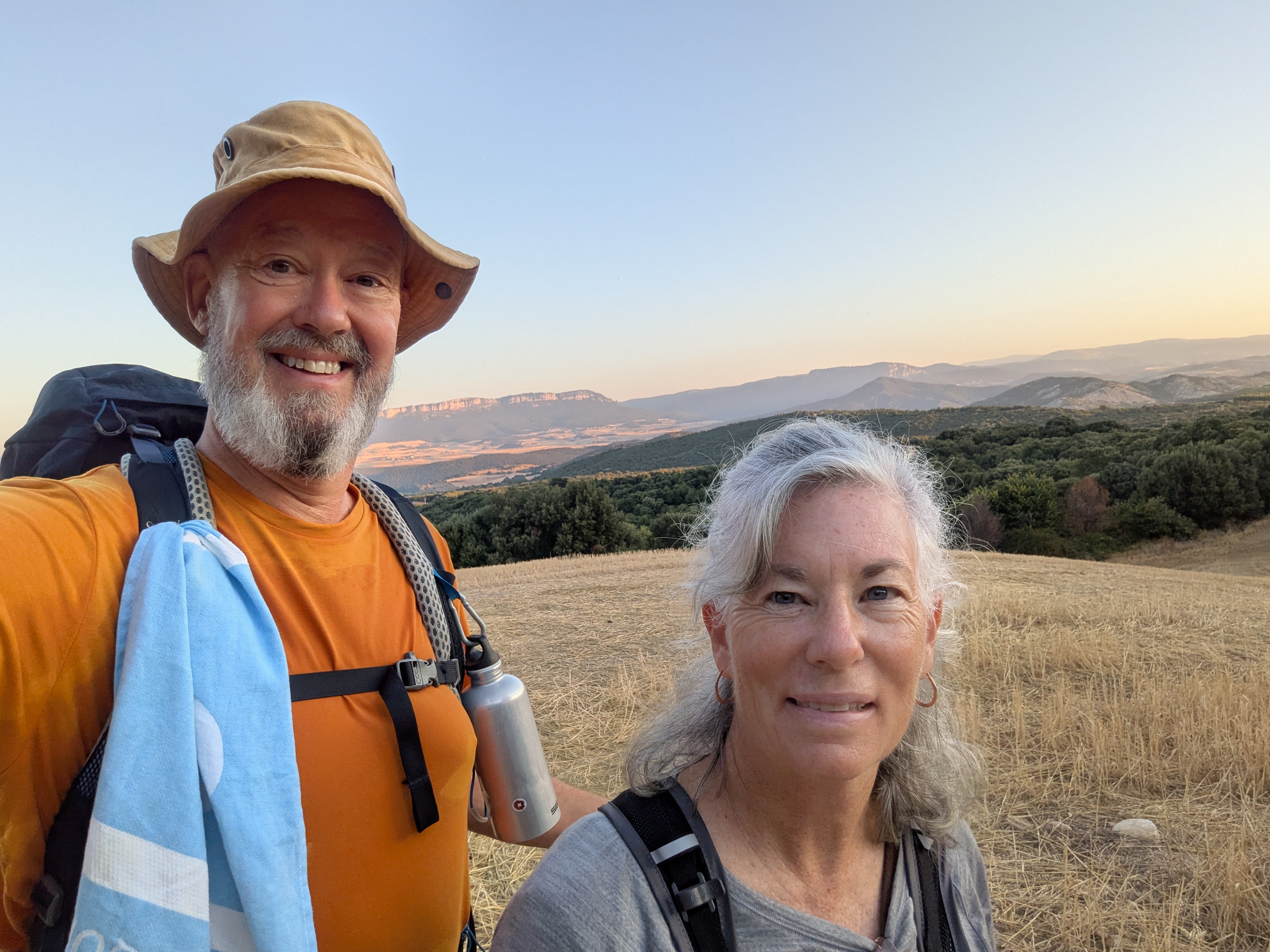
The last thing I want to say is about pastoral moments. When you meet people who are on the Camino as a pilgrimage they share their stories, and they want to know yours. And because you are all just there as yourselves, with none of the padding of life around you as an interpretative filter, and because you all come with some kind of a question, you get to the heart of things rather fast. Well, I do anyway. And in the last couple of weeks I have met people who are doing the pilgrimage because :
- They have been bereaved – particularly those who have lost children
- They have overcome life-changing illness
- They come because they are heart-broken
- They have a secret that is a burden to them
- They face ethical dilemmas and choices
- They are at a moment of life change
- Younger people who realise ten years into their career that it is not enough
- People with complicated love-lives
- People seeking God , or wanting faith.
It is all very moving, and one of the great privileges of meeting people on this journey. I think it really is an advantage for someone with a pastoral sense, as I think I have, to have a slightly complicated life story oneself. As one person said to me, before sharing their big and burdensome secret, “I thought I had a complicated life, but yours is ridiculous!” And in the sharing of stories there have been tears, and hugs, and prayers. This is why pilgrimage can really change people – some of the meetings people have as they walk, or eat and drink together in the evenings, allow encounters unlike anything that some of them have ever experienced. And from my perspective, it is a kind of giant Road to Emmaus – people walking along with ther questions and worries – and on the road we are met and changed, as they were so many centuries ago.
I will be back next spring for more adventures.
 From The Quire