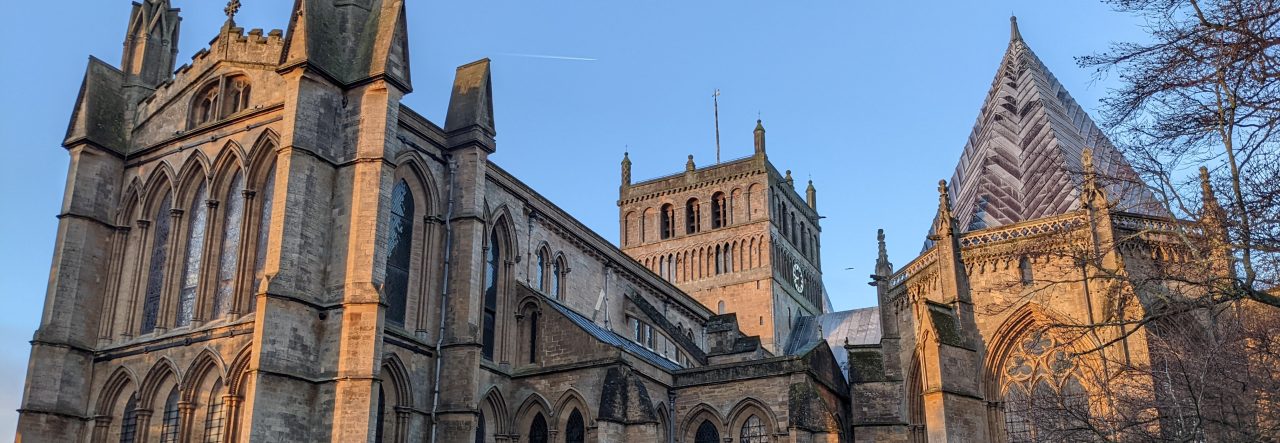
This hardly counted as a walk, to be honest. I gave myself permission to lie in, and so didn’t leave the hostel much before eight. I was joined early on by Martin, an ex-prison governor from Milton Keynes, and together we shared a pleasant flat stroll through suburbs which brought us to the hefty and ancient walls of Pamplona.
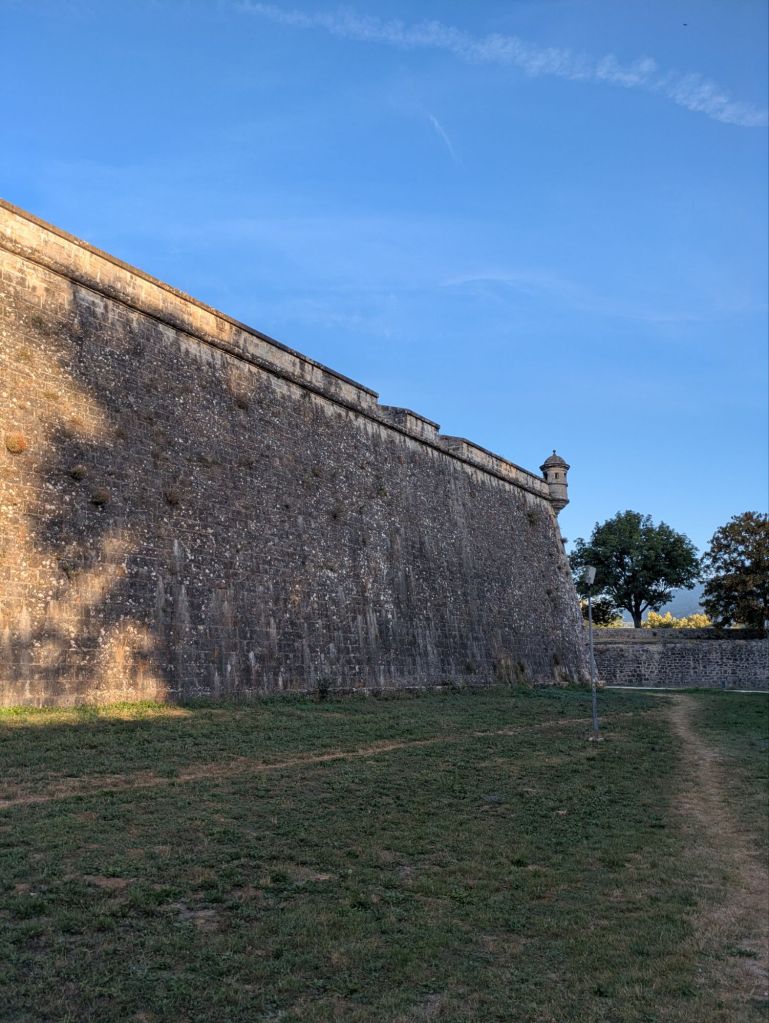
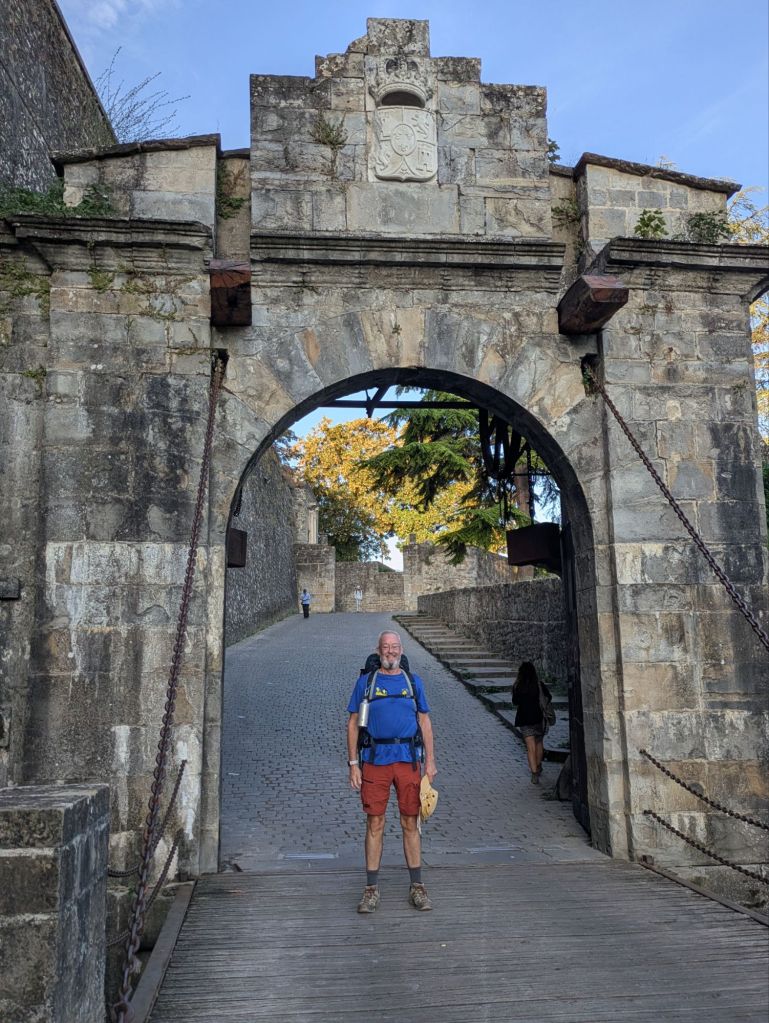
It was a great deal more impressive than I had anticipated. We made our through the until we found an open cafe where we had breakfast. Martin then departed for Puente la Reina, 20 or so kms further on.
The hostel I had booked into for tonight opened at 11:30, so I thought I would look around. Normally, I have a strongly present internal compass that helps a great deal in getting a general sense of orientation and relationship in new places. Pamplona totally defeated me. I spent an hour going round and round, circling back, passing the same places several times – I was totally confused. Even when I employed Google maps to get me somewhere I found I was setting off in the wrong direction. I think this was because old Pamplona is a mass of streets of houses that are all five or six stories high, so I got none of the visual clues that sunlight should have provided – at that time it was still very low in the sky.
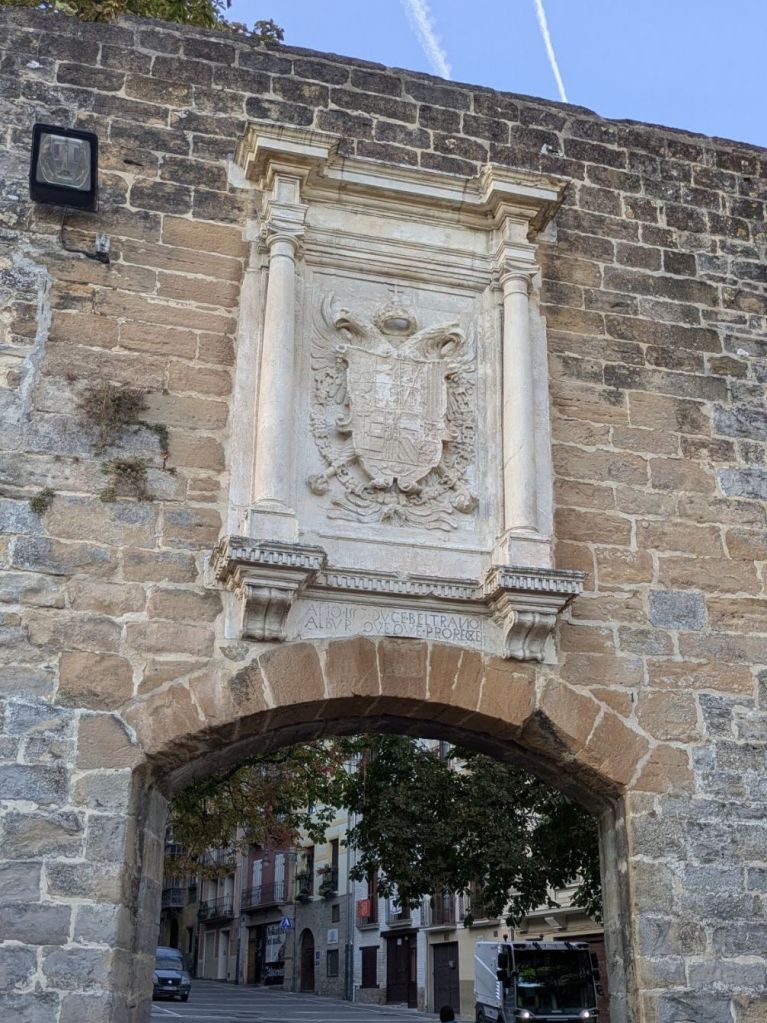
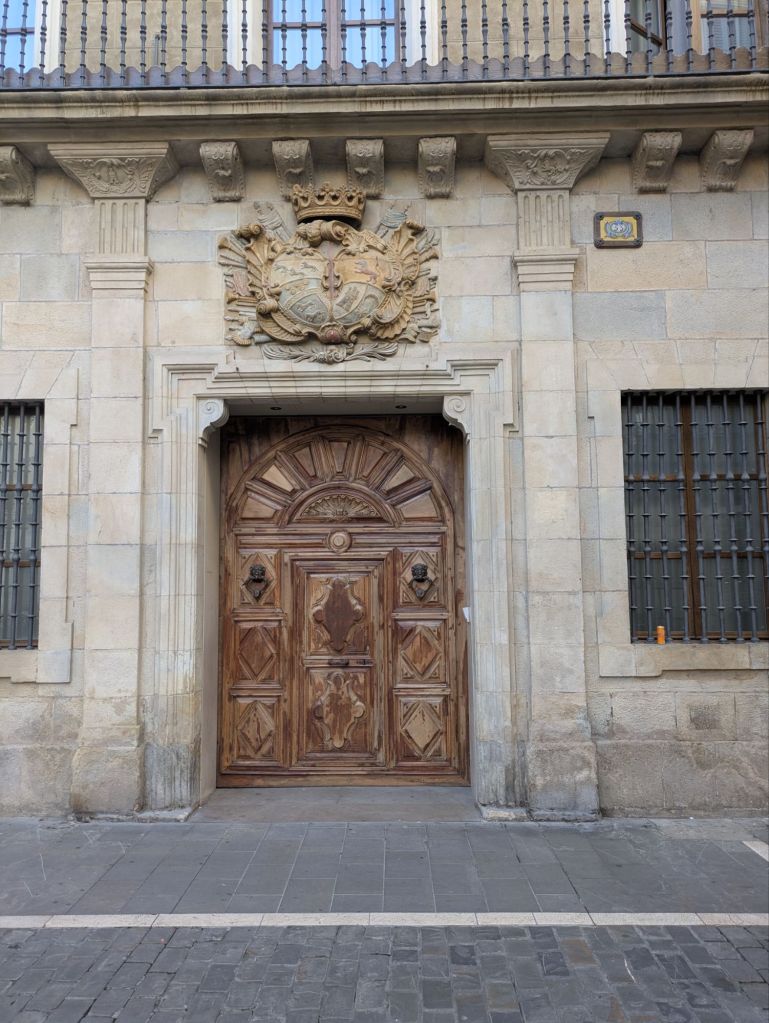
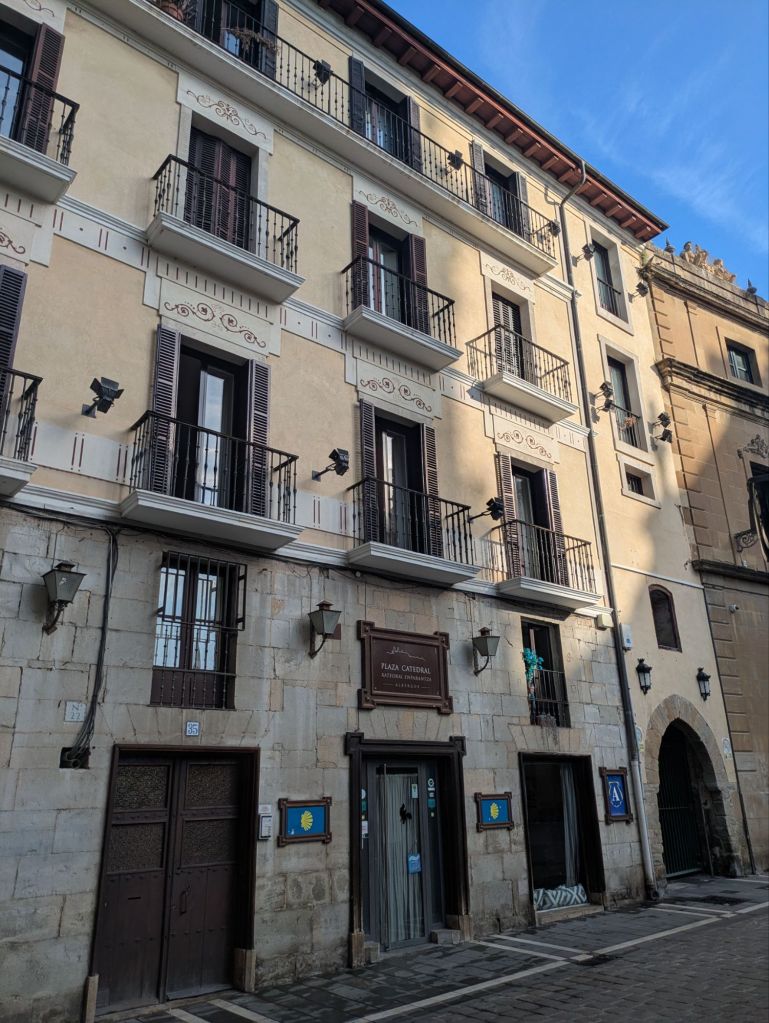
But despite this, the city was captivating. Doorways, oriel windows, old shop fronts, decorations, the portions and colours, all made up a very beautiful urban landscape, only enhanced by its irregularity.
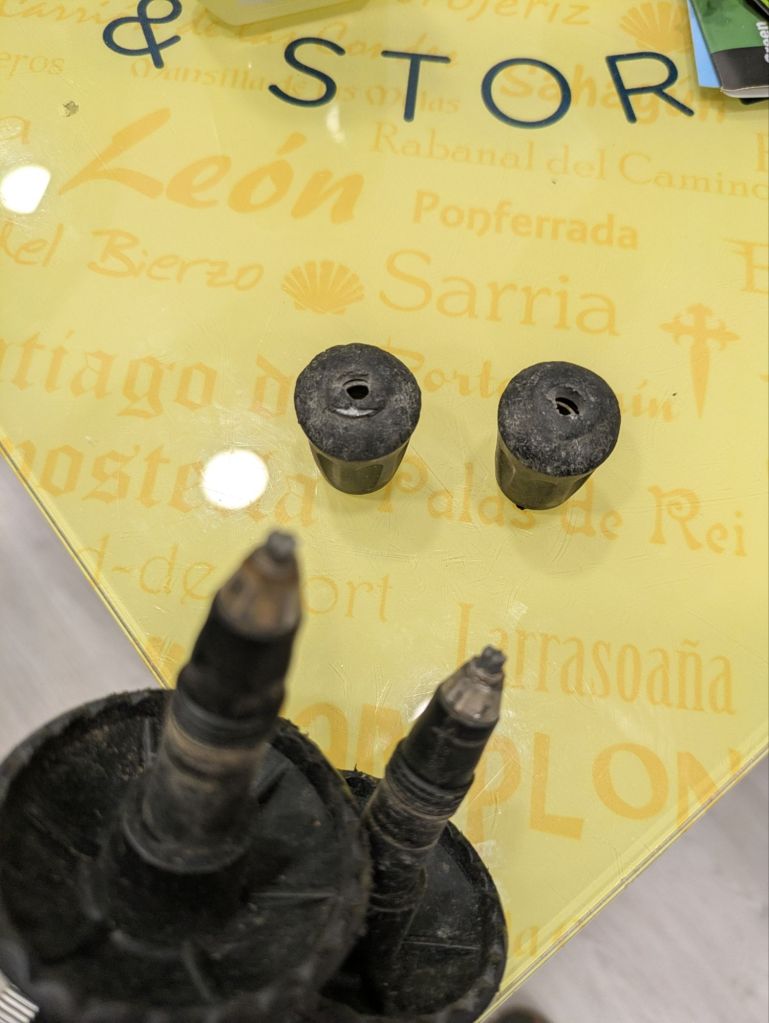
When I started work out where I was, I realised I needed to attend to one or two things. The ferrules on the end of my walking poles had completely worn through, and I needed more travel laundry liquid and toothpaste (mini sizes). Where were such things to be found in Central Pamplona? The answer was at Caminoteca, a shop with everything pilgrims could want or need (and quite a lot they definitely don’t – who would bother giving space to a fridge magnet in their backpack?)
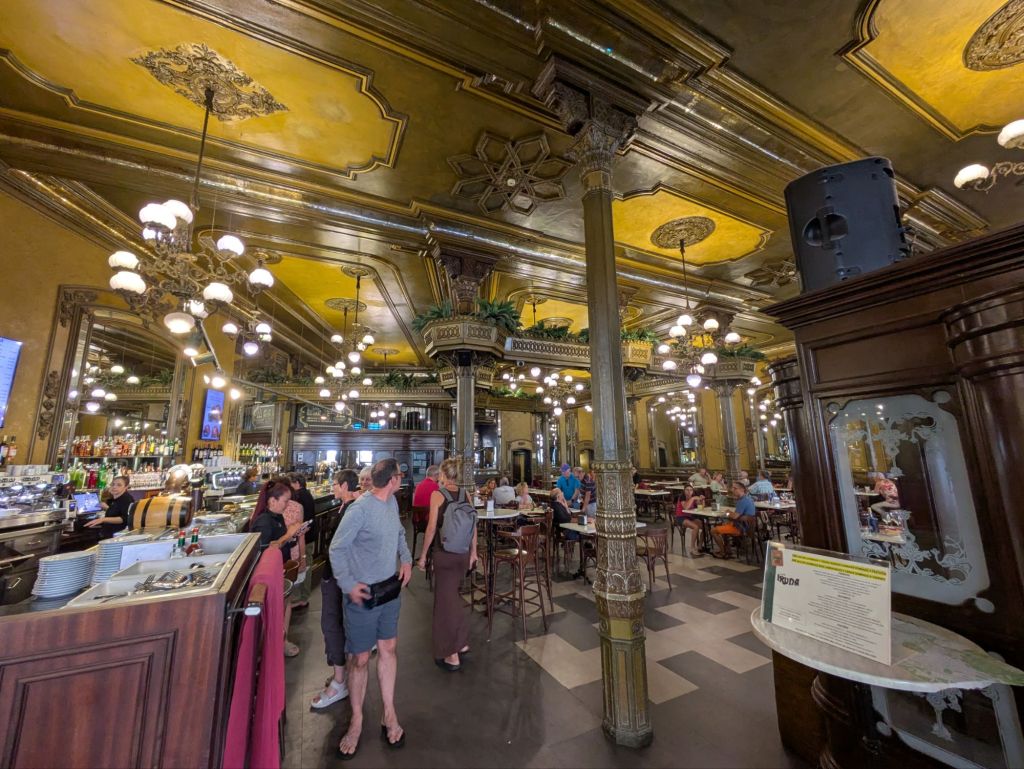
The shop also was an example of a place with a very narrow frontage – no more than a door’s width – which extended for a very long way back, and widened out (a bit) when you got inside. Even bars with quite a generous street frontage could be seen to go back for miles. Here is the glamorous interior of the Iruña bar, which proclaims itself to have been Hemingway’s nook!
Anyway, after Caminoteca, it was time to log in at the hostel. I showered, changed, gathered my washing and found a nearby launderette. Then it was time for a siesta.
By 15.30 I was ready to go out again. I have now been in Spain for two days, and it requires some adjustments. I am a big Francophile, comfortable with the French language, and an admirer of French history and culture. So walking through France was a special gift for me.
Spain is almost unknown territory. I am a beginner with the language (which doesn’t bother me, I love learning to get to grips with the sounds and shapes of a new language), and fairly ignorant of Spain’s history and culture. So I am letting go of an old friend to embrace a new. My first impressions are that Spain is beautiful, and that people are more unselfconsciously friendly than the French.
But what don’t understand is why is seems rather scruffy – for example, maintenance of footpaths is disorganised; sometimes immaculate, and at others almost falling apart to the point where walking is hazardous. This especially puzzling because it is the principal Camino route, and this brings hundreds of thousands of visitors to Northern Spain and must generate a lot of income. So wouldn’t you maintain things? The same rather puzzling attitude is evident in relation to litter and graffiti. They are everywhere: why do people tolerate them?
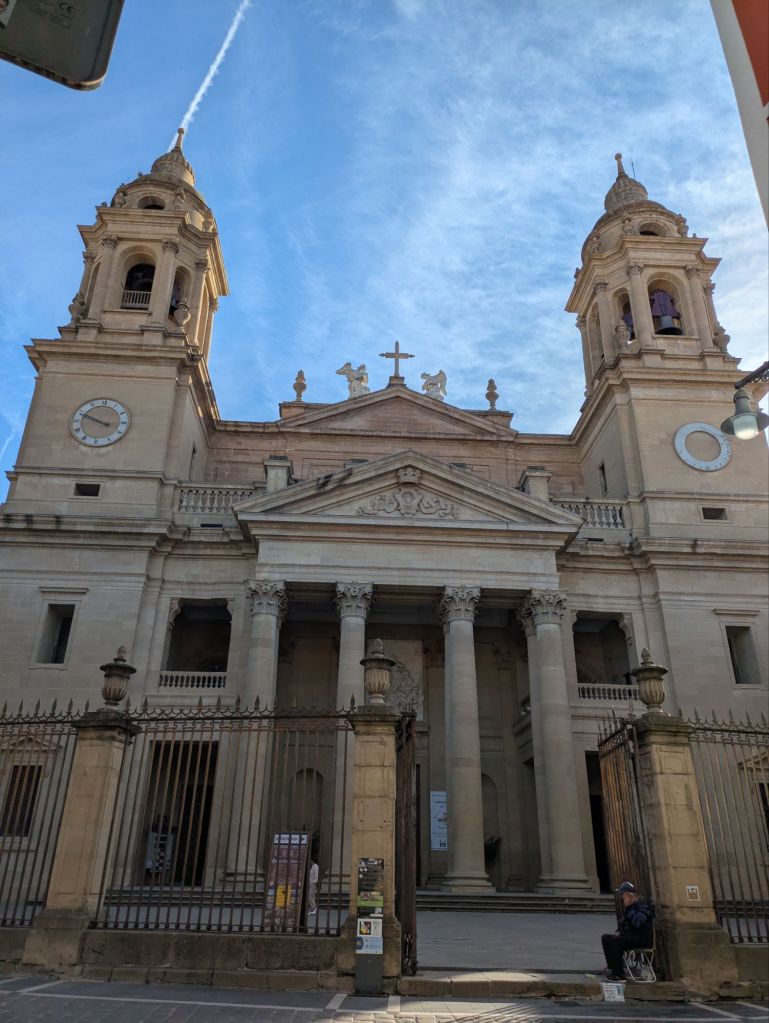
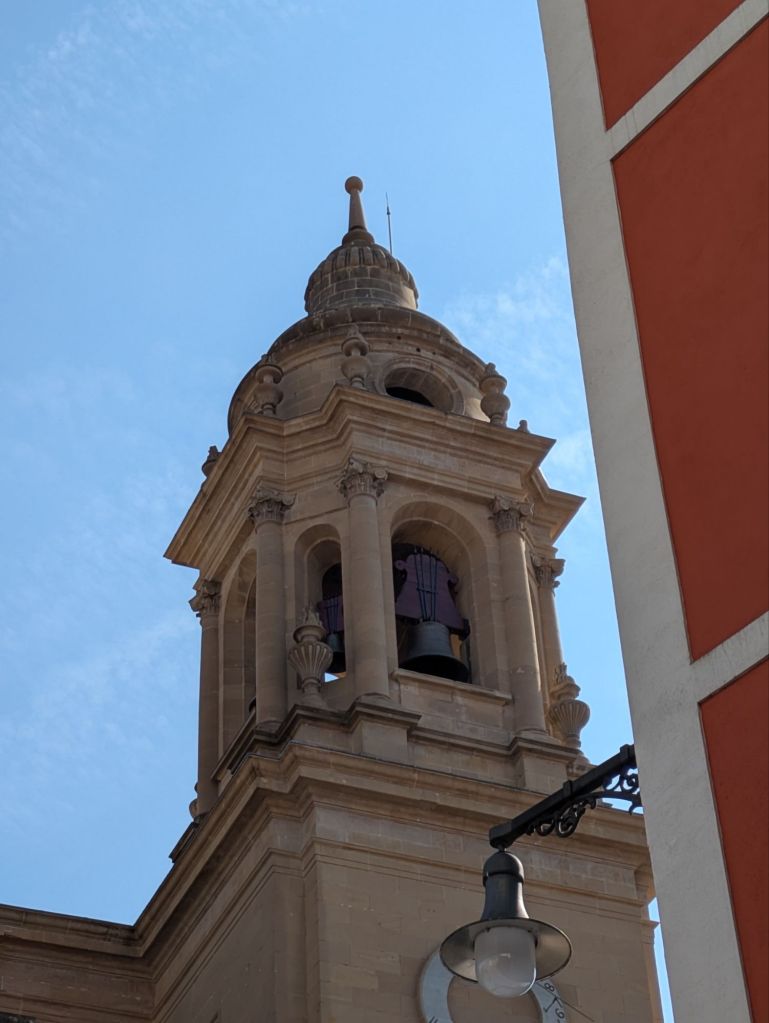
Anyway, I crossed the square from the hostel to the Cathedral, unprepared for what met me. The place was immaculately ordered, cleaned and cared for. One thing the Spanish excel at is the use of gold-leaf – I have never seen so much in one place. And while it isn’t my instinctive taste, I recognised that, created as these altar pieces were, hundreds of years ago, there was an intensity of devotion poured into their creation. This wasn’t just gold for gold’s sake.
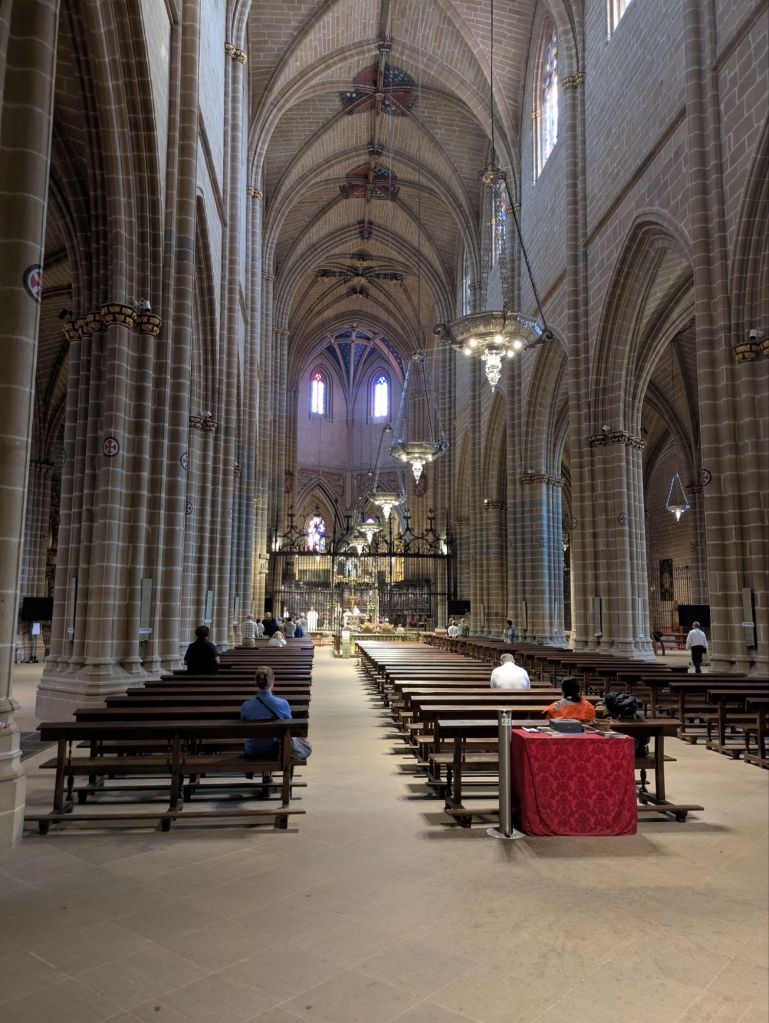
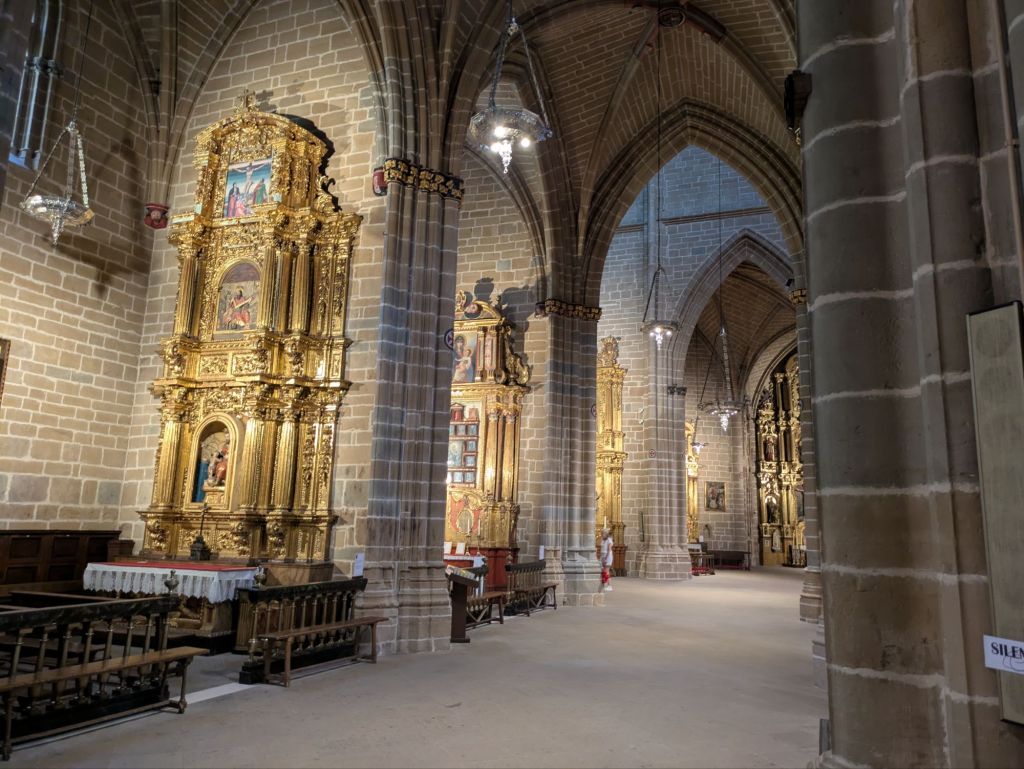
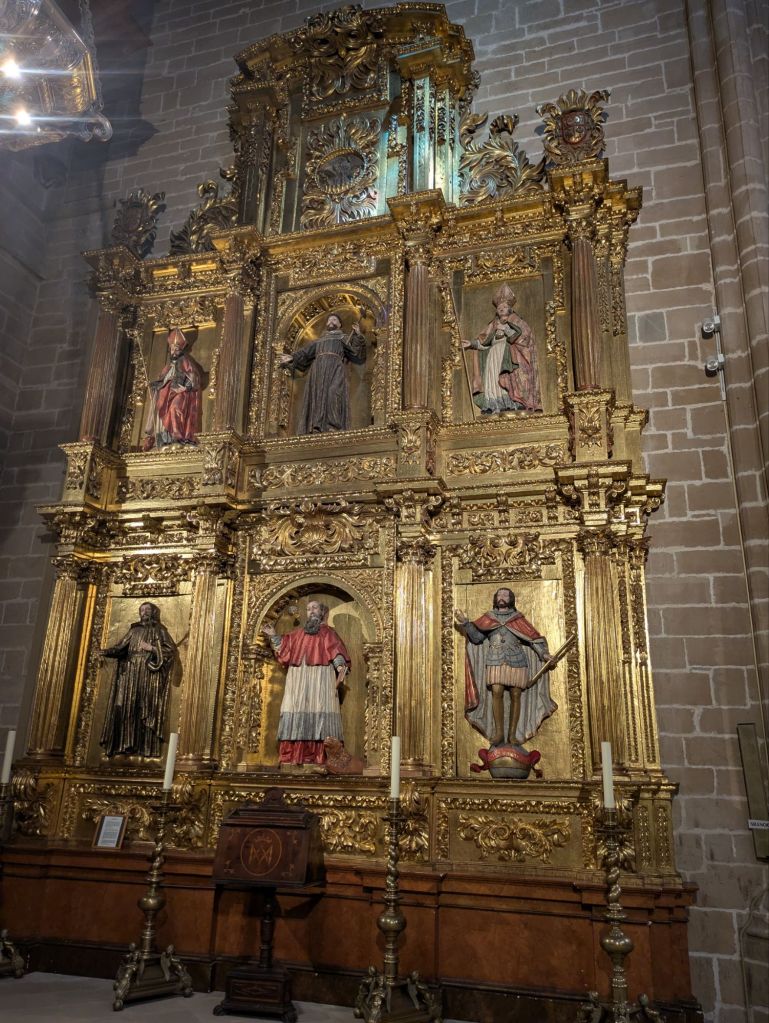
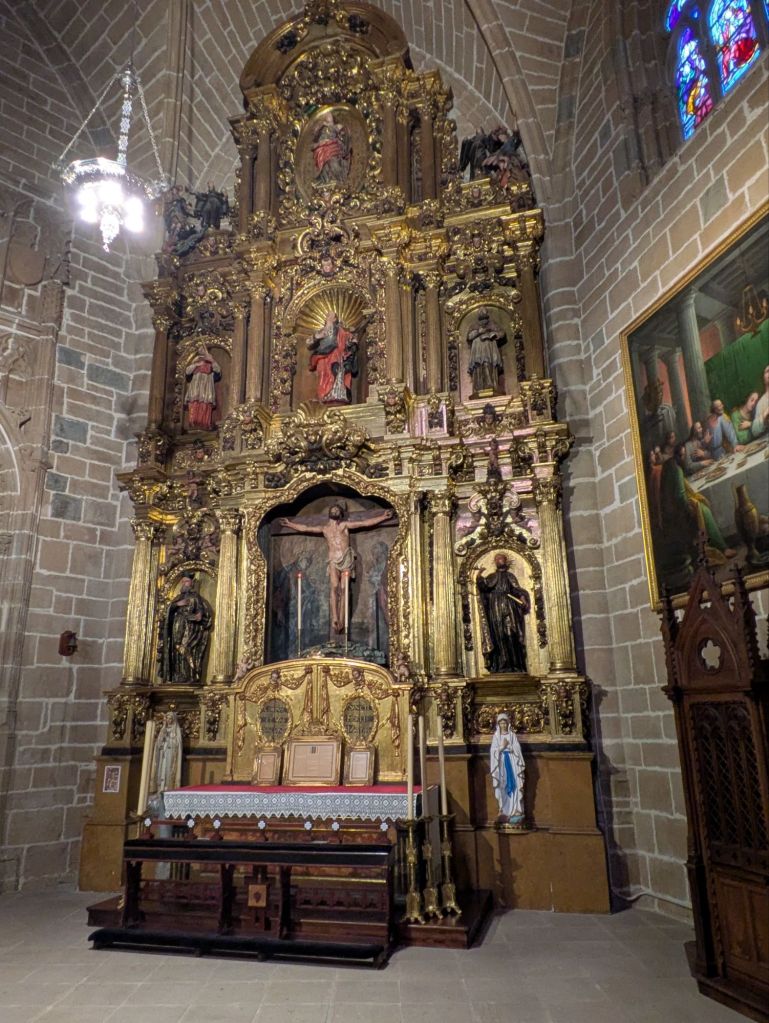
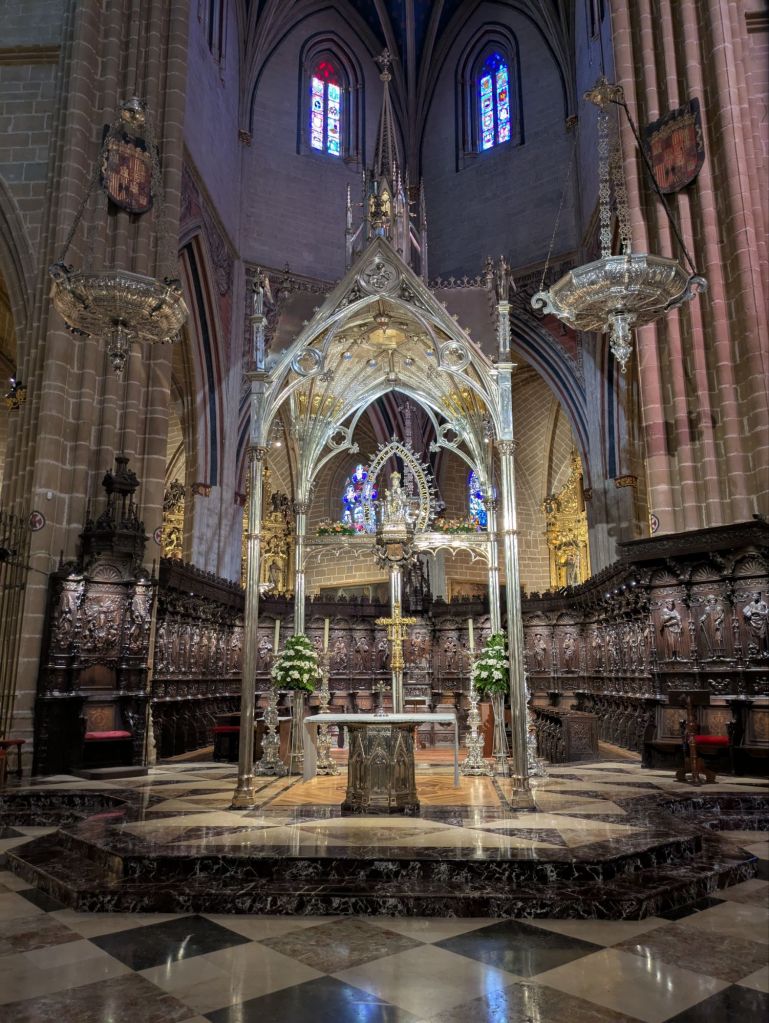
The sobriety of the stonework somehow set off the dazzling exuberance of the altarpieces. The effect was stunning. The nave also held the alabaster tomb of Charles III of Navarre and Eleanor of Castile, placed, rather like King John in Worcester, in the middle of things.
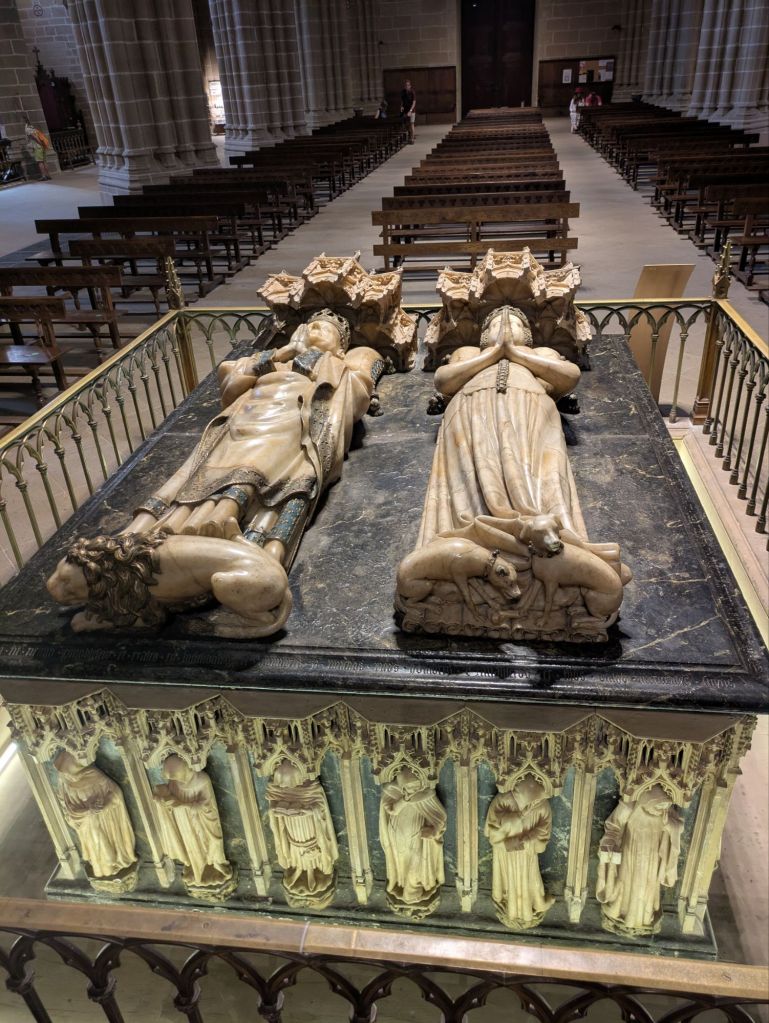
This magnificent sculpture was created in 1415-1419 by John of Tournai, a reminder of the international impact of European artists in the medieval period. Navarre wanted the best to memorialise its king and queen, and sent Flanders to get it.
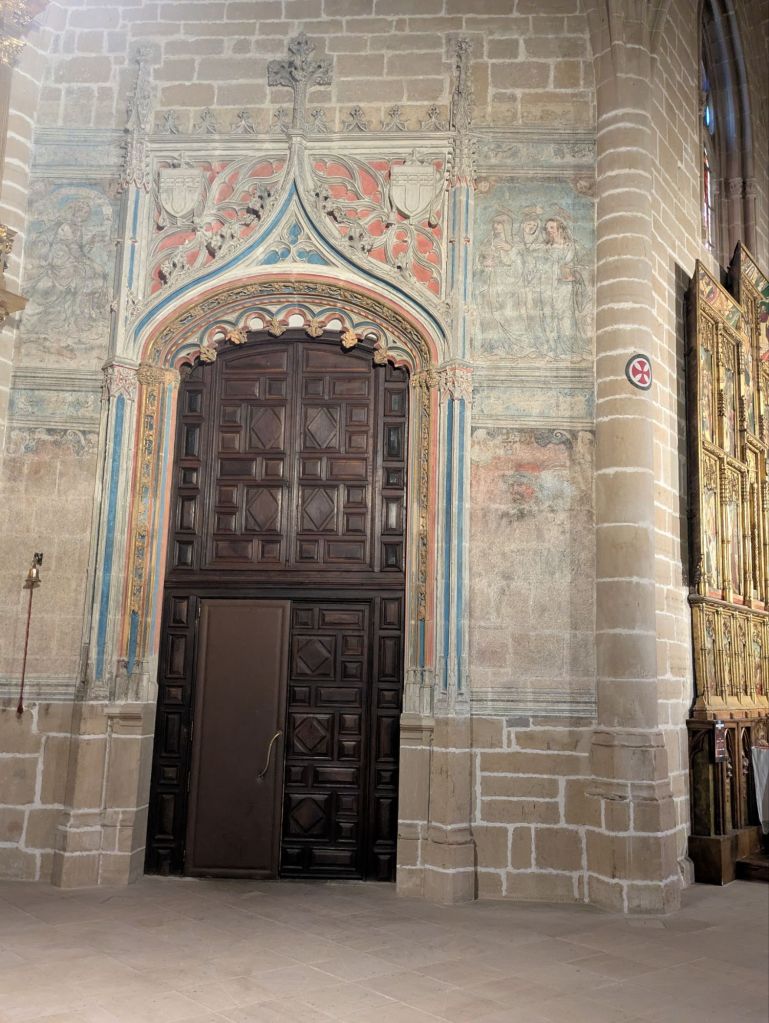
Impressive as the church was, the best was yet to come. When you think of English cloisters, they are single height constructions. Not here.

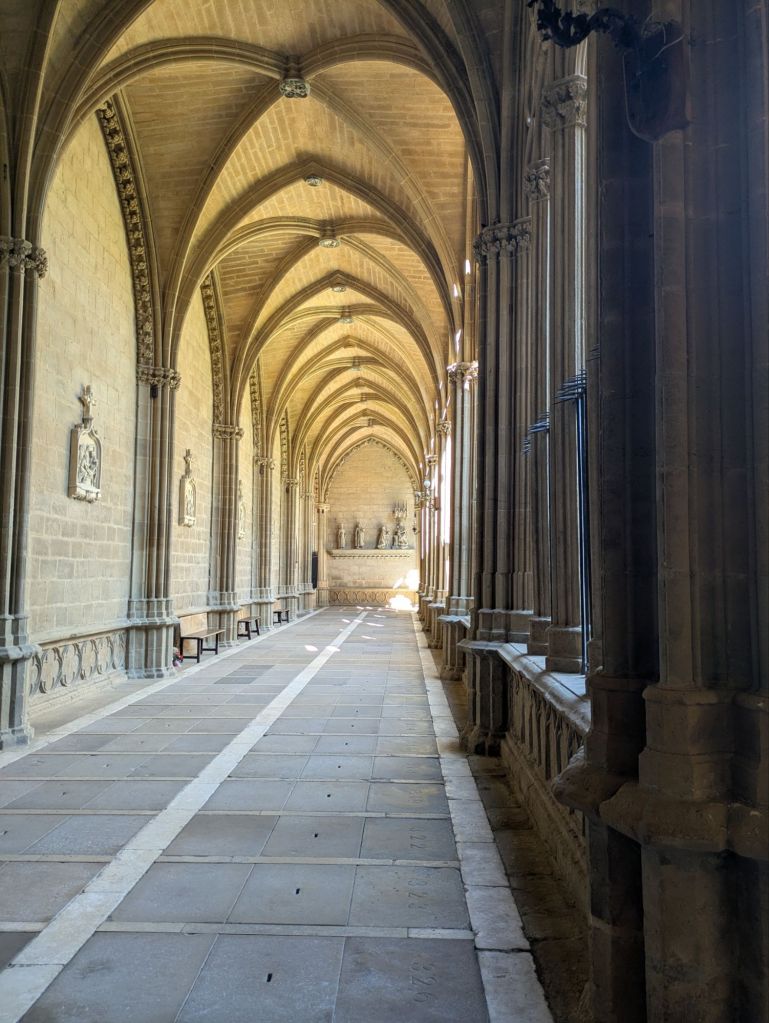
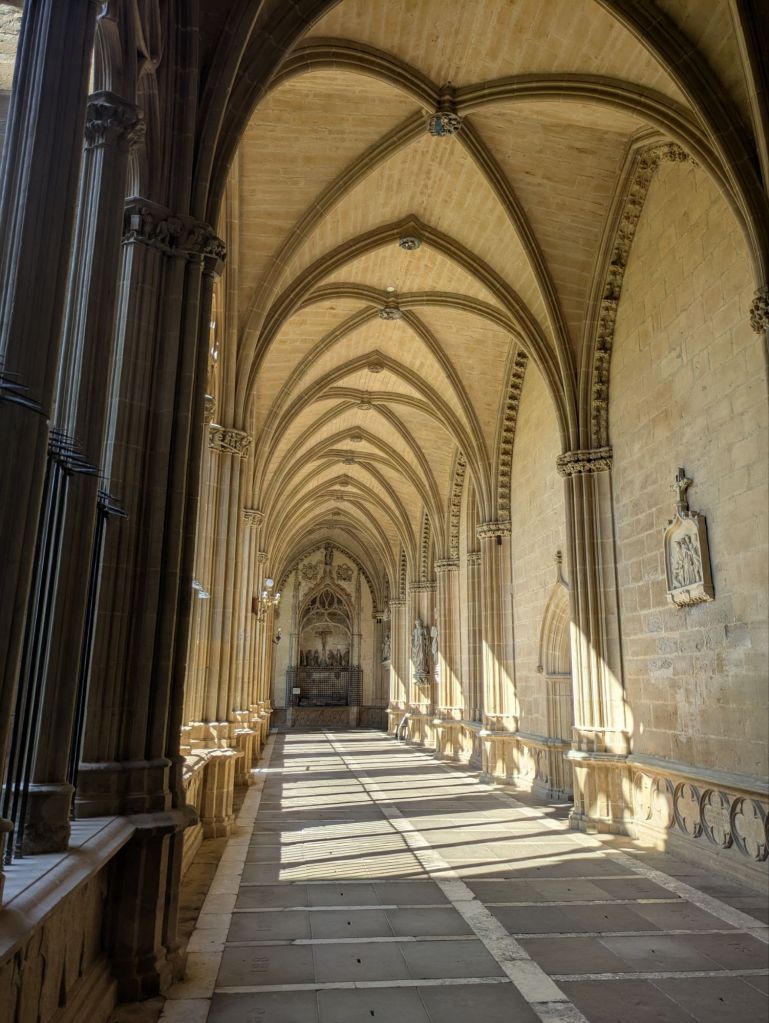
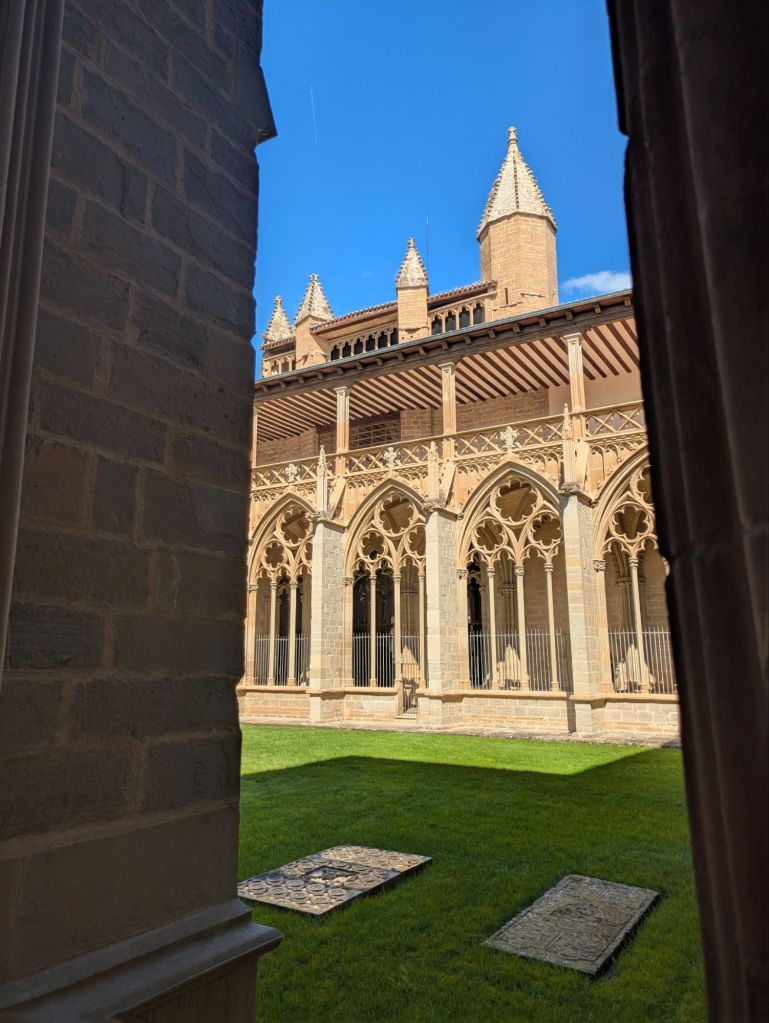
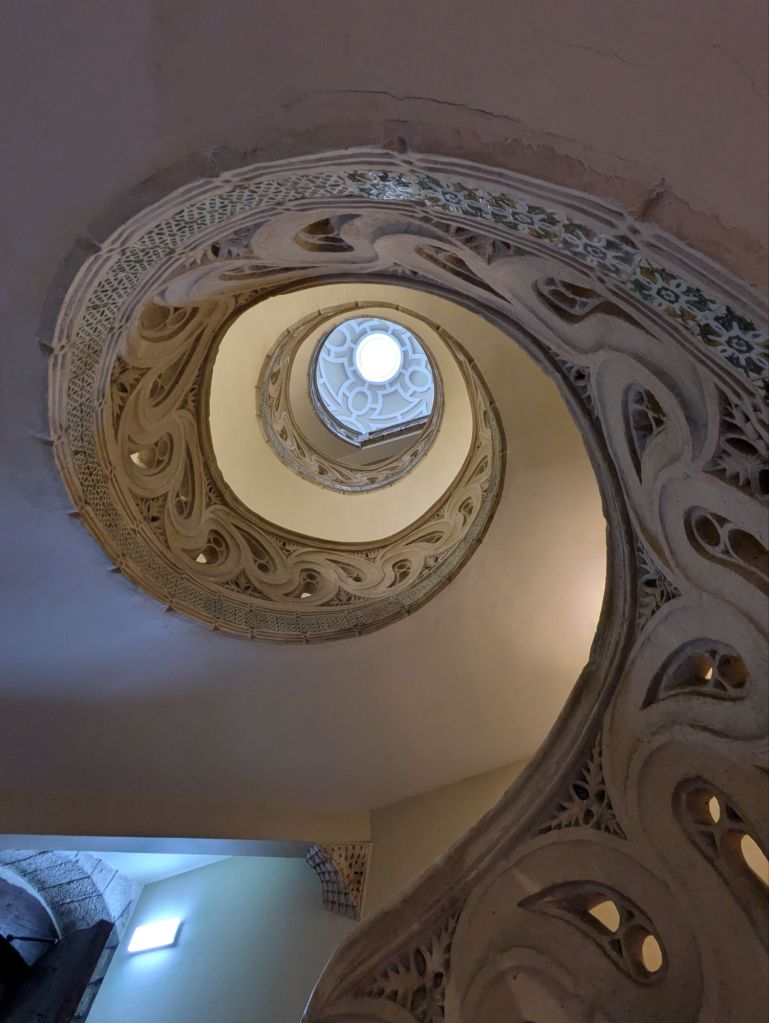
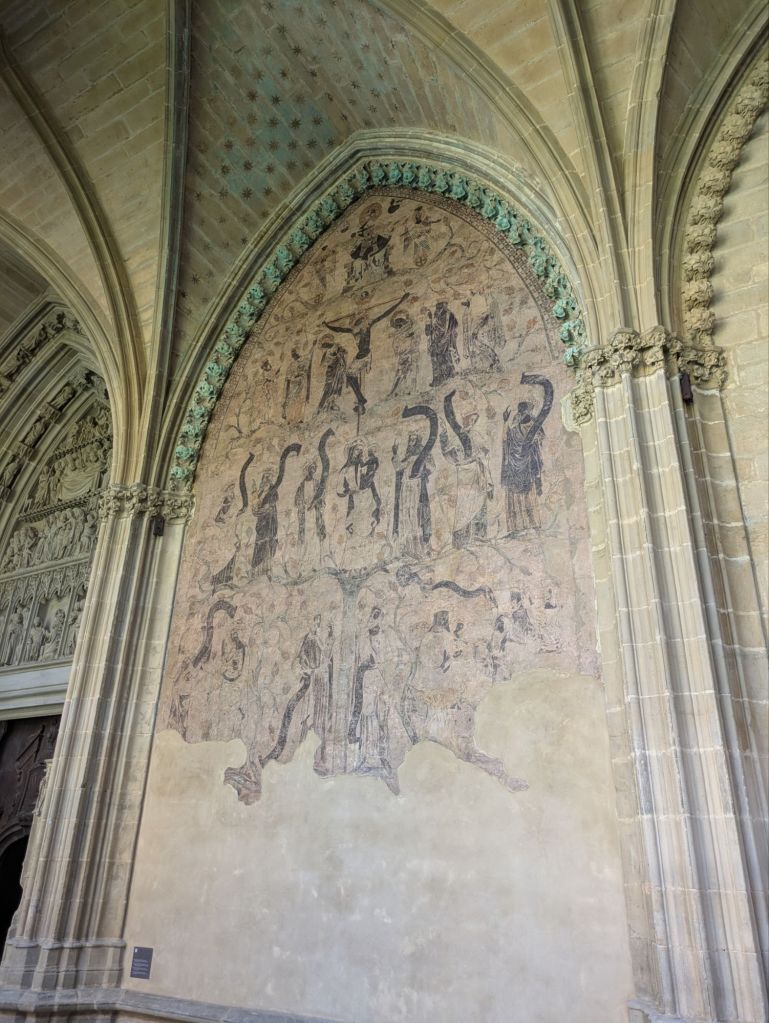
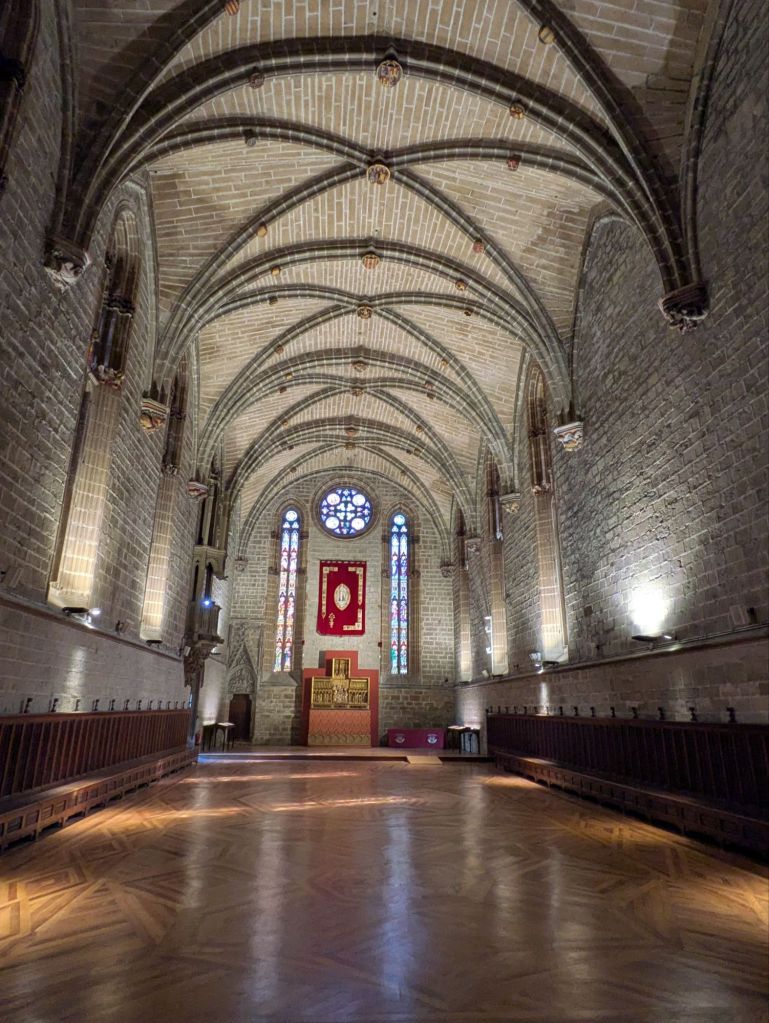
And beyond this serene, confident contemplative walkway, there is a whole other cloister which has been turned into a brilliant histrico-cultural interpretation of Pamplona and its cathedral. It is called the Diocesan museum, but don’t let that put you off, as Victoria Wood would say. Here are a few pictures:
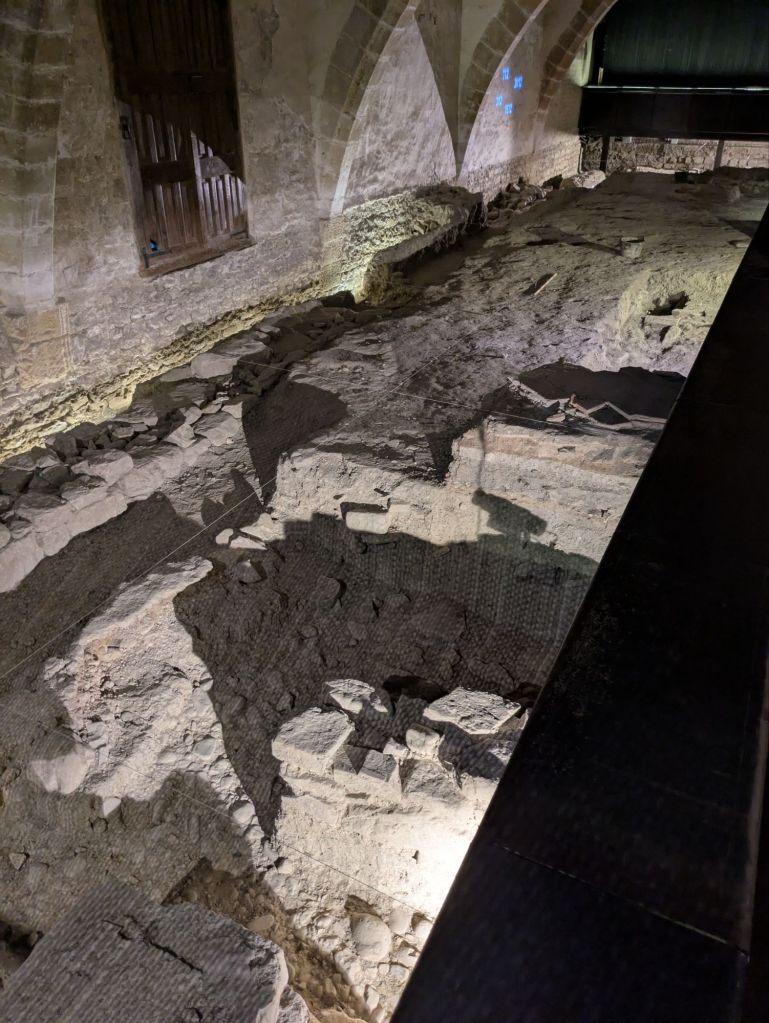
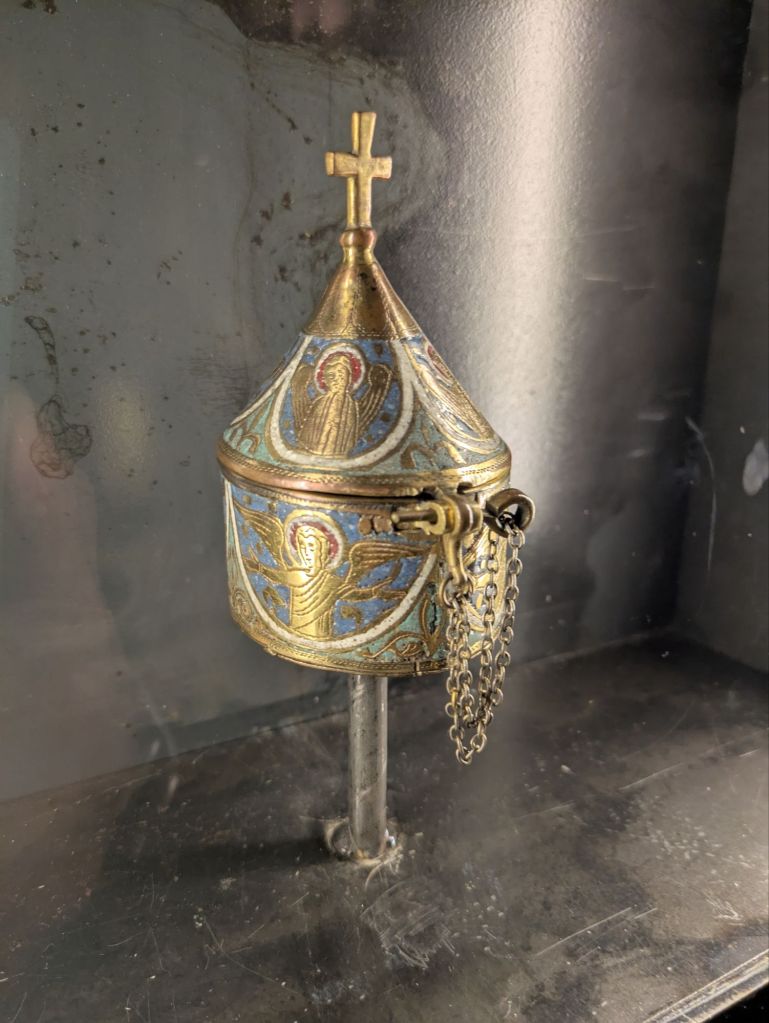
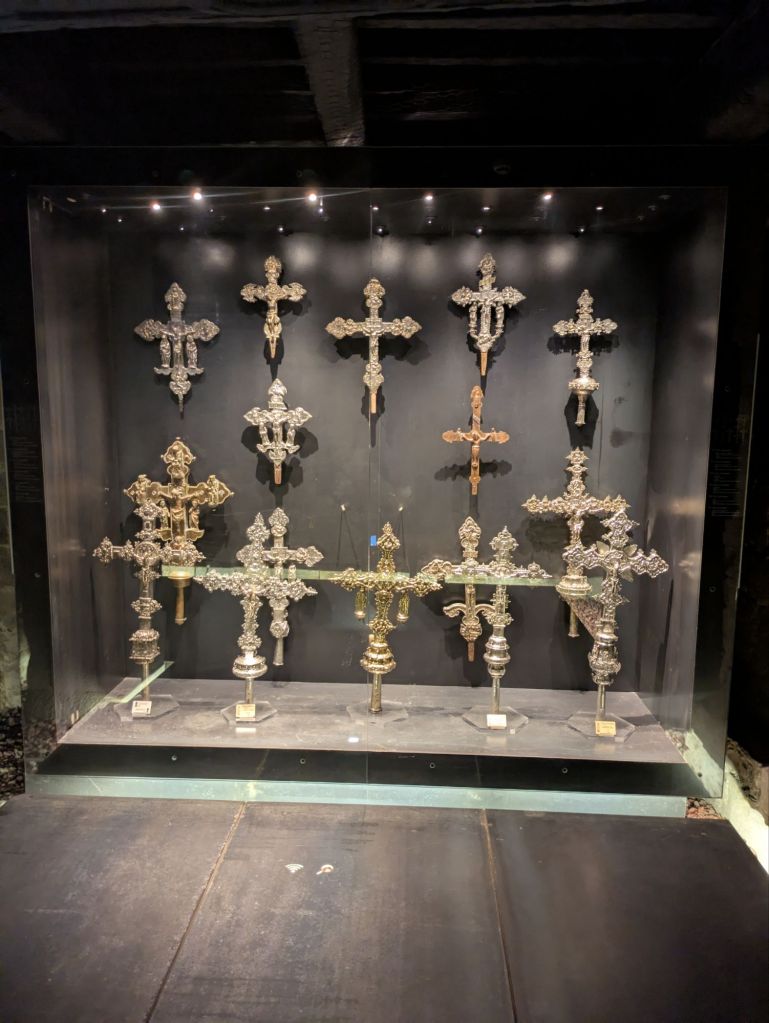
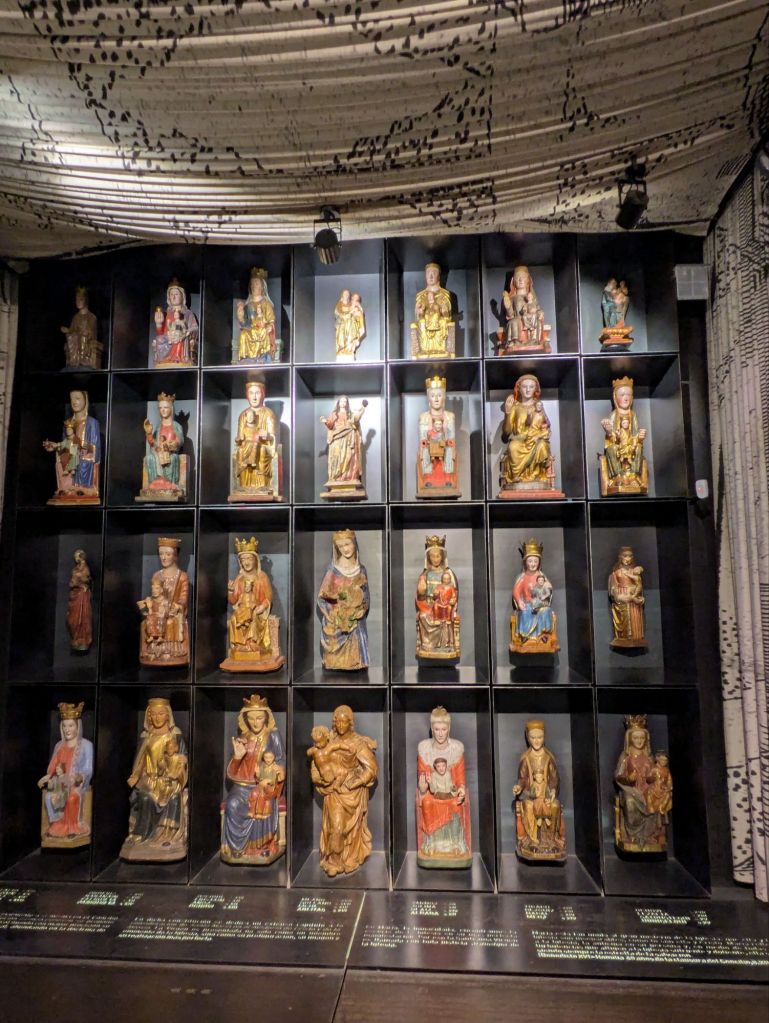
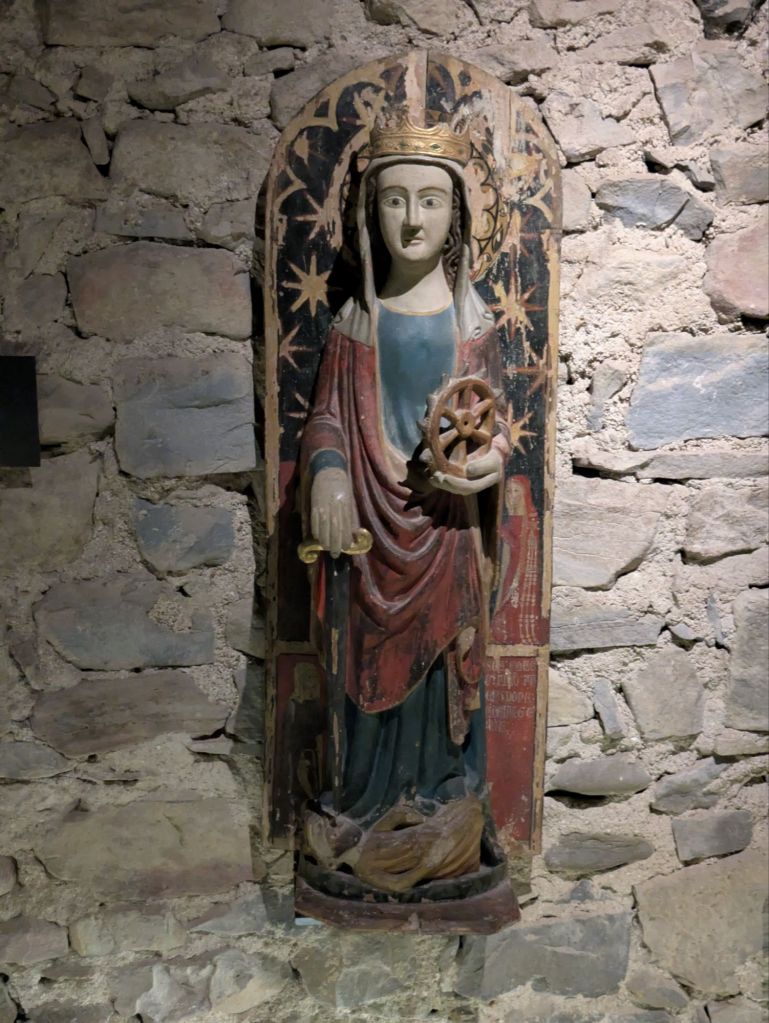
Everything in the cathedral and the museum was beautifully displayed and cared for – it was a privilege to enjoy it. Highly recommended.
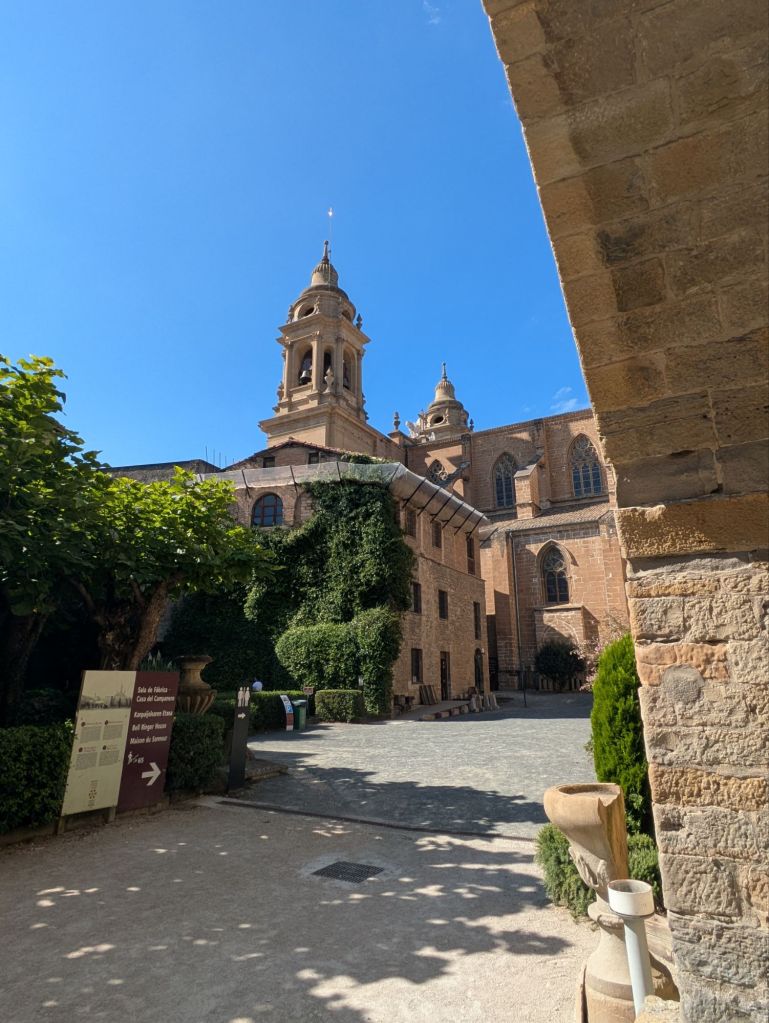
By now it was 28° – so a good time to seek shelter from the sun. I walked on the shady sides of streets and around squares for an hour or two, just enjoying the beauty of the old city.
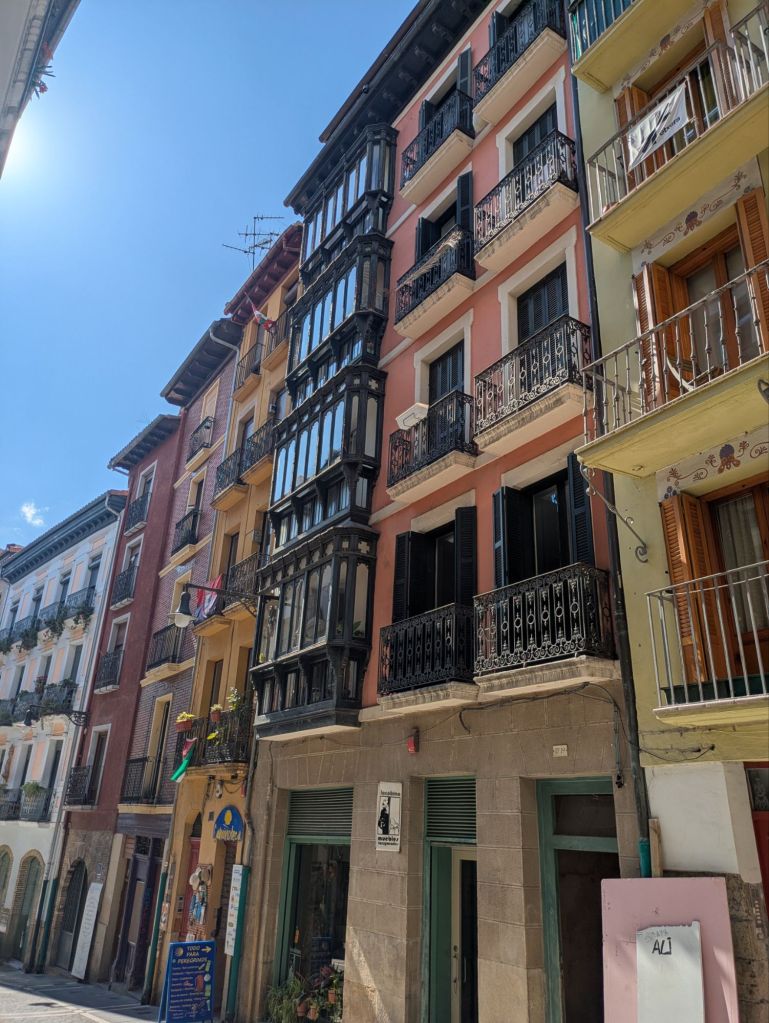
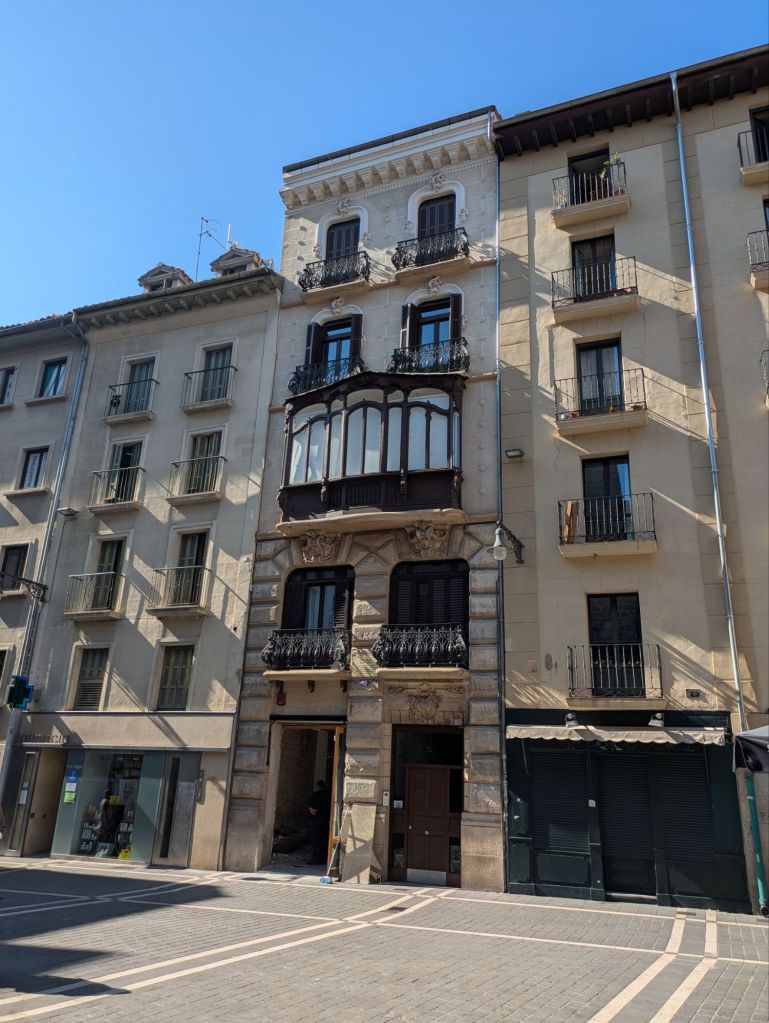
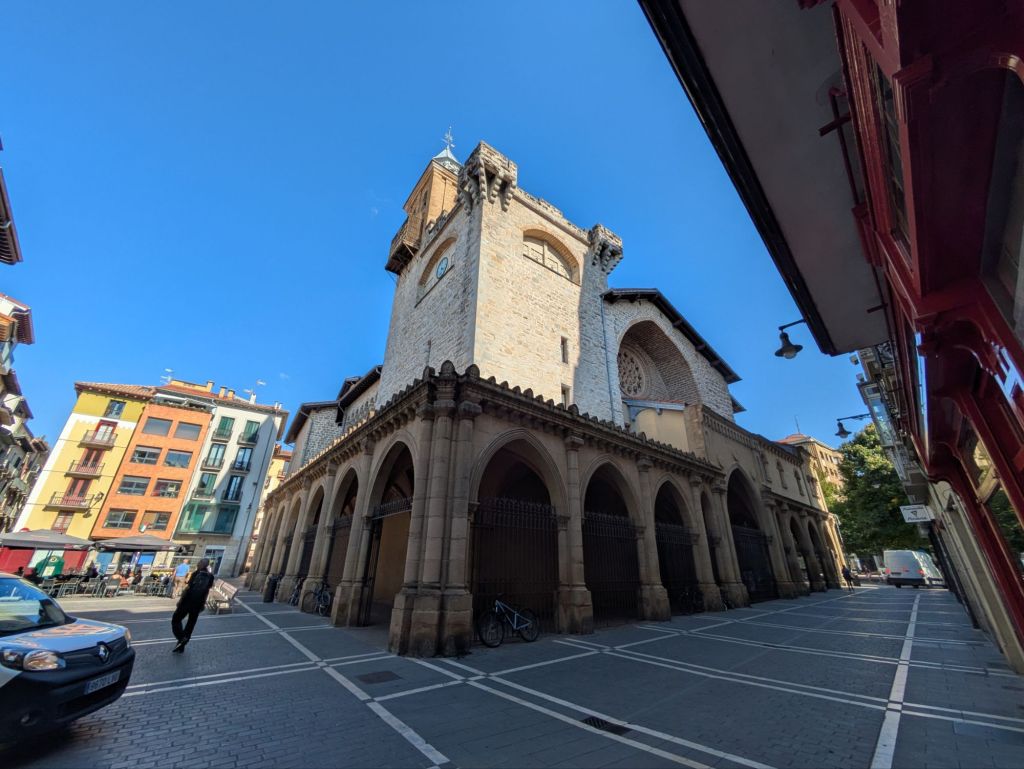

On my way round I saw various faces I recognised from the Camino. Pamplona appears to be the present end of the route for quite a few people, so it may be that the road will be less crowded from tomorrow. I had some food with a Kosovan pilgrim, G, and came back to the hostel and bed. Tomorrow, Puente la Reina. Temperatures over 30° are forecast, so lots of factor 50, and an early start, with full water bottles, is advisable.
 From The Quire