Once the walking stops, then I am keen to get home. But while I could rearrange two elements of my journey, Eurostar remained stubbornly immoveable, except at an outrageous price. Anyway, I woke silly early and could not get back to sleep, so I was first; first to be packed and ready, first at breakfast, and I left the refuge before 7am.


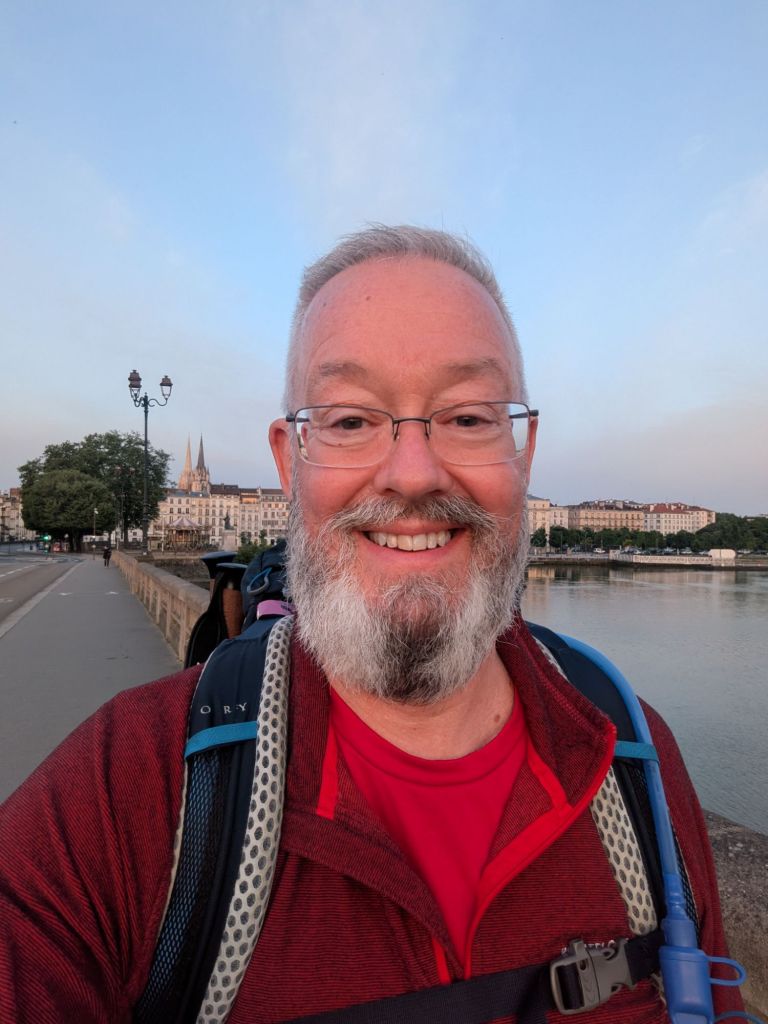
The first leg was four hours with short stops in Dax and Bordeaux. I knew I had time to fill before a late afternoon Eurostar, so I decided to have a proper lunch and then visit Notre Dame.
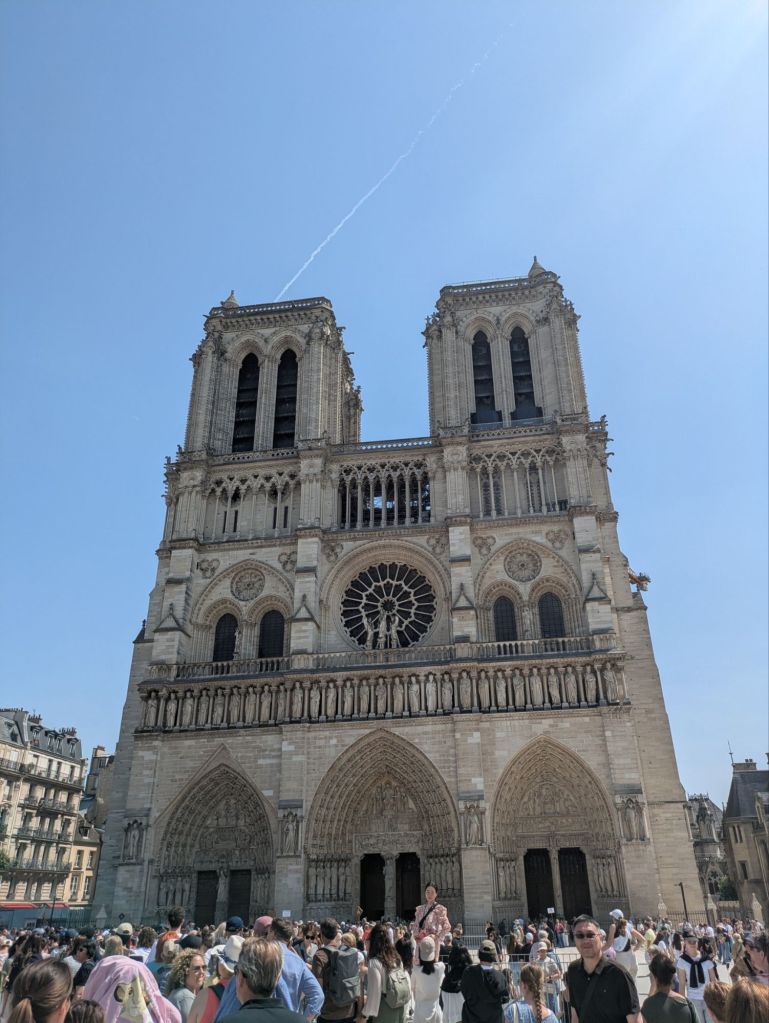
The square in front of the cathedral was packed. Queues for people who had booked tickets, even longer queues for those who hadn’t, and teeming gangs of guided groups. But a pilgrim told me I should go to the front and let them know I was walking the Camino, so I did. I was ushered straight through, and no charge was made. It was astonishing. Once inside, I was able to get my pilgrim passport stamped, and then start to look about.
The emotional impact of this cathedral’s extraordinary reconstruction and renovation was immediate. The sheer beauty reduced me to tears, and I went round gulping and sobbing. I don’t think photographs will do it justice, but perhaps they will give you an idea.

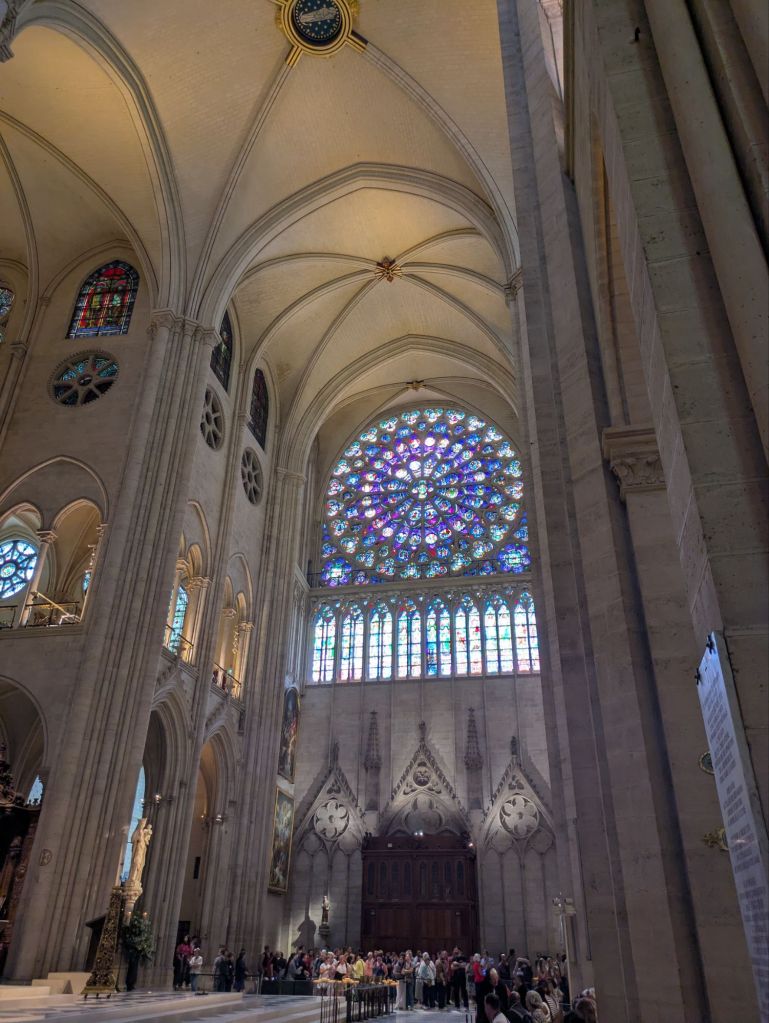
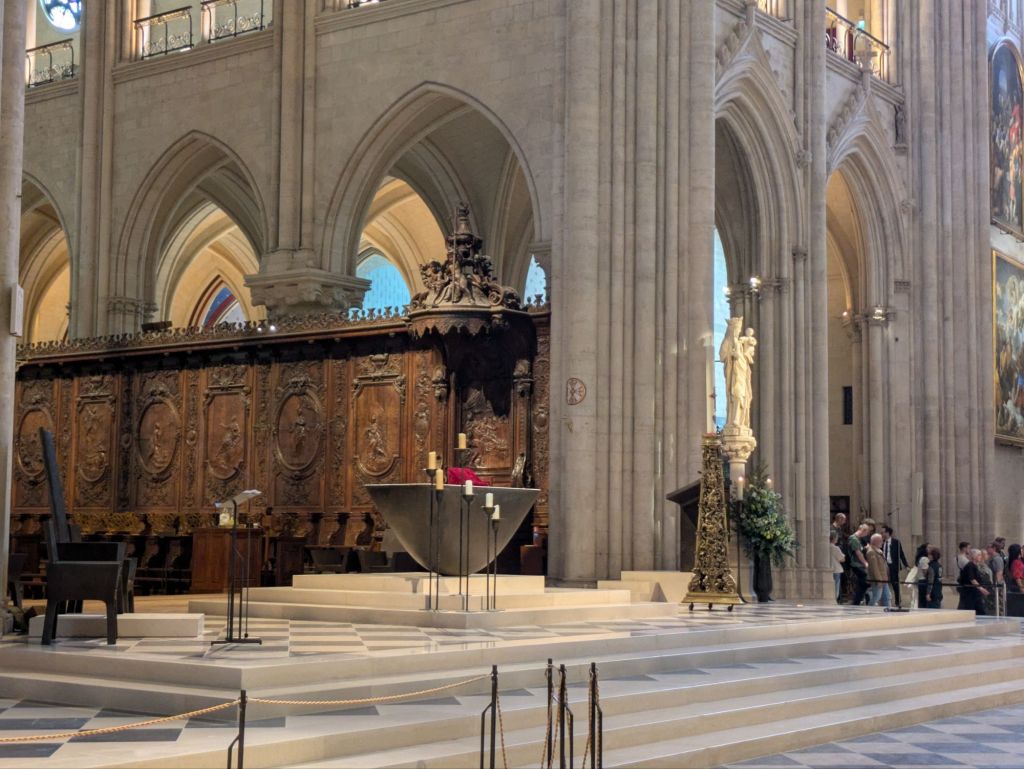
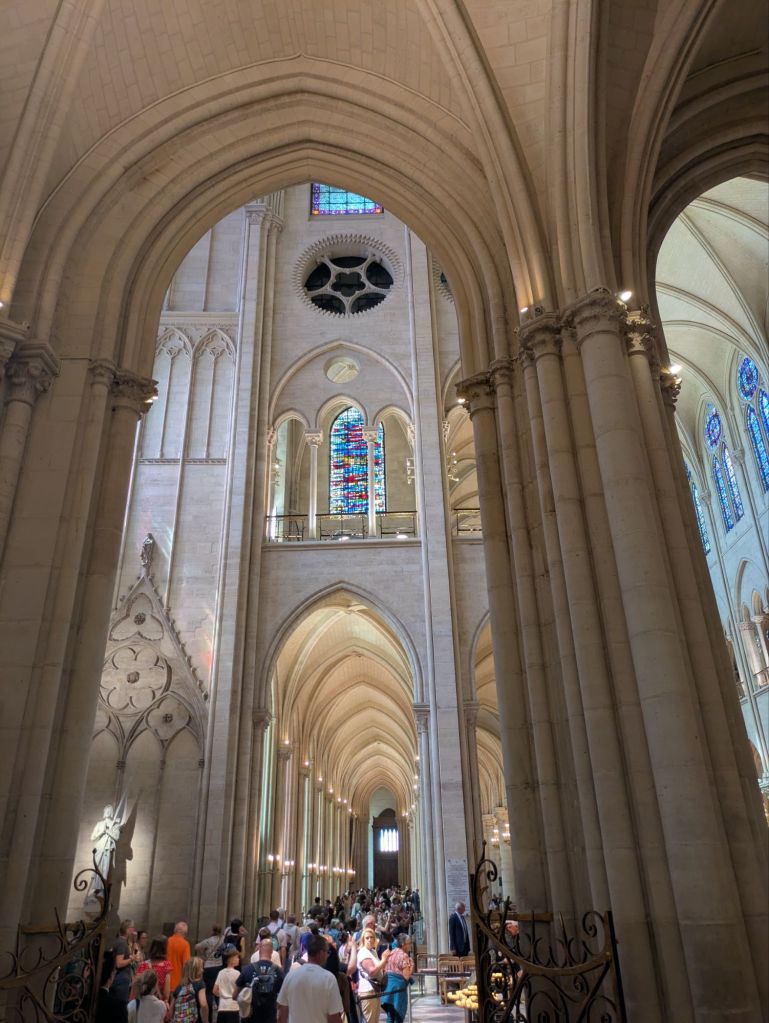

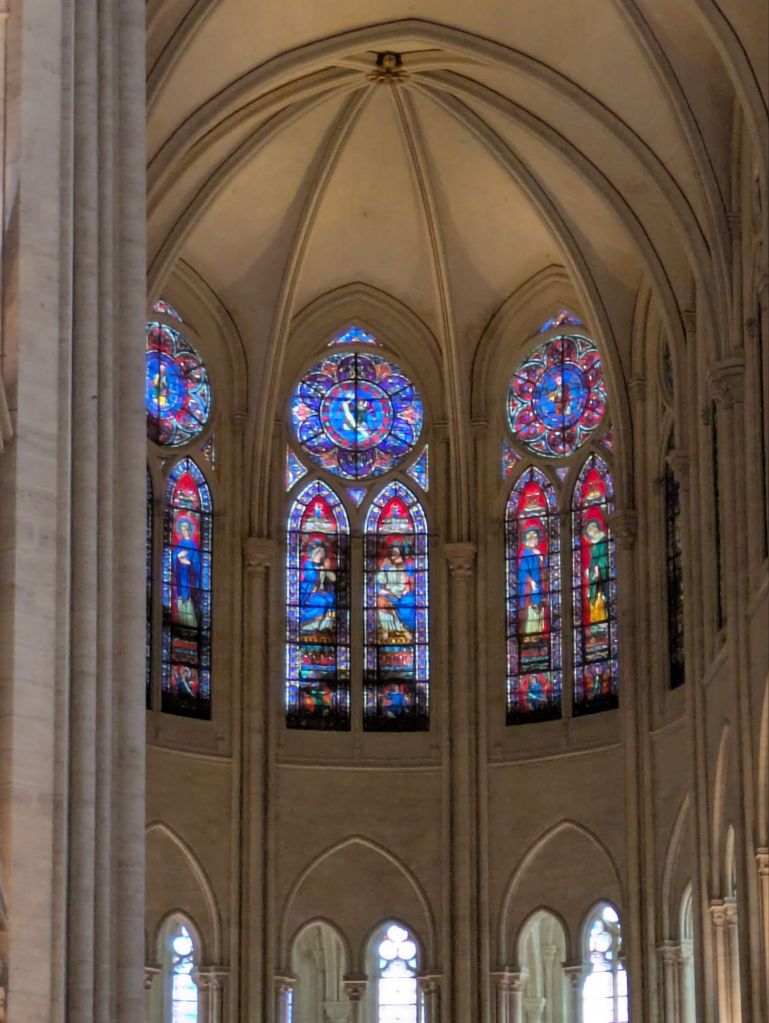
Those who knew the old Notre Dame will remember how dim and gloomy it was. But this church just glowed with light. So much was lost that new things had to be done, and modern paintings and tapestries adorned the walls of Northern aisle chapels – all of a high quality, and with a colour palette that used a lot of blue. Some glass was saved and looked as good as ever, but new windows had been commissioned, and the number of clear windows greatly increased.
Elements that might initially look over-egged, like the plain gold cross behind the Pietà at the high altar are, in the flesh, very powerful. I think it was the bold confidence of using modern artists exercising their own artistic judgement to create vehicles for devotion that made such an impact on me. The most extraordinary of all was the reliquary for the crown of thorns in the chapel directly behind the high altar.
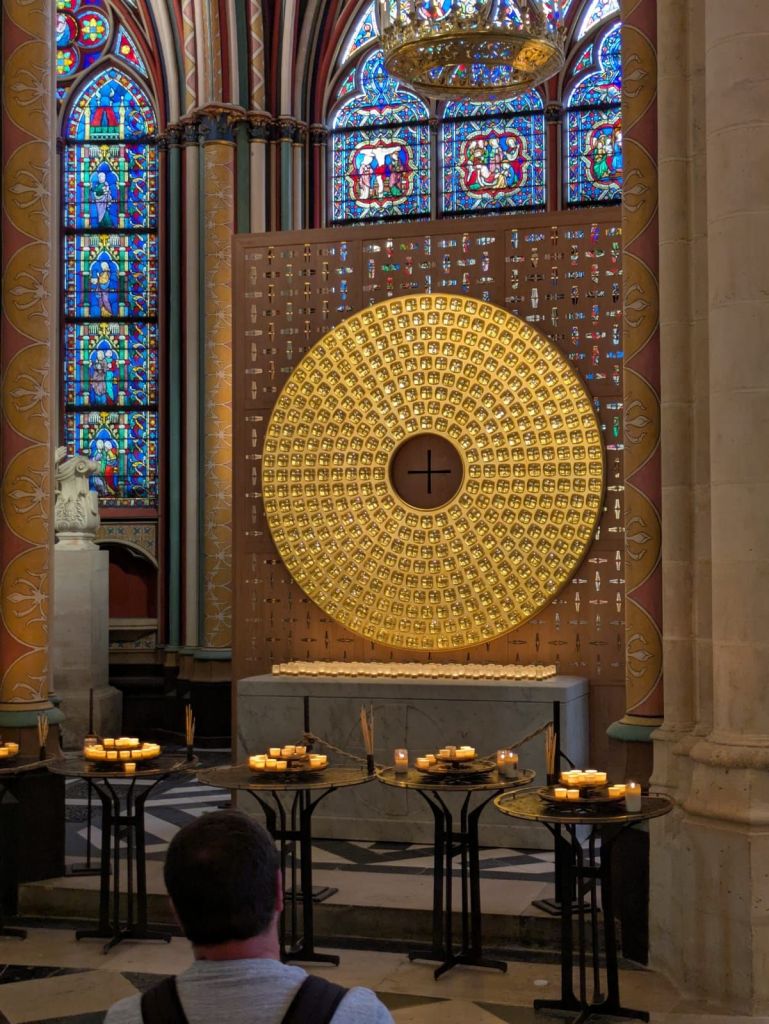
Separated from the hordes of visitors, this was a place of prayer, and for me, lighting a candle for a particularly painful anniversary, a place to let out my grief in my praying.
I wandered about a bit more and eventually emerged, quite unexpectedly shaken by the visit – normally I am very wary of crowds and find them quite anxiety inducing, but today they might as well have not been there, as I was pulled into an encounter that drew from me deep feelings I only dimly realised I was carrying.
I am writing this on Eurostar, as the train thunders through the tunnel. Three things occur to me as I look back on about five and a half weeks’ walking from Vézelay to the foothills of the Pyrenees.
First of all, this whole experience so far is an extraordinary gift. I know I chose to do it, but I owe the inspiration to the late and much-loved Philip Endean S.J. I think of him often as I go, and pray for him. Without his testimony I don’t know if I would ever have opened myself to this possibility. So whether any particular day has been good or bad – and any real pilgrimage will have plenty of both, fed by exterior circumstances and interior attitudes – I can honestly say that the quality of gift never goes, and for that I am deeply thankful.
Secondly, at its heart, pilgrimage is about both simplification and attention – which, perhaps not incidentally, is what one might say about prayer. Simplification, because pilgrims just carry life with them in their packs. And largely eschewing other means of transport (people do get buses to edges of dull towns, or do it by bicycle or horse) there is, in the simplicity of step after step, an invitation to attend and respond to all that is around. First of all to nature, large and small; insects, amphibians, birds, mammals, and trees and flowers and hedgerows. And then the people you see as you pass. Some you just greet, others you converse with for a moment of two. The built world, the world we have made for our lives is another element that draws the attention, sometimes because of ugliness, but more often because of beauty and ingenuity.
As you go, the fruit of all that attention feeds into one’s interior life and reflection as you turn it over as you walk. And out of one’s memory come all kinds of snatches of life, or characters, or incidents painful and joyful, to interact with all that has surrounded you and to which you have tried to attend.
So the structural requirements of pilgrimage; slowing down, simplifying, attending; simply by doing them, by physically inhabiting them, have the potential to have a quite profound spiritual impact by the way they crack open some of the tougher recesses of one’s heart.

The third impact is not one that I have yet experienced. It is the way people can be changed by doing a protracted walk over a period of a month, or six weeks or more. My guess is that it is probably an intensification of the kinds of elements I have already identified; which sometimes means a kind of coming to the end of oneself, and then finding a way through.
Of course, it must be said that none of this happens automatically. People go on pilgrimage for a host of reasons, some fairly light-hearted, and there is nothing wrong with that (see Chaucer for details). But I have been amazed by how many people are making their pilgrimage because of a life transition, or because they face a big decision, or in the hope getting clarity about things that seem muddled. (I suspect I find out these things because I have that kind of face and people tell me things.)
Well, I don’t know that the third impact will be one I will discover. It may be easy for some people to leave home and loved one(s) for a long period, but it isn’t for me. I feel both the pull of the road and the pull of my closest relationship (though let it be said, I know absolutely that I am free to go for as long as I need). But I have my own internal brake on going for too long. So I will continue to try and learn the extraordinary lessons of pilgrimage in the way that I do it. And everyone who walks pilgrimage ways knows that each pilgrim makes the pilgrimage their own and does it in their own way.
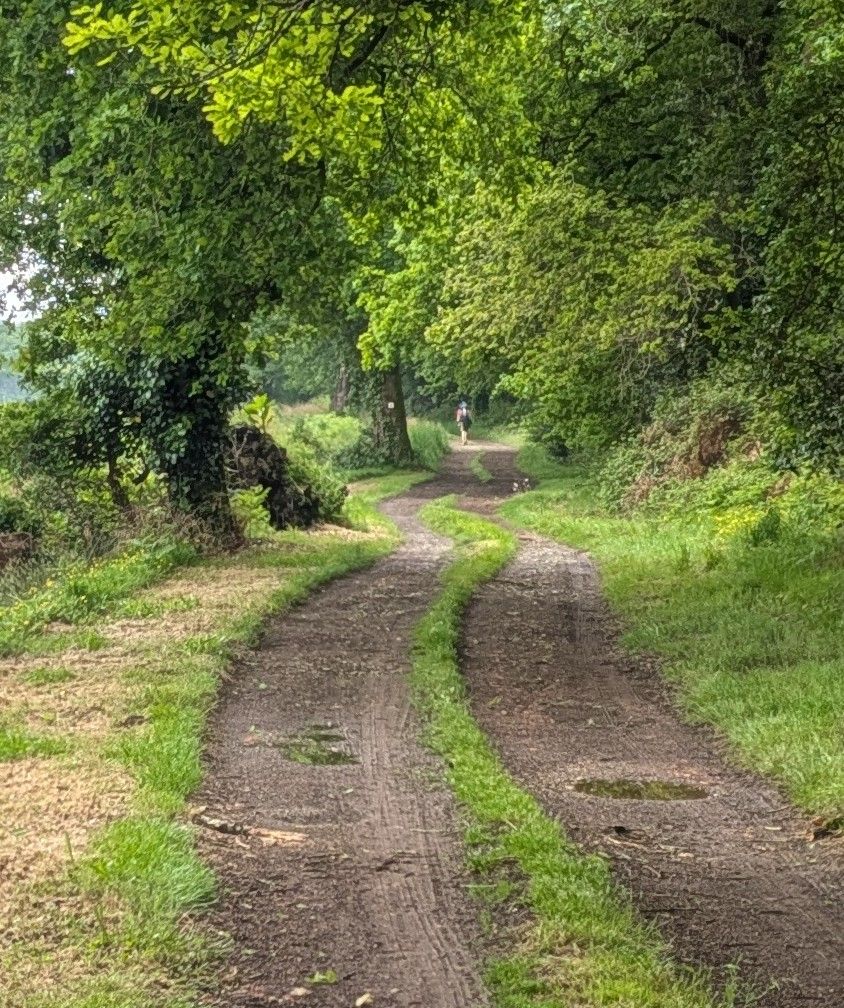
Thank you for reading this. I shall be on the road again in September, this time starting Bayonne and, after three days, heading into Spain in the direction of Pamplona, where I will join the main route. As they say on the Camino: Ultréia!
(*Further!)
 From The Quire